
-
AuthorSearch Results
-
June 23, 2026 at 9:31 am #41152
In reply to: Forex Forum
June 22, 2026 at 11:56 am #41134In reply to: Forex Forum
June 10, 2026 at 9:34 am #40864In reply to: Forex Forum
Forex Market Snapshot
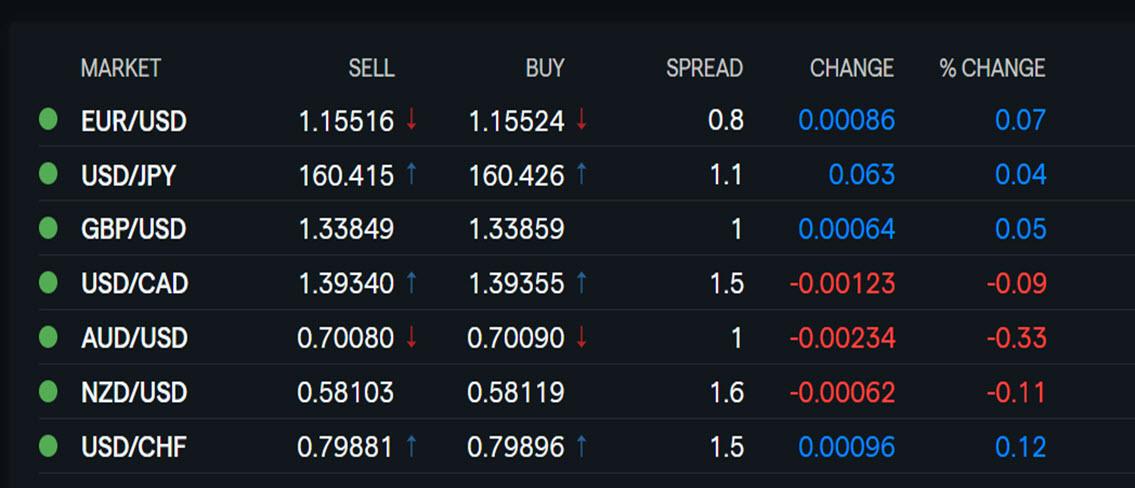
Cautious forex trading with the focus on US CPI and headlines from the Middle East.
EURUSD continues to pivot 1.1550, finding some support ahead of an expected ECB rate hike on Thursday.
AUDUSD underperforming. USDJPY remains firm above 160, still wary of pushing too hard given an intervention threat.
 May 27, 2026 at 9:19 am #40544
In reply to: Forex Forum
Forex Market Snapshot
The dollar is trading mixed despite the risk on mood elsewhere. Big move has been in AUNZD which is weaker after the REBNZ decision, boosting NZDUSD while AUDUSD retreats,
Otherwise, let’s see if the USD starts to correlate (i.e. weaker) if the risk on mood continues. as all eyes will be on the White Houise cabinet meeting today.
 April 24, 2026 at 4:56 pm #39399
In reply to: Forex Forum
AUDUSD(4HR)
The Australian Dollar remained stable at $0.7130 despite falling 0.5% during the night session to its lowest level of $0.7110 amid a retreat in global stocks from their recent highs. Having gained to a new four-year high of $0.7222 last Friday, the pair is likely to end the week lower by about 0.5%.
Key resistance for AUDUSD sits near the March 11 high around 0.7200, while supports are nearer 0.7135 and 0.7100 from 50 and 100 EMA
 April 21, 2026 at 9:32 am #39198
In reply to: Forex Forum
Forex Market Snapshot
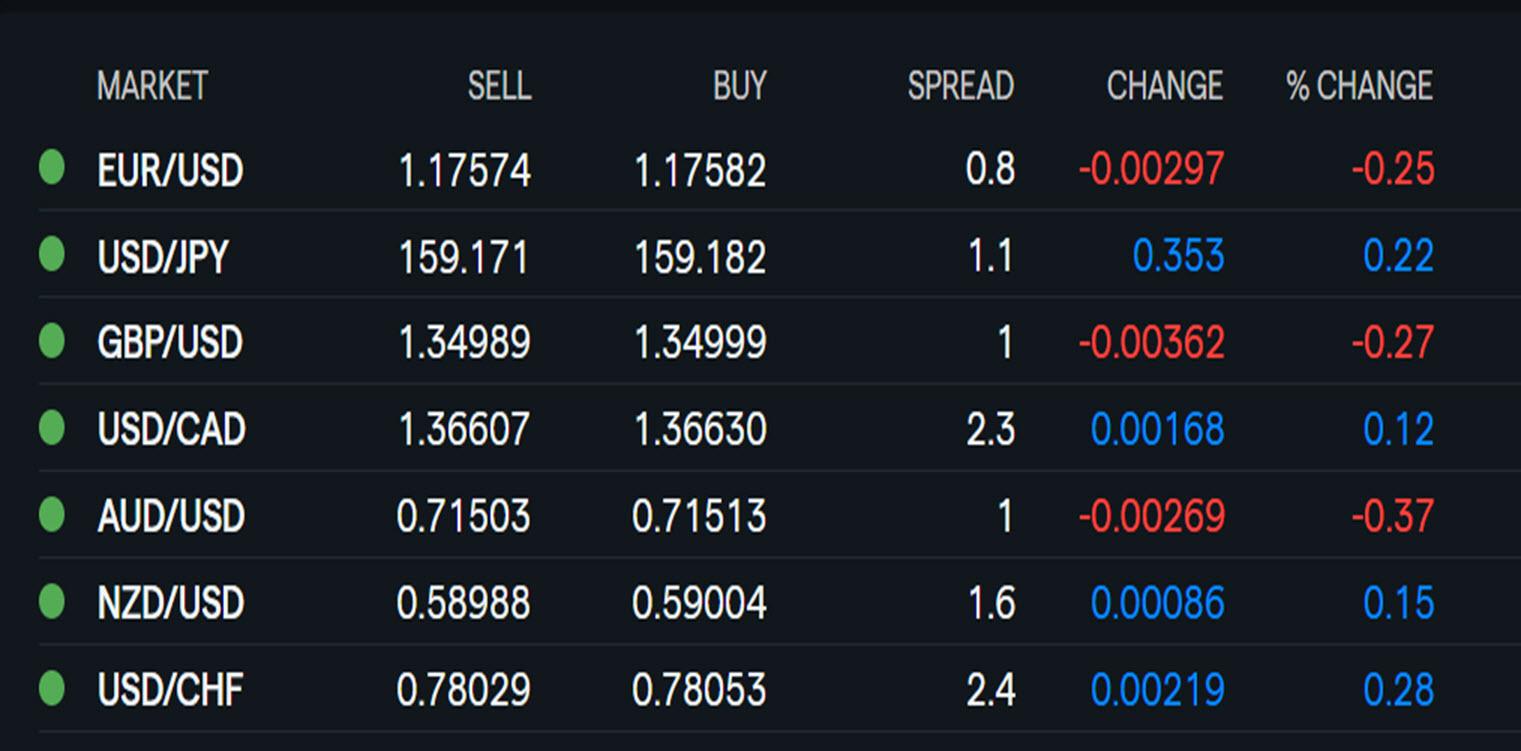
The dollar is trading firmer as global markets turn defensive awaiting clarity over whether/when Iran will be sending a delegation for peace talks. Given so many misleading and conflicting headlines,from various sources, traders have little choice but to turn cautious.
EURUSD, also hit by a weak ZEW. is so far holding above 1.,1750. USDJPY is back above 159 and GBPUSD has pivoted 1.35.
In Japan, consensus seems to be for the BoJ to have a hawkish hold on rates in April.
AUDUSD is underperforming while NZDUSD is overperforming (but off its high) as a May rate hike has been put on the table following the CPI report (note weaker AUDNZD cross).
 April 20, 2026 at 4:15 pm #39178
In reply to: Forex Forum
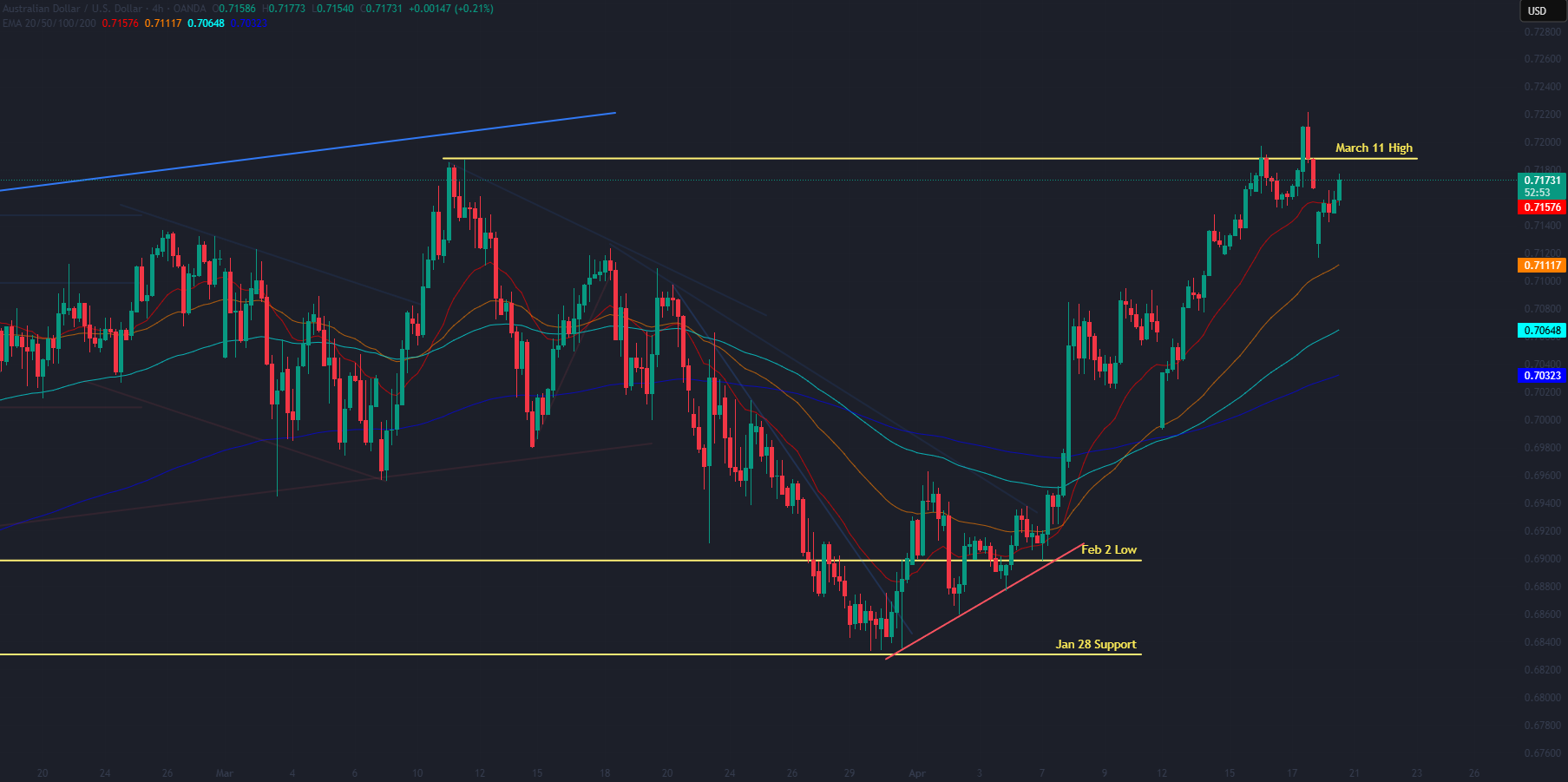
AUDUSD (4HR)
The Australian dollar, which rallied earlier in the week, has started to ease as momentum fades near resistance around 0.7180–0.7200. Initial gains were driven by a weaker US dollar and improved risk sentiment, but selling pressure emerged into the end of the week.
AUDUSD has since pulled back toward the mid 0.71 range and while the pair remains supported above 0.7000 near-term consolidation is likely. Support is seen around rising short-term moving averages near 0.7110, with stronger support seen closer to 0.7060. Resistance near the 0.7200 region from the March 11 high
 April 20, 2026 at 9:54 am #39152
In reply to: Forex Forum
Forex Market Snapshot
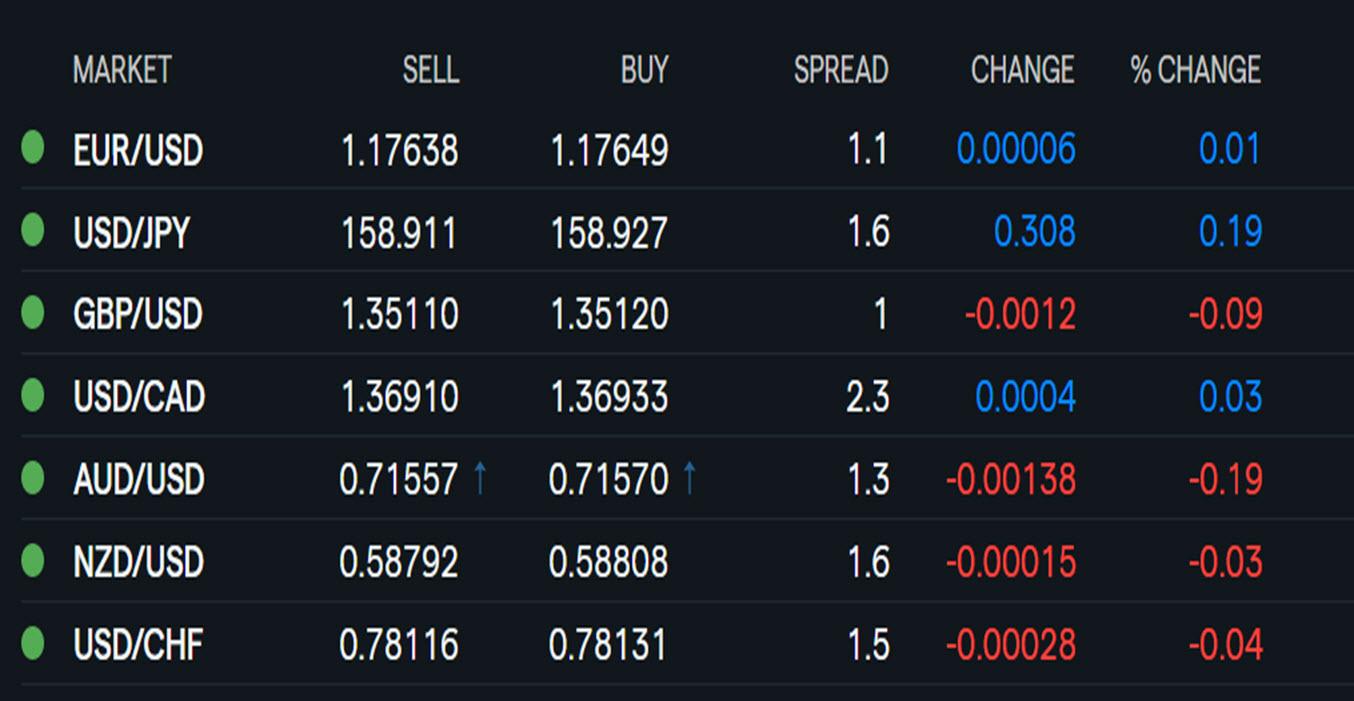
Given how many opening week gaps have not followed through during this crisis, it should not be a surprise to see caution at yet another one to start this week.
This has seen opening week gaps filled in EURUSD, GBPUSD, AUDUSD and NZDUSD while the USDJPY gap remains open. There were no gaps seen in USDCAD and USDCHF.
This leaves the focus on news headlines with forex and other markets following the lead set by crude oul.
 April 15, 2026 at 9:15 pm #39018
In reply to: Forex Forum
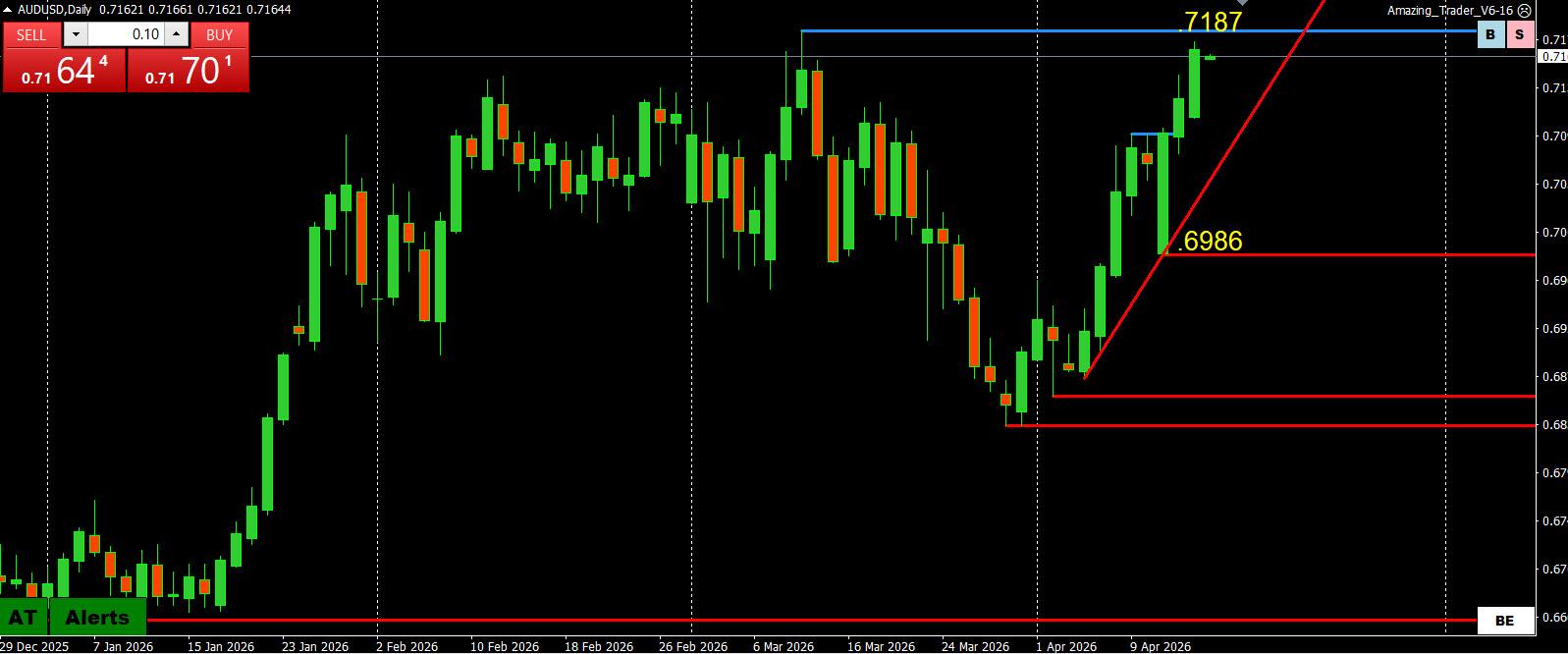
AUDUSD DAILY
Outperforming ahead of and in anticipation of a solid Aussie jobs report.
Key resistance: .7186
Next pivotal level: .7200
See detailed preview: Aussie jobs report
 April 13, 2026 at 9:16 am #38872
In reply to: Forex Forum
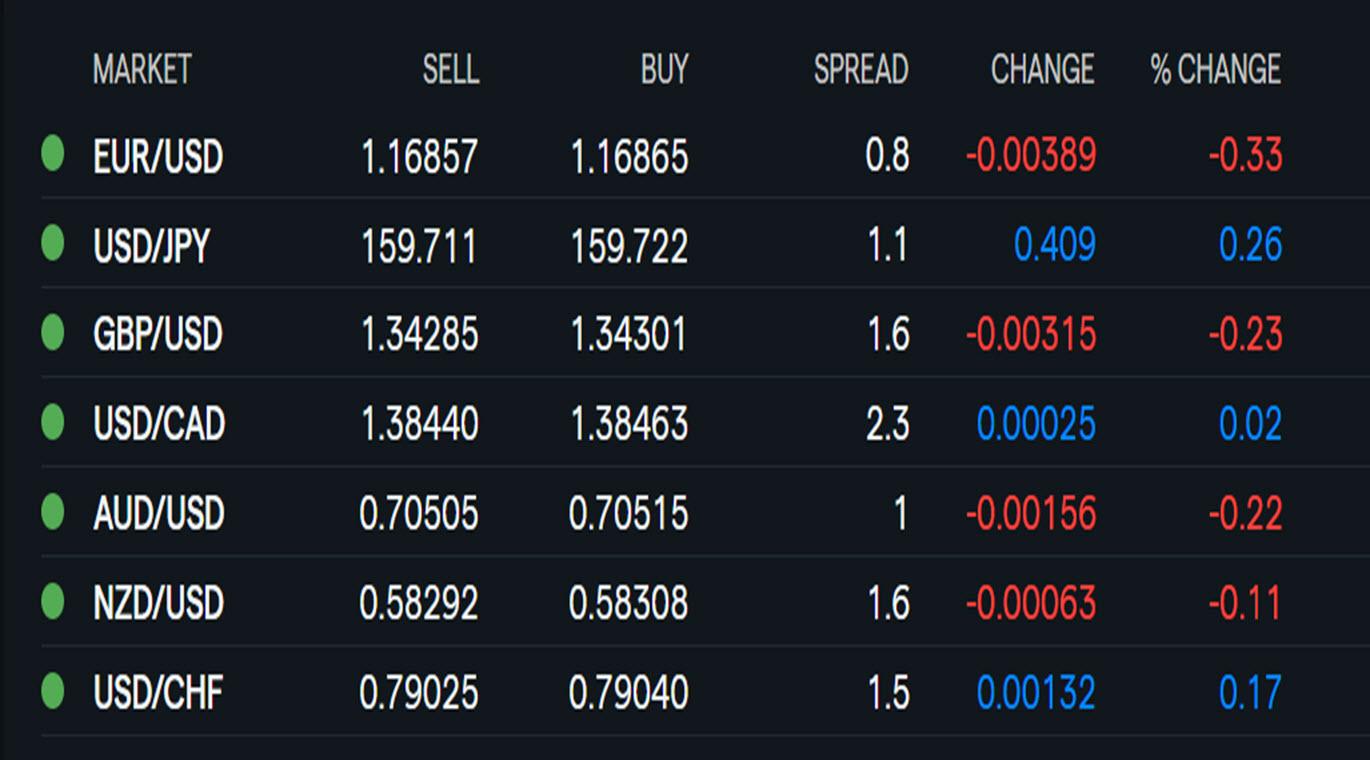
Forex Market Snapshot
The dollar is trading firm but off opening gap highs after pausing above EURIUSD 1.1643, USDJPY below 160, GBPUSD at 1.3380 while AUDUSD has bounced back above.
It should not be a surprise to see some caution given how many headline whipsaws there have been since the start of the conflict while uncertainty should put a floor under oil and thus the USD as well.
 April 7, 2026 at 4:45 pm #38696
In reply to: Forex Forum
April 3, 2026 at 12:40 am #38566In reply to: Forex Forum
NZDUSD (4HR)
The kiwi dollar has declined in recent trading session similar to AUDUSD, with the New Zealand Dollar losing its two-day gain and now trading at $0.571. The RBNZ has stated that oil price increases could boost inflation, affecting household spending.
The NZDUSD is under pressure, with interest rates likely to be held by the Reserve Bank next week. The possibility of a rate hike in May has fallen to 25% from 60% last week.
 April 3, 2026 at 12:30 am #38565
In reply to: Forex Forum
AUDUSD (4HR)
The Australian dollar has been declining in the recent intraday session, with the Australian dollar weakening by 0.95%. Currently, the price is at $0.6914. The price has moved below the 50-period EMA, which is an indication of increased downside pressure in the near term. The price is currently moving closer to its two-month low registered during the past week.
 March 31, 2026 at 3:25 am #38428
In reply to: Forex Forum
AUDUSD(4HR)
The Australian dollar, which traded sideways for most of the month, is seen weakening in recent times due to a shift in market concerns from inflation to global growth. The Aussie traded overnight at a two-month low of $0.6834. Currently it is now consolidating just below its previous support of 0.6900 with further downside is still in the open.
 March 27, 2026 at 9:25 am #38317
In reply to: Forex Forum
Forex Market Snapshot
There seems little choice but to trade defensively ahead of the week end, month/quarter end on Tuesday and a holiday shortened week ahead of the Easter break in what remains a headline (and oil) driven market.
This has seen firmer oil set a modest risk off tone and the dollar trade mixed to a touch firmer (except vs a lagging AUD and NZD).
- EURUSD: Trading within 1.1500-50, downside more exposed while below 1.1550 but contained while above 1.15. Key supports lie below 1.15. (1.1484, 1.1442, 1.1410)
- USDJPY: Trades firm but still yet to crack 160 (BoJ?)
- GBPUSD: Keeping pace with EURUSD. Key support is nit until 1.3234.
- USDCAD: Keeping a bid while above 1.38. Tight range 1.3835-65. So far not benefiting from firmer oil
- AUDUSD: Remains on the defensive but ckagging today and onsolidating within a .6870-.6920
 March 26, 2026 at 8:45 pm #38298
In reply to: Forex Forum
AUDUSD (1HR)
The Australian dollar has confirmed a stronger bearish move on the 1H chart after breaking below the key 0.6900 support zone. Price is now trading beneath all major moving averages and remains capped by a descending trendline, indicating sustained downside pressure.
Supports and resistance can be seen at 0.6850 and 0.6950.
 March 26, 2026 at 9:44 am #38252
In reply to: Forex Forum
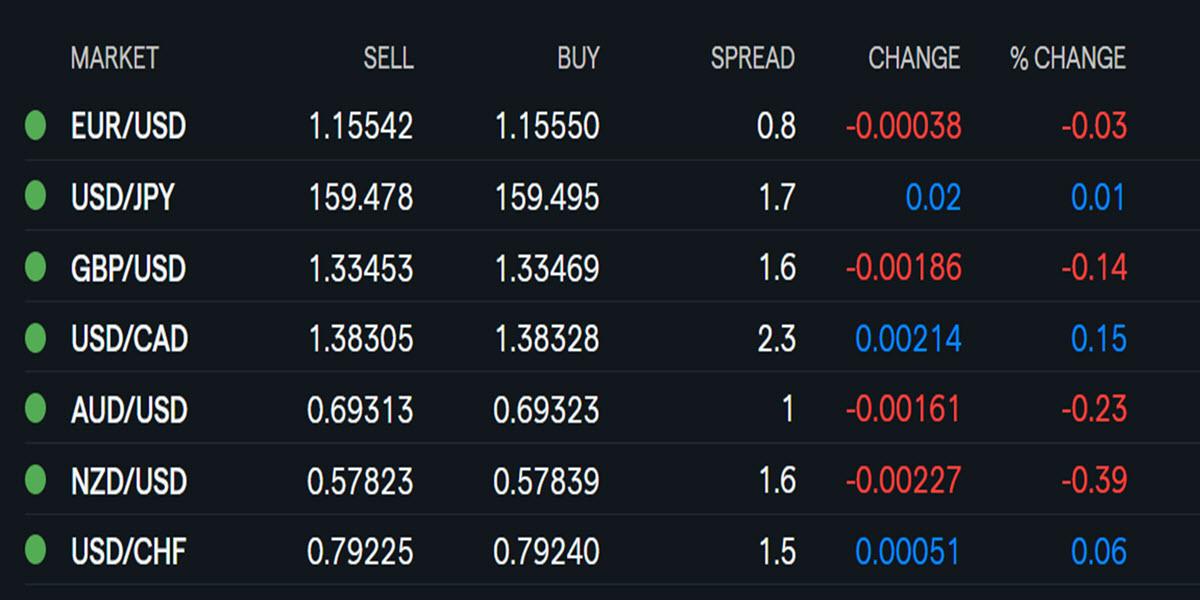
Forex Market Snapshot
With the weekend and month/quarter end approaching, traders have little choice but to play defense to guard against a headline news risk. This has seen US stocks slip, gold dip while crude oil up and the dollar holds firm.
- EURUSD: So far break9ng a 5-day trade around 1.16 (potentially bearish)
- USDJPY: Trading firm within 159-160 with conspiracy theorists saying BoJ likely lurking in attempt to [the top end being breached.
- GBPUSD: L:aging rather than leading and following the EUREUSD lead
- USDCAD: Joining in with a strong bid while above 1.38…faces key resistance at 1.3845 and 1.3928
- AUDUSD: NO longer an outperformer… on the defensive while below .7000… key support 6896
- USDCHF: Still paying notice to SNB intervention threat
 March 26, 2026 at 1:43 am #38247
In reply to: Forex Forum
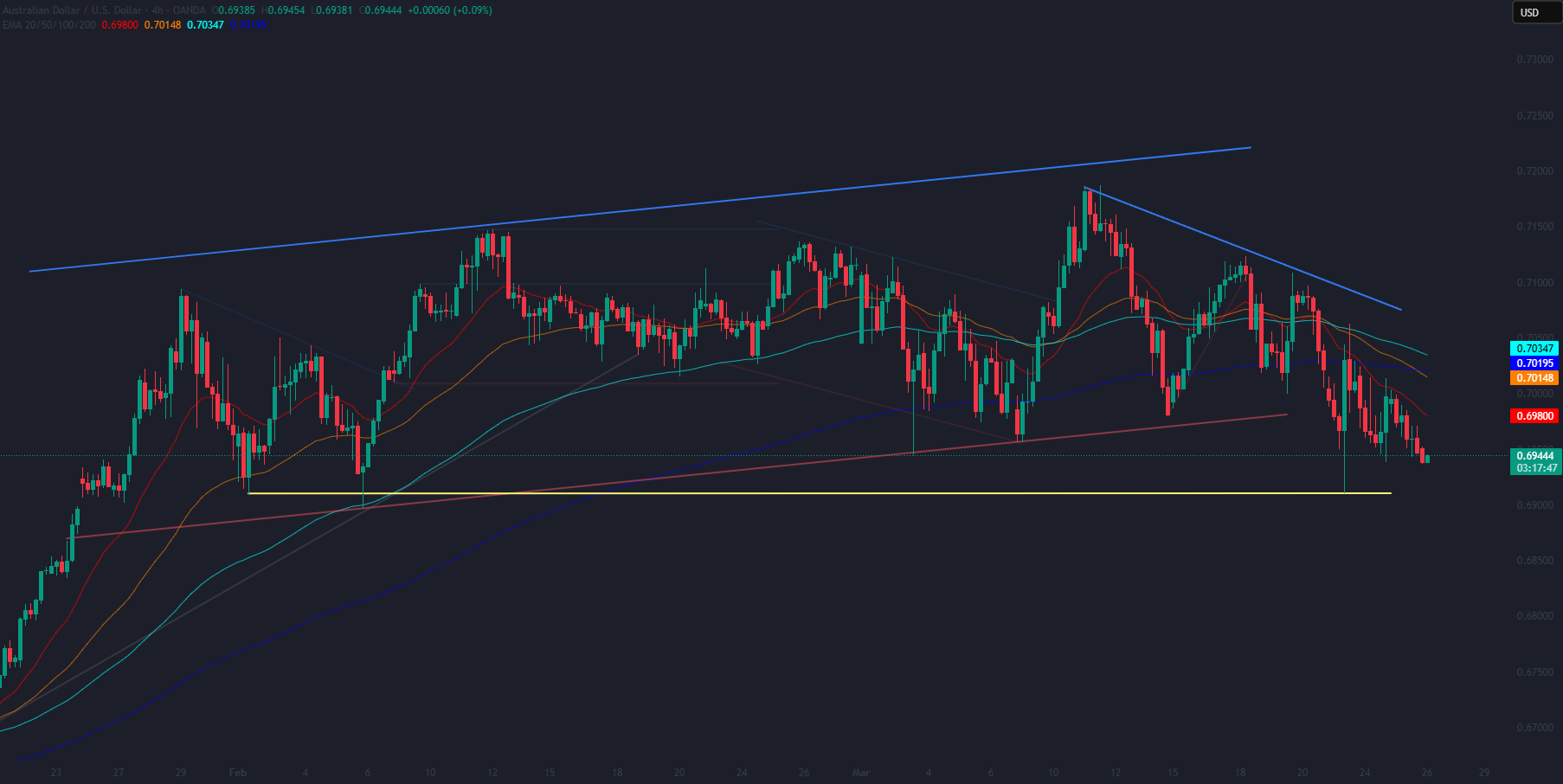
AUDUSD (4HR)
The Australian dollar went below $0.695 and is trading near a seven-week low as investors seem to be skeptical about a de-escalation in Iran tensions in the near future. The Australian dollar has now gone down by 3.42% from its peak two weeks ago.
The key support for the Australian dollar is around 0.6900.
 March 24, 2026 at 12:38 am #38153
In reply to: Forex Forum
AUDUSD (4HR)
After the early morning news.. AUDUSD saw brief volatility but ultimately returned to its prior trend. The pair remains under downward pressure within a short-term bearish move. However, key support levels are still holding. A stronger push lower is needed to break these supports and confirm further downside.
Supports and resistance can be seen at 0.6945 and 0.7050
Investors are now focused on the upcoming Wednesday inflation data
 March 24, 2026 at 12:37 am #38152
In reply to: Forex Forum
AUDUSD
The Australian dollar weakened amid a broad sell-off in Asian equity markets. AUDUSD fell to 0.69, marking its lowest level since February 2026. Over the past four weeks, the pair has declined by 1.59%.
The currency continues the pressure from last week, falling 1% on Friday, which reduced its overall weekly gain to 0.6% as rate-hike expectations provided support, while the equity market sell-off put it under pressure.
March 20, 2026 at 12:24 am #37976In reply to: Forex Forum
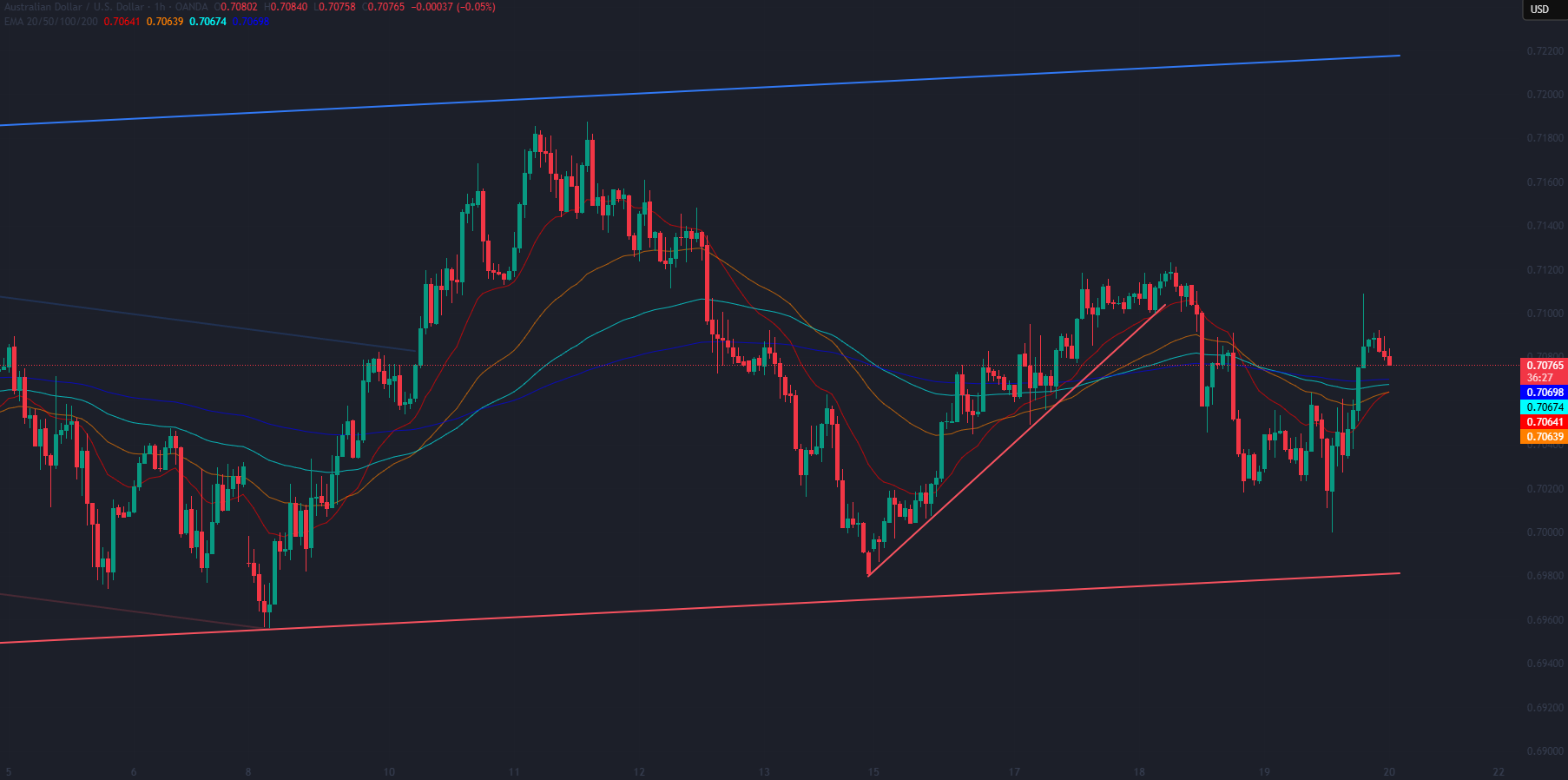
AUDUSD (1HR)
the Australian dollar rose by 0.83% to $0.70810 following February data showing unemployment increased to 4.3%, slightly above the market expectation of 4.1%.
Resistance can be seen around 0.7110-0.7130 from the recent highs and areas of rejection. Support is around 0.7065 coming from the EMA 200.
 March 18, 2026 at 1:21 am #37837
In reply to: Forex Forum
AUDUSD (1HR)
The Australian dollar remains firm, supported by persistently high domestic inflation and the Reserve Bank of Australia maintaining a cautious, hawkish stance. The central bank has raised interest rates for a second consecutive month, pushing them to a 10-month high. This move reverses two of the three rate cuts made last year, with policymakers warning that inflation risks are increasingly skewed to the upside.
AUDUSD gained 0.41% to 0.71005 against the US dollar, extending its recent intra day gains. The pair is dancing around this short term ascending structure. Immediate resistances is seen around 0.7120–0.7150, followed by the recent high of 0.7200. Support lies near 0.7070–0.7050 where the EMA is, and stronger support around 0.7000 from the 4hr trend line.
 March 16, 2026 at 11:15 pm #37776
In reply to: Forex Forum
March 13, 2026 at 3:01 pm #37696In reply to: Forex Forum
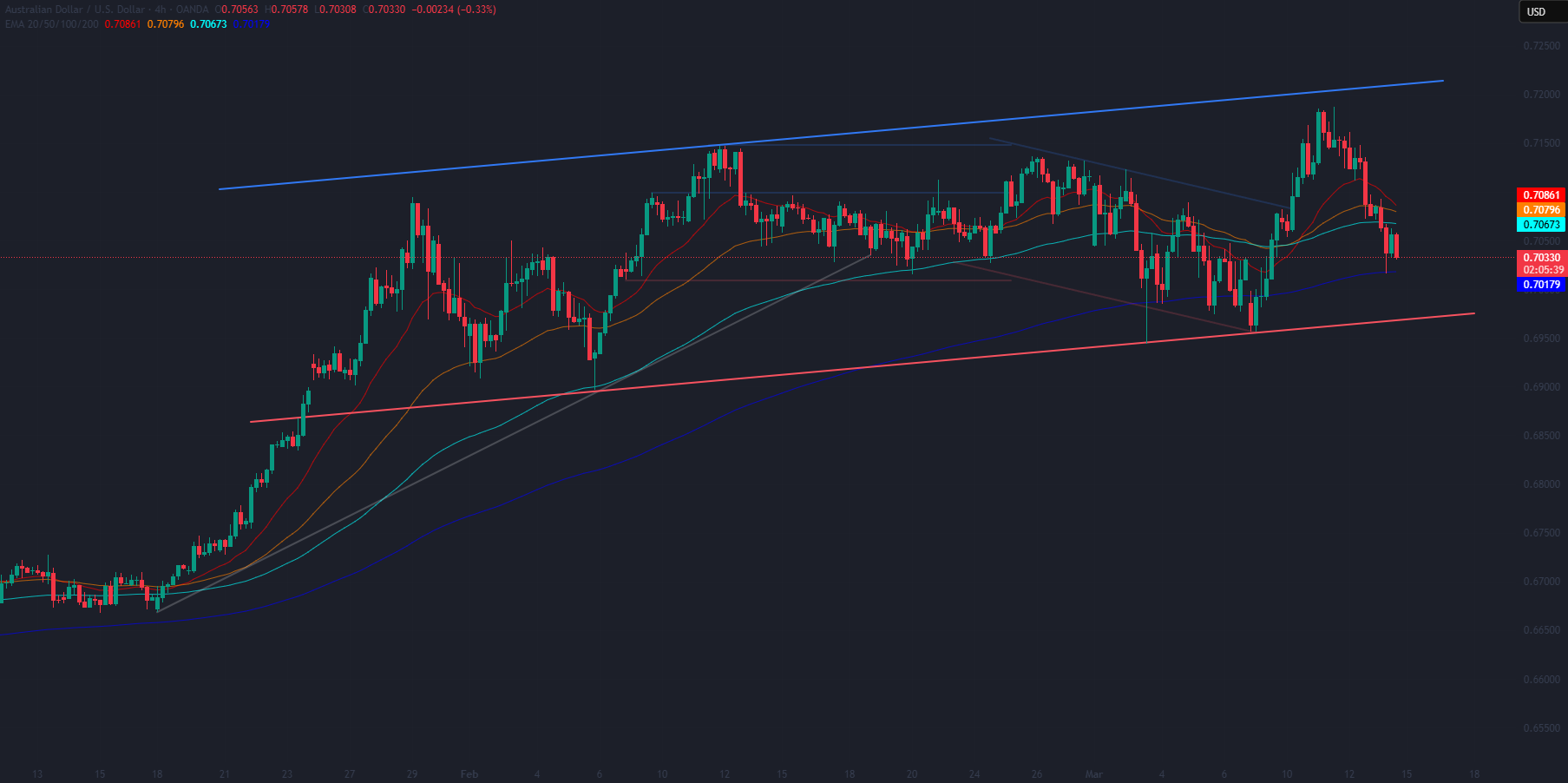
AUDUSD (4HR)
The Australian dollar rose in Asian trading on Wednesday against a basket of global currencies, extending gains for the fourth consecutive day versus the US dollar and reaching its highest level in four years, supported by the decline of the US currency ahead of key US inflation data. However, the pair pulled back from its recent highs as the US dollar regained some strength
AUDUSD has been trading within a broad ascending channel on the 4-hour timeframe. After testing the upper boundary near 0.7150, the pair faced selling pressure and pulled back toward the middle of the structure.
The pair is currently trading near the 200-period EMA around 0.7020. Support is around 0.7000, while resistance is near 0.7080.
 March 12, 2026 at 9:57 am #37601
In reply to: Forex Forum
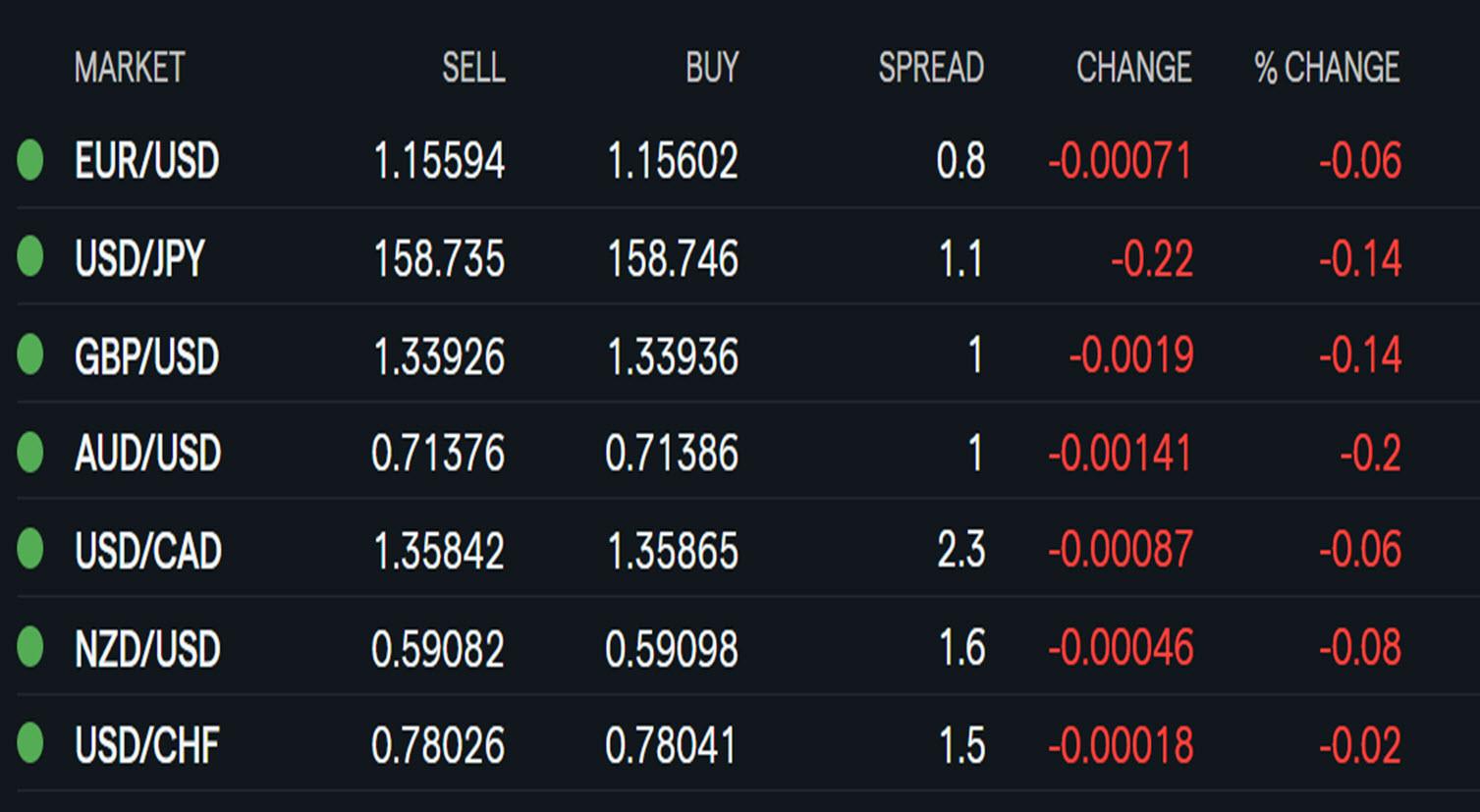
Forex Market Snapshot
- The dollar is currently trading mixed and off overnight highs in a market that remains hostage to headlines out of the Gulf and the reaction in crude oil.
- AUDUSD has flipped to an underperformer. EURUSD is only down slightly after holding off a fresh run at 1.15. USDJPY has backed off after testing 159+ (BoJ?). GBPUSD is currently a slight underperformer. CAD is up slightly vs the USD on firmer oil.,
- So, it is another headline watching day where once again pay attention to the reaction.
- US PPI and Weekly Jobless claims are due.
 March 10, 2026 at 9:24 am #37494
In reply to: Forex Forum
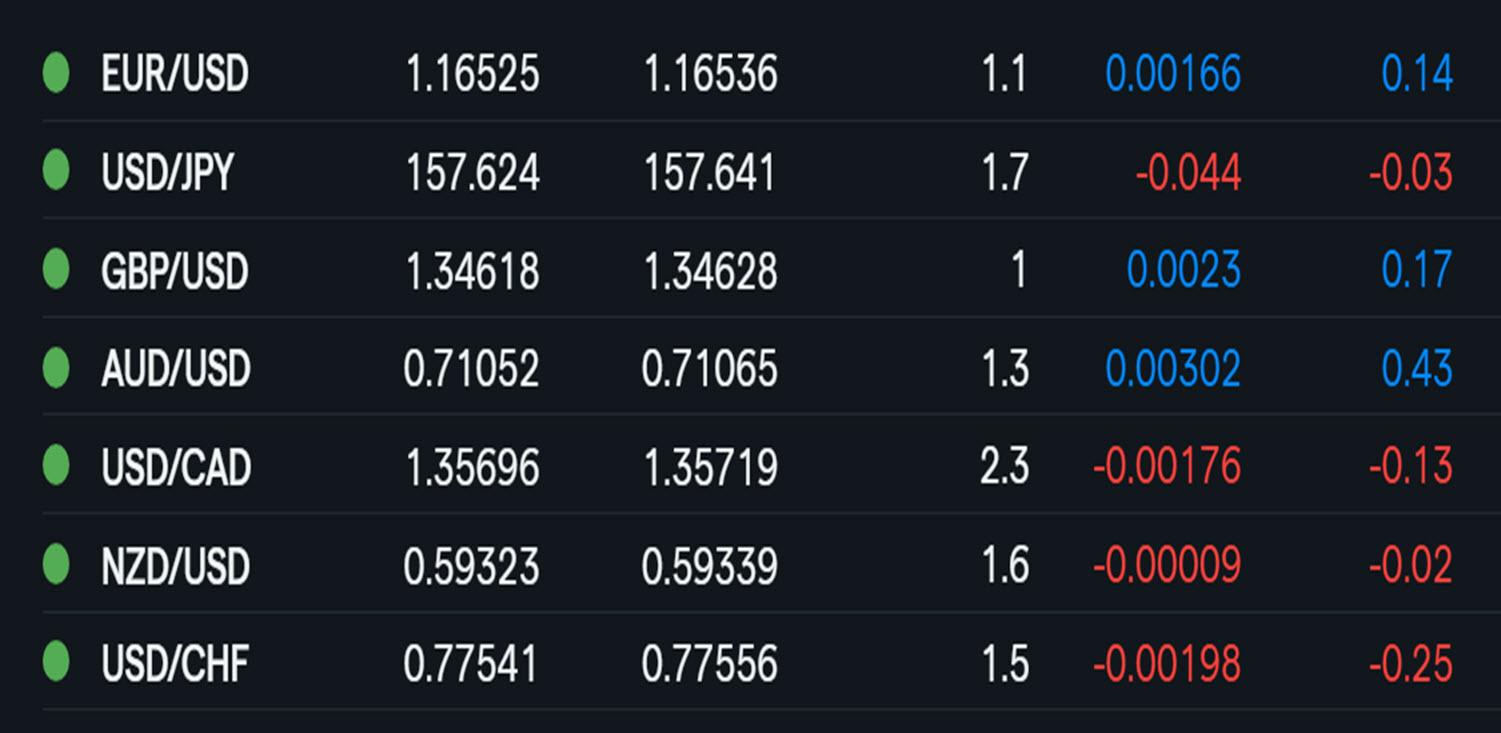
Forex Market Snapshot
- What a difference a day makes! At this time yesterday EURUSD was trying to hold off a run at 1.15, USDJPY was aiming for 159, GBPUSD had traded 1.32xx, AUDUSD was trading below .70 and CAD was firmer on an oil play.
- US stocks have extended rebounds, XAUUSD (GOLD) is firmer and BTCUSD is back above 70K.
- All it took was news algos reacting to one comment by President Trump to get the ball rolling the other way, confirming once again that it is the reaction to news more than the news itself that matters and gives a clue to trading.
- In any case, it it is hard to suggest follow through without confirming news. So, it feels like another headline watching reaction to news day with one eye on crude oil and the risk mood set by US stocks.
- No key data is due from the US
 March 5, 2026 at 8:15 pm #37333
In reply to: Forex Forum
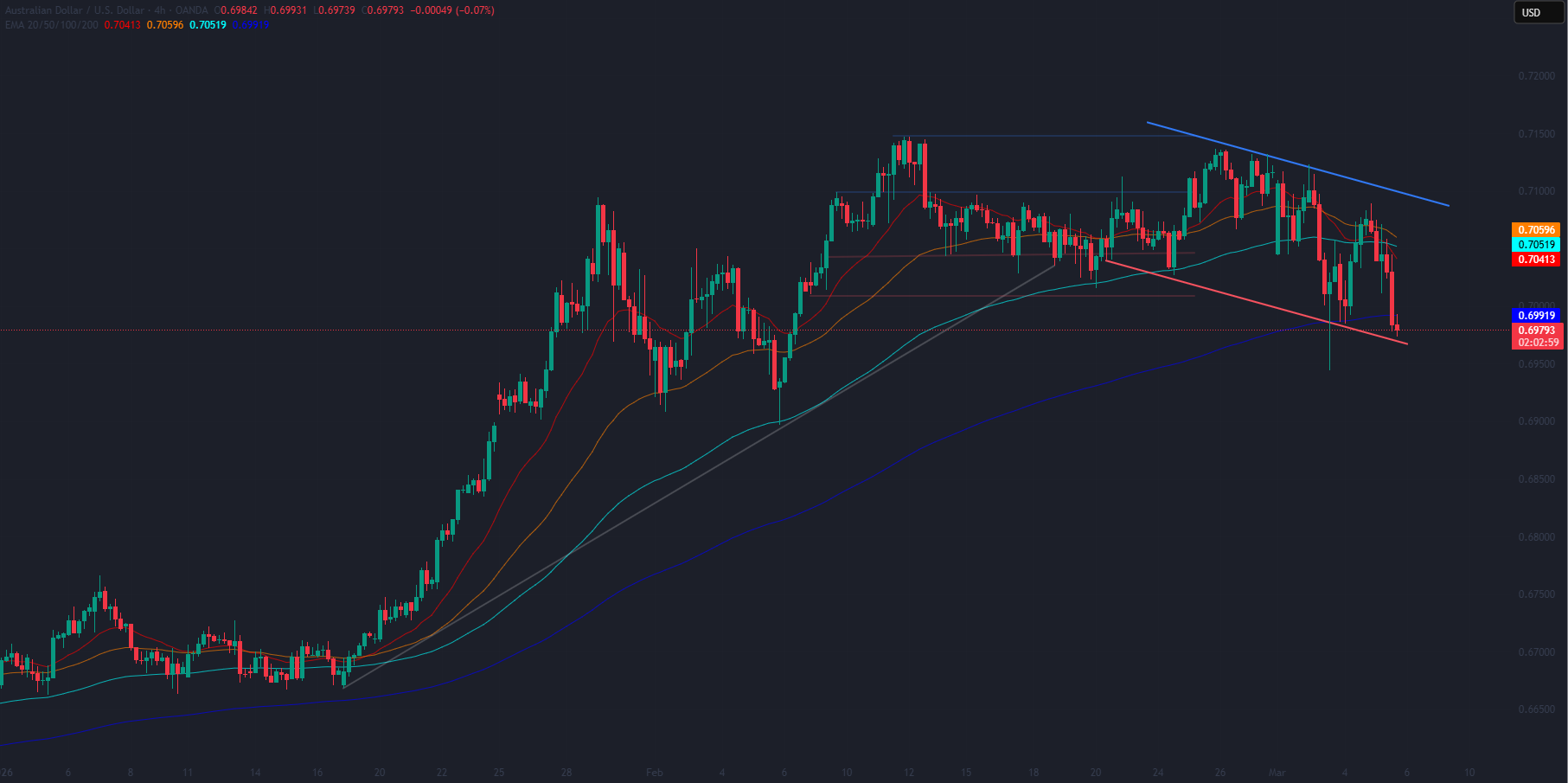
AUDUSD(4HR)
The dollar strengthened on Thursday after briefly pulling back from its three-month highs, as the ongoing fallout from the war in the Middle East unsettled global markets and kept investor sentiment fragile, increasing demand for the safe-haven currency.
The Australian dollar has traded within a wide range this week, moving from a high of 0.713 down to a low of 0.697. It has often been used as a proxy for risk sentiment, though at times it has also received a rare safe-haven bid, supported by the country’s strong energy resources that help offset the impact of rising oil prices.
The pair is currently trading very close to the 200-period EMA. Support is located near 0.6950, while resistance stands around 0.7050.
 March 5, 2026 at 2:08 am #37289
In reply to: Forex Forum
AUDUSD(1HR)
The Aussie was up at $0.7078, having bounced 0.6% overnight and away from a low of $0.6985. Current events and news have been causing the pair to dive as deep as $0.6945 to as high as $0.7122 so far this week, and more volatility looks likely. However, the supports and resistances are still intact and the pair is still following the rules from the previous month’s lows and highs.
Data showed Australian household spending rose only a modest 0.3% in January, after a 0.5% drop the month before, suggesting consumer demand had lost some momentum.
 March 2, 2026 at 6:35 pm #37149
In reply to: Forex Forum
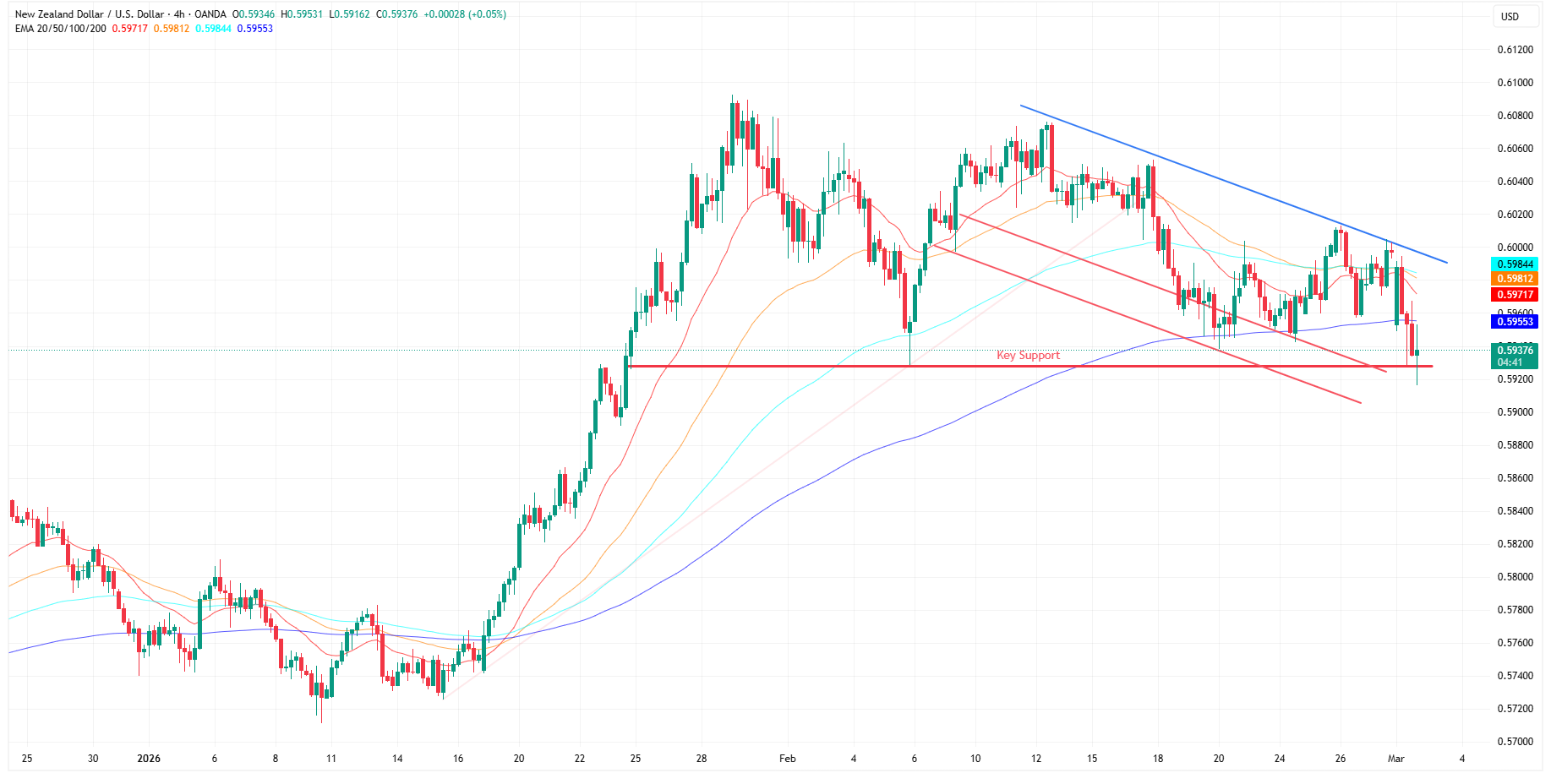
NZDUSD(4HR)
Similar to AUDUSD, the New Zealand dollar initially fell to 0.5948 before trimming its losses to trade just 0.2% lower at 0.5935. The pair is holding near support at $0.5930, though this key level is beginning to look vulnerable as the four-hour candle approaches its close. Price briefly dipped below support earlier, but buyers quickly stepped in to push it higher, although, only for a bit as the price is still bearish
Overall, unlike the Australian dollar, NZDUSD appears to be yielding to mounting downside pressure. The pair remains under negative, dynamic resistance, reflected in its continued trading below the 50-period EMA, which reinforces the bearish bias in the near term.
 March 2, 2026 at 6:25 pm #37148
In reply to: Forex Forum
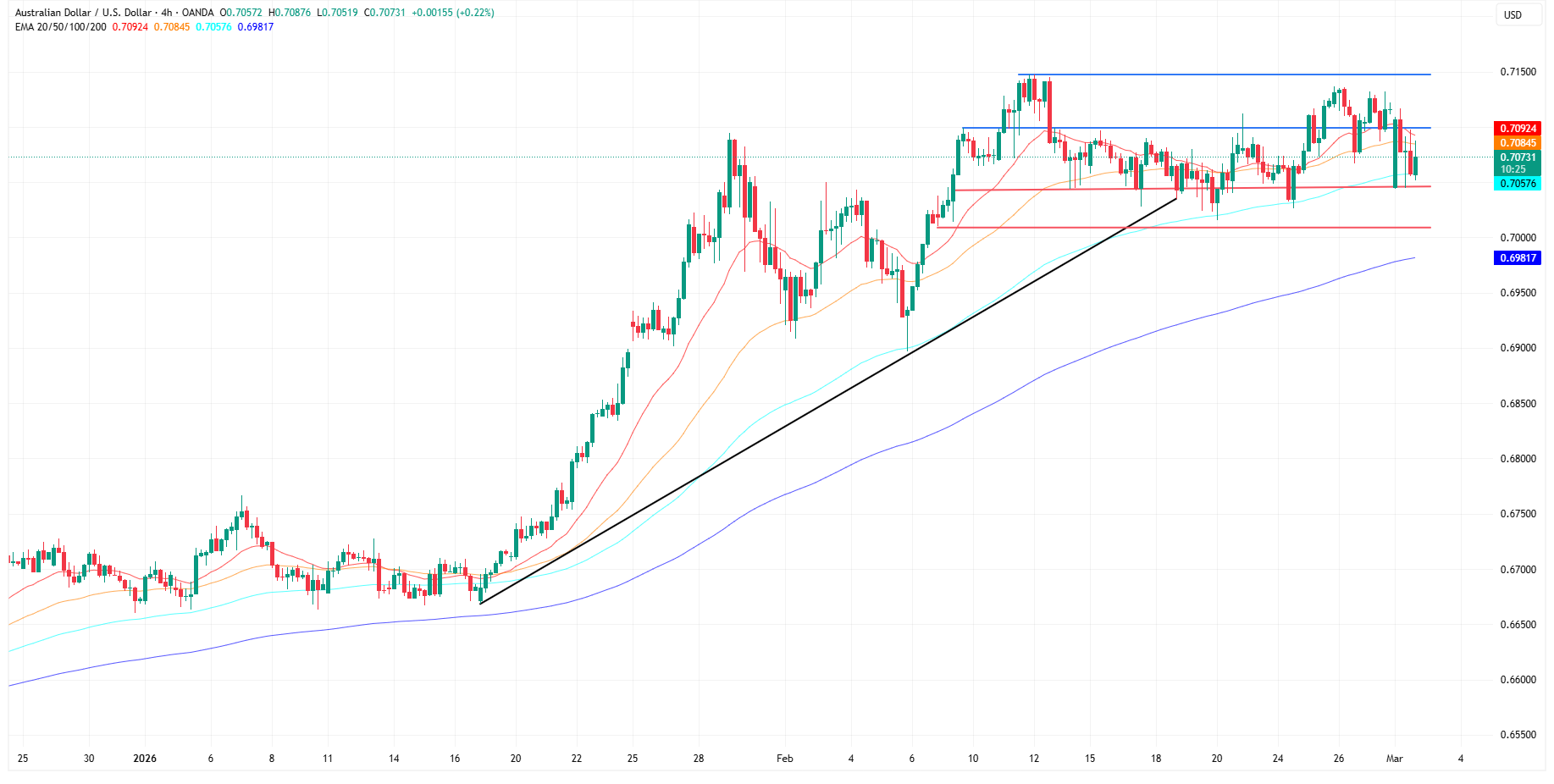
AUDUSD(4HR)
The Australian dollar began the week with a bearish price gap, falling as much as 1.2%. Although the initial reaction has since eased, volatility remains elevated. Despite the sharp move, the pair continues to trade within its established channel, hovering around 0.7075. The currency has posted gains for seven consecutive weeks, with the February high of 0.7146 acting as near-term resistance.
Attention now turns to a speech by Reserve Bank of Australia Governor Michele Bullock, in approximately three hours, which could provide further direction for the currency.
-
AuthorSearch Results


Search
© 2024 Global View