
- This topic has 28,643 replies, 54 voices, and was last updated 5 hours, 23 minutes ago by GVI Forex 2.
-
AuthorPosts
-
June 13, 2025 at 1:46 pm #26253
Bitcoin Price Tumbles as Gold Rises. Why Crypto Is No Haven
Bitcoin fell early Friday as it reacted to heightened global tensions in the Middle East, dropping along with other so-called risk assets.
It remains to be seen what sustained effect the geopolitical tensions will have on cryptos’ recent momentum. Amazon.com and Walmart are the latest companies to consider issuing their own stablecoins, according to a Friday report by The Wall Street Journal.
It comes less than a month after U.S. banks JPMorgan Chase, Bank of America and Citigroup were also reported to be exploring issuing a stablecoin — a digital asset pegged to a fiat currency, typically the U.S. dollar.
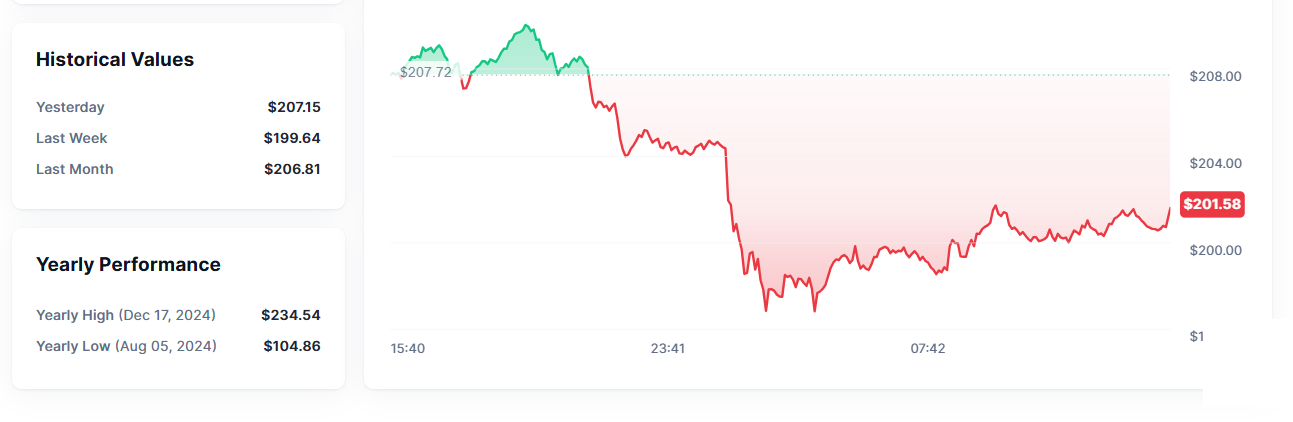
The world’s largest crypto was down 1.9% over the past 24 hours to $105,061, according to CoinDesk. It dropped to as low as $103,274 overnight, for a loss of about 4% on a 24-hour basis, but has recouped some of those losses since, perhaps indicating crypto investors’ interest in buying on dips.
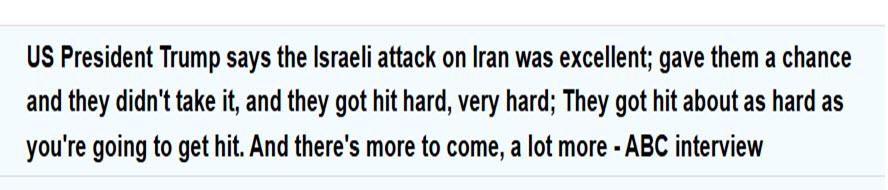
Israel launched a wide-ranging strike on Iran overnight, targeting the country’s nuclear program and military leadership. Oil prices jumped and markets fell. Futures tracking the S&P 500 were down 1.4% early Friday morning.
Ether and XRP were down 7.1% and 3.7%, respectively. Solana plummeted nearly 9%.
Gold, the ultimate haven asset, rose 1.1%.
Bitcoin has held up relatively well amid the tariff drama over the last couple of months, with some hailing it as “digital gold,” or a haven in uncertain times. Friday’s price move will likely dent those ideas.
The total market value of cryptocurrencies fell to $3.22 trillion on Friday morning from a peak of $3.47 trillion late Wednesday as investors fled risk assets in response to the Israel-Iran conflict
CoinMarketCap 100 Index Chart
 June 13, 2025 at 1:33 pm #26252
Asian Stock Markets Undercut by Middle East Tensions
Asian stock markets pulled back on Friday following reports of Israeli military attacks on Iranian sites connected to possible nuclear-weapons programs.
Global crude oil prices rose between 8% and 9% for most grades in Asian trading hours.
Hong Kong, Shanghai and Tokyo stock exchanges finished in the red, as did other regional trading floors.
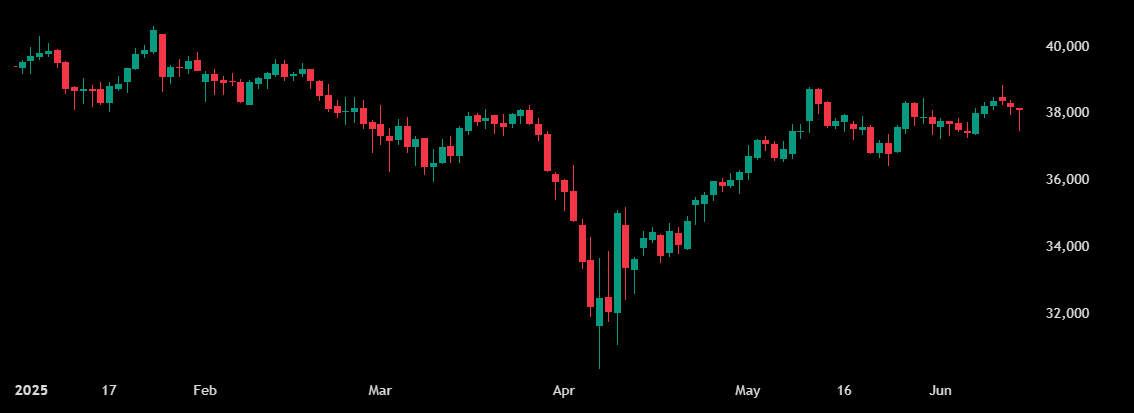
In Japan, the Nikkei 225 opened lower on Middle East geopolitics and drifted sideways, finishing off 0.9%. A stronger yen dented export issues.
The benchmark Nikkei 225 fell 338.84 to 37,834.25, as losing issues outnumbered gainers 176 to 46.
Leading the upside was games-maker Nexon, up 8.4%, while internet-services outfit LY declined 5.3%.
In economic news, Japan’s index of industrial production rose 0.5% on year in April, but fell a seasonally adjusted 1.1% from March, according to the Ministry of Economy, Trade & Industry (METI).
In Hong Kong, the Hang Seng Index opened evenly but declined in trading, finishing off 0.6% on Middle East war reports.
The broad gauge Hang Seng rose 142.82 to 23,892.56, as losing issues outnumbered gainers 49 to 34. The Hang Seng TECH Index lost 1.7% on the day, but the Mainland Properties Index rose 0.9%.
Property issues gained after the People’s Bank of China disclosed a fresh “reverse repo” program for the second time this month, in a bid to boost bank funds available for lending.
Leading the upside was Chow Tai Fook Jewelry, gaining 5.4%, while Sunny Optical Technology declined 5%.
On the mainland, the Shanghai Composite fell 0.8% to 3,370.00.
On the other regional exchanges, the S. Korean KOSPI fell 0.9%; the Taiwan TWSE declined 1%; the Australian ASX 200 declined 0.2%; the Singapore Straits Times Index fell 0.3%, and the Thai Set declined 0.5%. In late trading in Mumbai, the Sensex was down 0.7%
Nikkei 225 Index
 June 13, 2025 at 1:27 pm #26251
ING Comments on Euro, Sterling, Poland’s Zloty, Hungary’s Forint, Czech Republic’s Koruna
The euro generally dislikes geopolitical shocks leading to higher energy prices, and has, as such, detached from Japan’s yen and Swiss franc in early price action after the Israeli strike on Iran, said ING.
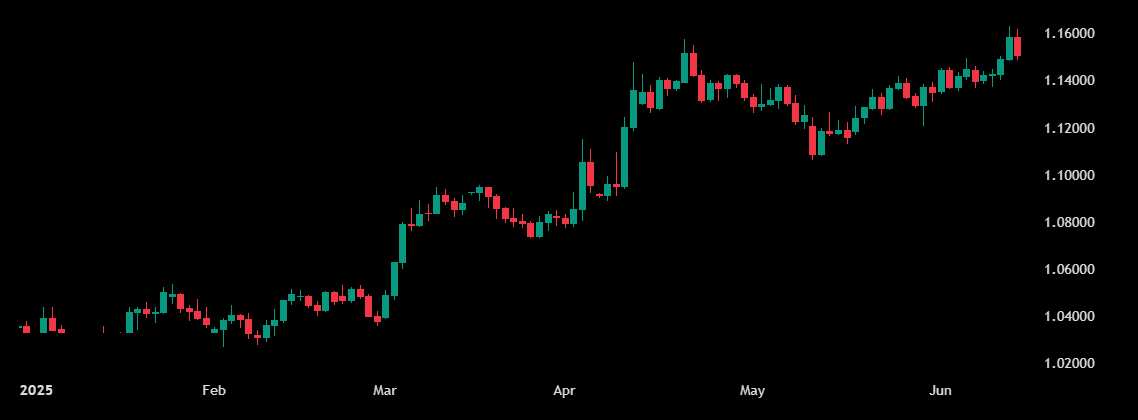
This is a trigger for an unwinding of stretched longs on EURUSD, which, according to the bank’s model, briefly reached a two-standard-deviation overvaluation relative to short-term drivers on Thursday.
That is just above the 5% “misevaluation,” which ING has assessed as the peak, where further rallies would need to be justified either by a substantial shift in rate differentials — higher EUR short-term rates or lower US dollar short-term rates — or another material deterioration in the United States debt market. That overvaluation sits at 4% after early Friday’s correction.
From a European Central Bank perspective, oil market volatility likely endorses its cautious tone on further easing, and potentially pushes the chances of the last 25bps cut of the cycle more to Q4 2025 rather than 3Q — mirroring the current market preference, stated OING.
Anyway, the bank likely needs to wait for next week’s ECB speakers to get a better sense of what this all means for monetary policy. Given the fast-moving geopolitical situation, it’s definitely too early to draw conclusions just yet. EURUSD will likely follow that situation closely and primarily via the oil price channel.
However, the bank thinks the starting point was already quite rich for the pair, and a return to the 1.14-1.15 seems entirely appropriate.
The week has been a rather negative one for sterling’s domestic drivers, pointed out ING. April gross domestic product surprised on Thursday with a 0.3% month-on-month contraction, and the bank noted how growth may well get worse later in the year.
Adding to that, payrolls dropped significantly in May, and a relatively uneventful spending review event did very little to suggest the government can dodge tax rises at the fall budget.
In line with ING’s call, EURGBP has broken above 0.8500, and prolonged geopolitical turmoil in the Middle East should drive further gains in the pair, where the bank retains a bullish bias.
Cable has potentially a wide room for downside correction given how expensive it looks relative to rate differentials, added ING. But the bank has seen how structurally bearish USD bets are preventing US dollar gains from being sustainable. So, ING is more “cautious” on that side.
In the foreign exchange market, a weaker US dollar further supports stronger Central and Eastern European (CEE) currencies, according to ING. On the other hand, on Thursday, the bank saw a slight correction in rates after a sharp rise in previous days — a move that also pared back recent foreign exchange gains.
However, the picture for CEE currencies still looks more bullish. The Czech Republic’s koruna (CZK) in particular should continue its gradual gains, while Poland’s zloty (PLN) and Hungary’s forint (HUF) seem more of a mix to ING.
 June 13, 2025 at 1:10 pm #26250June 13, 2025 at 1:08 pm #26249June 13, 2025 at 12:50 pm #26247June 13, 2025 at 12:22 pm #26242June 13, 2025 at 12:06 pm #26241
BTCUSD – Bitcoin
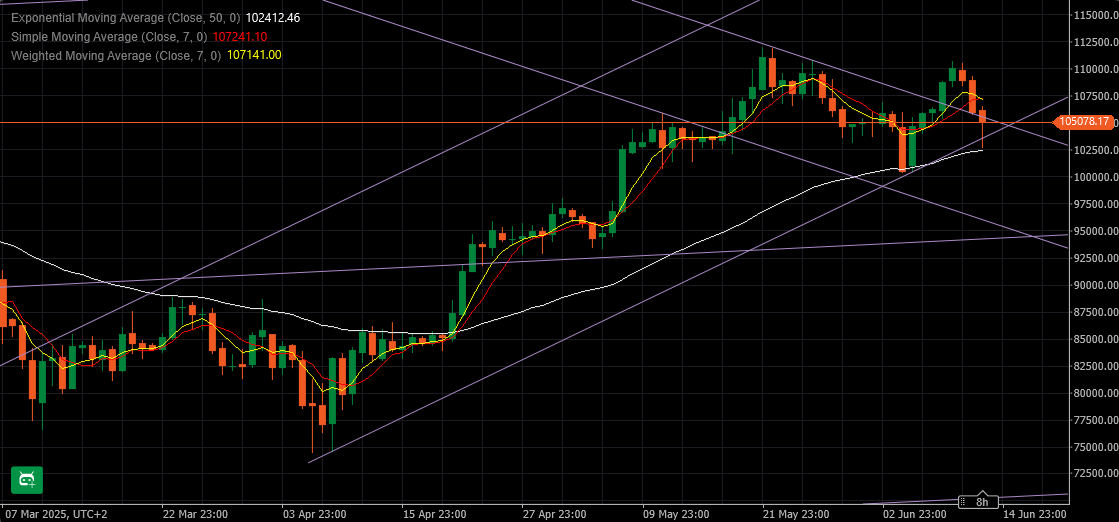
Bitcoin dived to 102.715 overnight but rebounded nicely so far.
That support line that you see on the chart that was briefly broken – on weekly chart it comes at 102.000 – so not even broken, yet.
If BTC manages to return to levels above 107.000 till tonight, this would be considered as just a dip.
Intraday it is pushing up right now, with resistances at:
105.500, 106.560 & 107.000
Supports: 104.445, 103.975 & 103.235
 June 13, 2025 at 11:59 am #26240
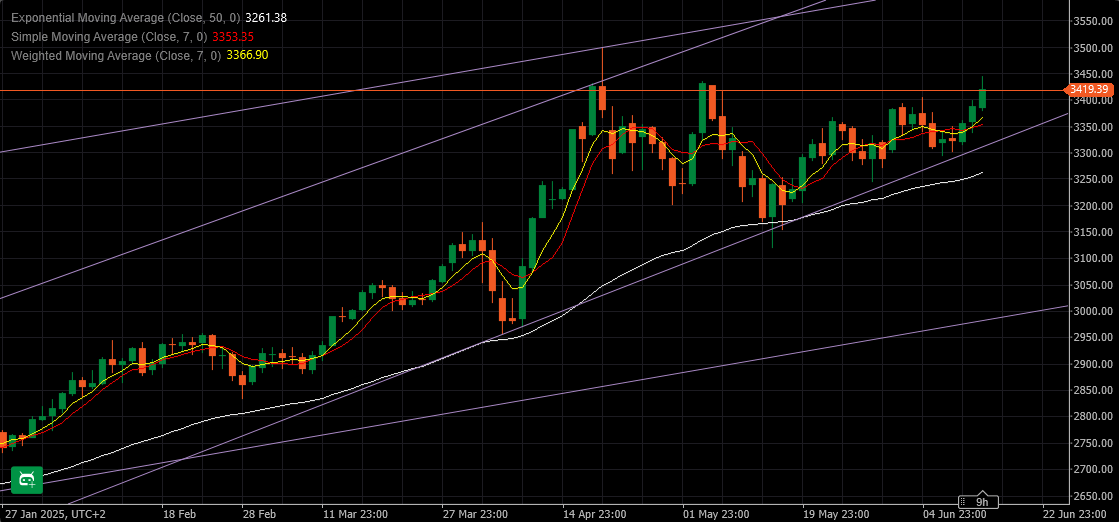
XAUUSD – Gold
Gold behaved as expected – ok few missiles helped a bit, but Pattern never lies J
Now to be able to continue Up at the current speed and angle, it has to stay today above 3405.00 and to close in the vicinity of it.
Next hurdle – and the last one prior to the new high is at 3500.00
I never recommend anyone to hold on a position over weekend, and especially not now!
We’ll continue to monitor it and inform you on any new developments
 June 13, 2025 at 11:47 am #26239
DAX
In the aftermath of last night’s news, Dax just slides down…
Now technical view is secondary – still works, but levels might be quite stretched.
Supports: 23.265, 23.155 & 22.870
Resistances: 23.700, 23.835 & 23.920
Now we can only hope that this shebang is not going to end up like in April of this year.
I would settle for 22.400 as a good bet for support, but stays to be seen
If however it does prove to be a strong support, DAX would be in a perfect position to advance, once this newest mess is over.
 June 13, 2025 at 11:26 am #26238June 13, 2025 at 11:02 am #26237June 13, 2025 at 10:59 am #26236June 13, 2025 at 10:42 am #26235June 13, 2025 at 10:36 am #26234
USDX (U.S. DOLLAR INDEX)
Correcting from a double bottom around 97.63
To break current momentum, 98.54 needs to be taken out (99.25 is an equivalent 4 hour chart)…. and gap more than filled
For USDX to have more legs to this bounce, , EURUSD (57.6% of the index) would need to move back below 1.15.
Intra-day support: 98.10

USDX 1 HOUR CHART
June 13, 2025 at 10:22 am #26233June 13, 2025 at 9:04 am #26232June 13, 2025 at 9:01 am #26231June 13, 2025 at 8:45 am #26230XTIUSD
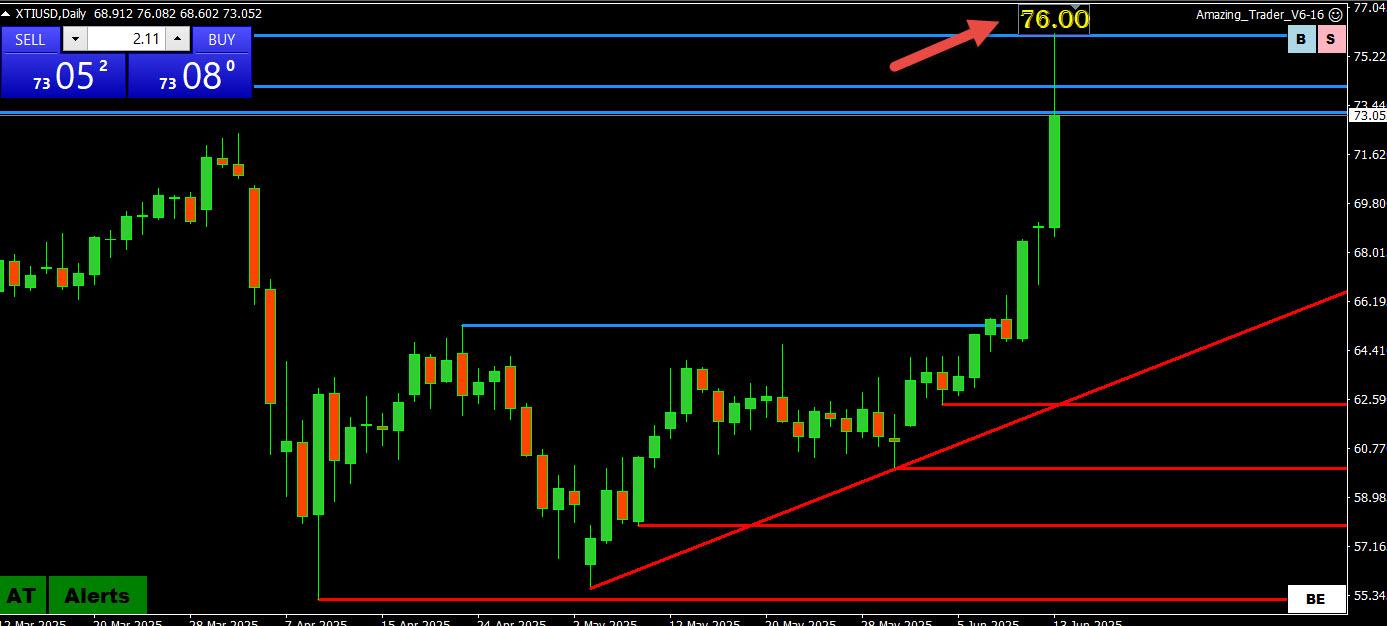
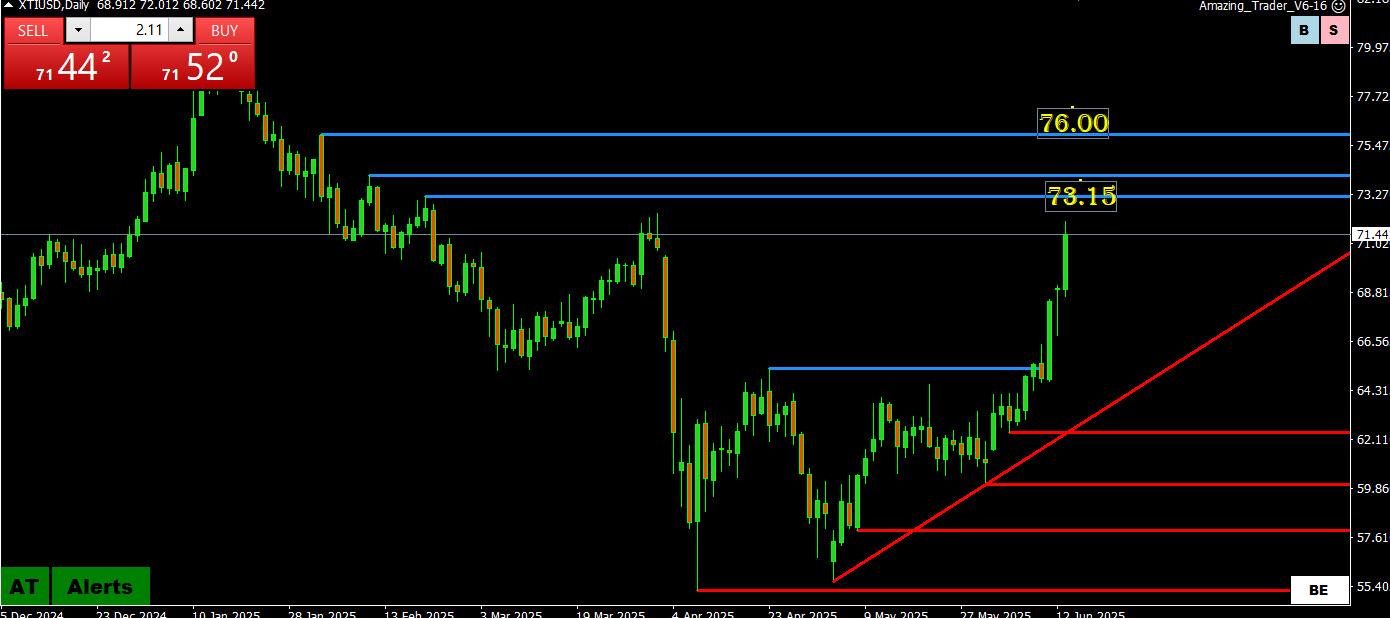
AS POSTED LAST NIGHT :Daily chart shows 73.00-76.00 as a resistance band… intra-day high 75.99
Identifying key levels is no coincidence when using The Amazing Trader. It creates order out of chaos. See more details and claim your 30 day free trial
It is a stretch to suggest technicals drive the price action in a geopolitical crisis but today’s high sets 76.00 as a key level
XTIUSD DAILY CHART
 June 13, 2025 at 8:29 am #26229June 13, 2025 at 8:16 am #26228
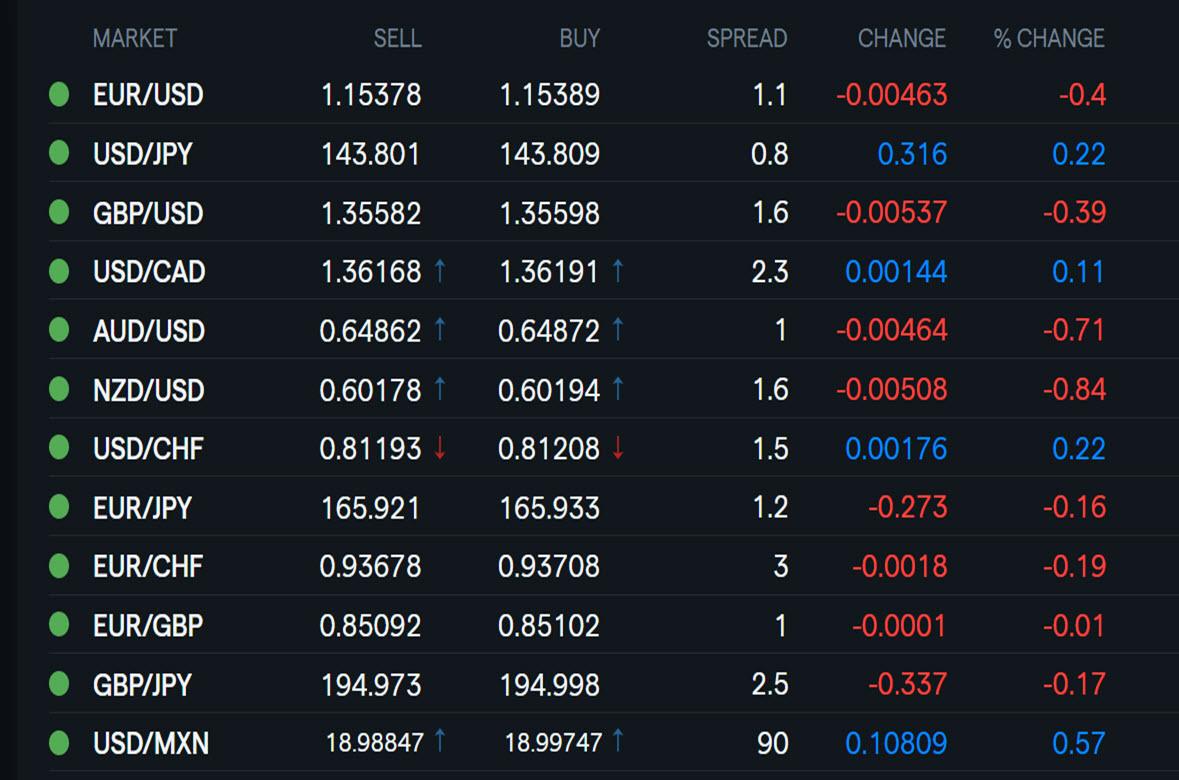
Using my platform as a HEATMAP shows…
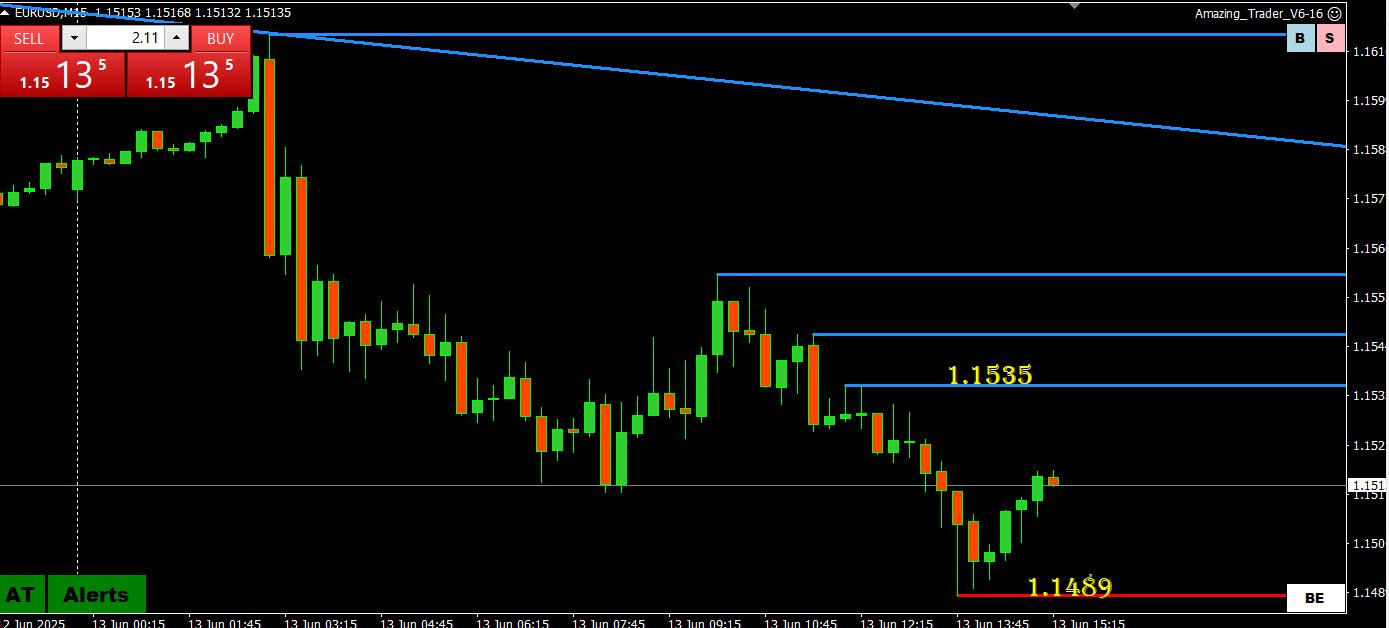
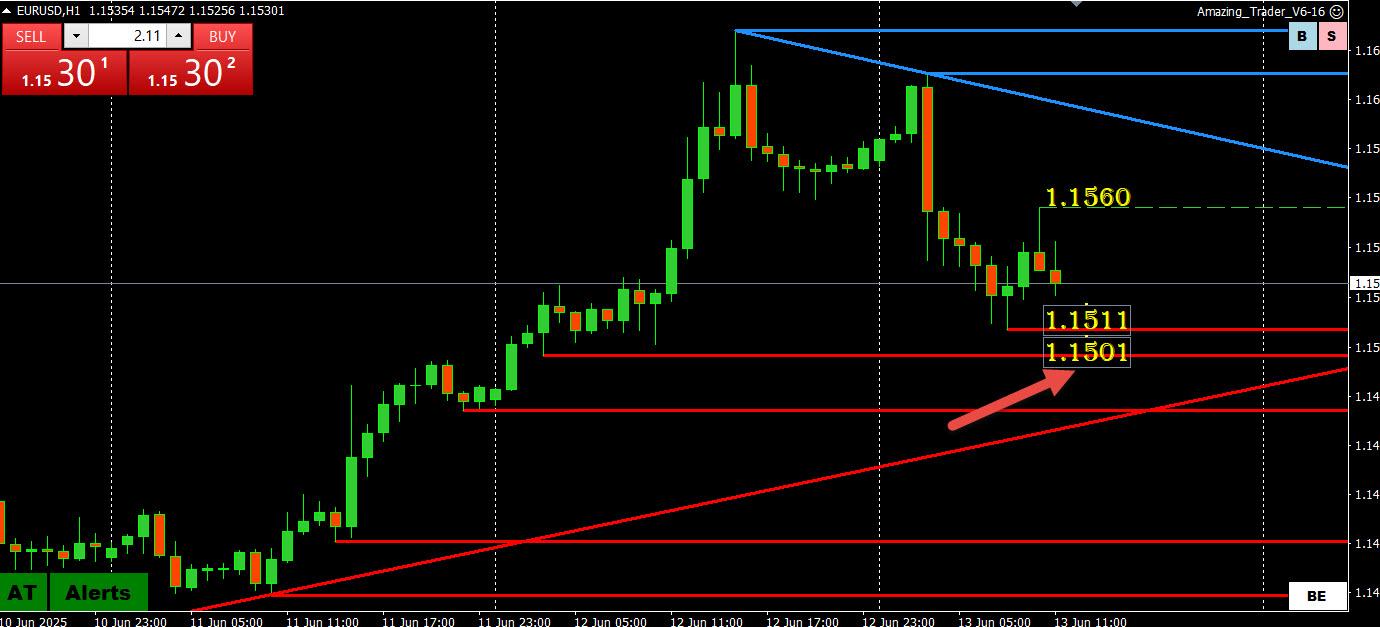
.. the dollar trading higher although so far contained with EURUSD holding above 1.15 (low 1.1511)
Risk off but in a wait and see mode
Gold spiked above 3400 but is off its high
Crude spiked but is off its high
Stocks fell sharply but off its lows
US bonds steady
Focus: Waiting for Iran to retaliate. So far it has just been drones.
Event risk is not just Iran’s response but whether the conflict escalates.
Expect defensive trading into the weekend given the event risk.
To suggest a greater run for cover, the overngiht lows (GOLD and crude oil highs) would need to be broken.
 June 13, 2025 at 7:49 am #26227June 13, 2025 at 5:05 am #26226
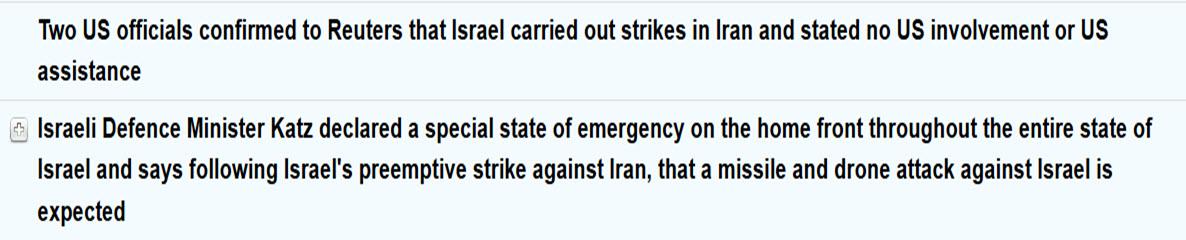
Israel launched a stunning series of strikes against Iran on Friday morning, targeting nuclear and missile facilities and killing the nation’s top three generals. Fears grew that the long-simmering tensions between the heavily armed rivals could explode into a full-blown regional war.
Israel described the strikes as a pre-emptive step to keep Iran from acquiring nuclear weapons. In addition to nuclear targets, Israel also struck Iran’s air defenses, long-range missile facilities, weapons depots, laboratories and the homes and headquarters of senior officials, according to Israeli defense officials. NYT
June 13, 2025 at 4:45 am #26225CNN
Israel strikes Iran nuclear sites and military leadership, as Middle East braces for retaliation
Military leaders killed: General Hossein Salami, the commander-in-chief of Iran’s Islamic Revolutionary Guard, was among those killed in the attack. He was among the country’s most powerful figures. The attack also killed Major General Mohammad Bagheri, Iran’s highest-ranking military officer.
June 13, 2025 at 4:36 am #26224June 13, 2025 at 1:07 am #26223June 13, 2025 at 12:45 am #26222June 13, 2025 at 12:40 am #26221Typically the USD acts as a safe haven in a geopolitical crisis… a risk given a market short USD.. other safe havens CHF, JPY and GOLD.(spiked above 3400),,,.. stocks have taken a hit
Event risk: Retaliation by Iran
 June 13, 2025 at 12:29 am #26220June 13, 2025 at 12:09 am #26219
-
AuthorPosts










- You must be logged in to reply to this topic.
Search
© 2024 Global View