
- This topic has 28,269 replies, 54 voices, and was last updated 34 minutes ago by Belgrade Bobby.
-
AuthorPosts
-
June 3, 2025 at 7:11 pm #25781June 3, 2025 at 7:08 pm #25780June 3, 2025 at 6:35 pm #25779June 3, 2025 at 6:15 pm #25778June 3, 2025 at 6:11 pm #25777June 3, 2025 at 4:48 pm #25776June 3, 2025 at 3:53 pm #25775
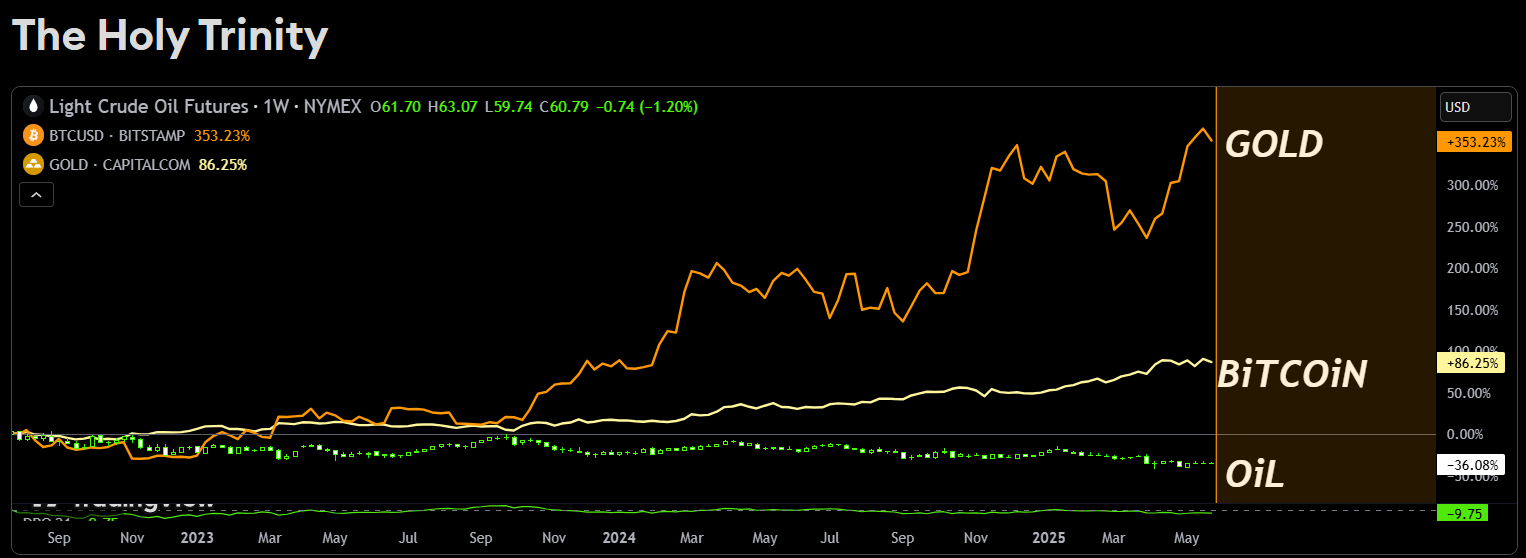
BofA Sees Crude Futures Flipping to Contango in Summer as Inventory Builds
Crude oil’s futures curve will likely switch to contango this summer from the current backwardation as global inventory is expected to build which would ease supply tightness, Bank of America energy analysts said Tuesday.
The bank said in a note that the front portion of the West Texas Intermediate and Brent futures curves are both backwardated now because of low inventory balances since the beginning of the year, while the back portion of the curves are in contango.
BofA said that the backwardation-contango combination is giving rise to a rare “hockey stick” crude futures term structure, showing that unique market condition for the first time in recent years.
Backwardation refers to a market structure in which the prompt market price of a commodity is higher than that of future deliveries, while contango is the exact opposite when future deliveries are pricier than current ones.
The bank said the contango further out on the crude curve suggests that the market expects rising global inventories due to planned supply increases by OPEC and its allies as well as slower global economic growth due to trade restrictions.
BofA said a recent decline in crude’s net short position is indicating softening bearish investor sentiment. However, tariffs are expected to settle at the highest rates in decades even though they have been scaled back from initial levels.
The bank predicted oil prices will likely stay rangebound for the remainder of the year. BofA forecast spot WTI and Brent crude to be around $72/bbl and $75/bbl, respectively, at the end of December.
Over a one-month horizon, BofA recommends an “underweight” position for WTI, Brent, gasoline, natural gas, livestock, agricultural and soft commodities, and an “overweight” position for gold, silver, copper and soybean meal.
Over a six-month horizon, however, the bank expects positive returns for the spot prices of the energy complex.
 June 3, 2025 at 3:40 pm #25774June 3, 2025 at 3:39 pm #25773June 3, 2025 at 3:10 pm #25770
What’s Hot and What’s Not?

What’s hot?
Stocks… reversing early losses
Dollar higher… in order of currency strength
CAD (firmest vs USD)
GBP
AUD
EUR
NZD
CHF
JPY (Weaskest vs USD)US bonds: More lukewarm with yields dipping slightly despite risk on
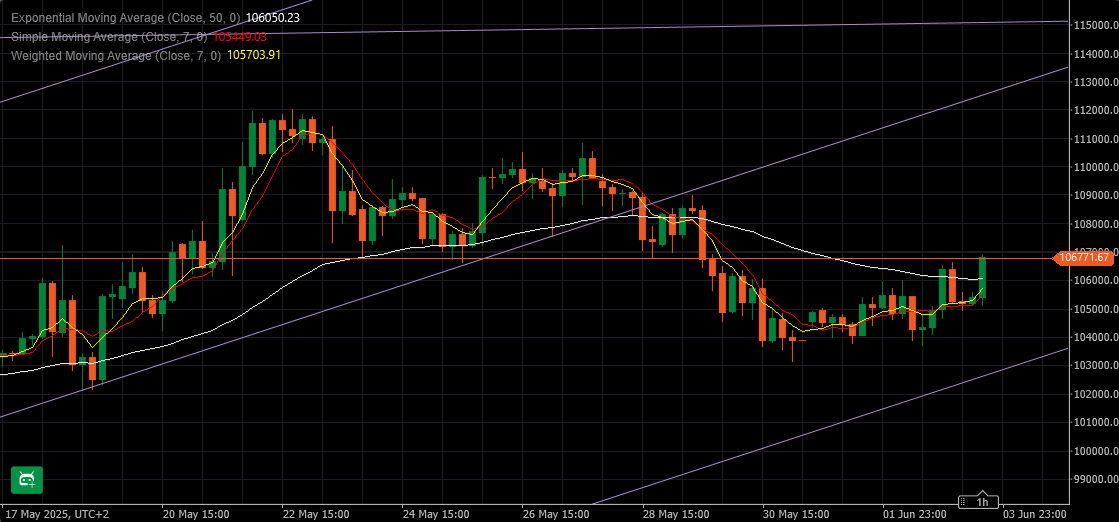
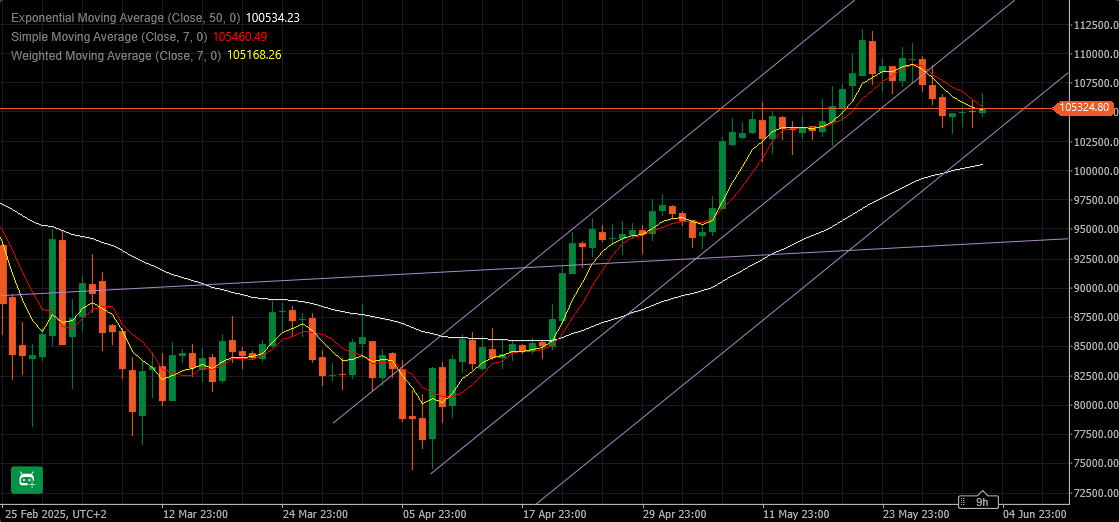
BITCOIN: Correlating with risk on
Crude Oil: Up but facing resistance
What’s Not
Currencies vs. the dollar (led by JPY and CHF)
GOLD: Backing off after breakout yesterday
June 3, 2025 at 2:56 pm #25769June 3, 2025 at 2:38 pm #25768June 3, 2025 at 2:25 pm #25767June 3, 2025 at 2:06 pm #25766June 3, 2025 at 1:54 pm #25763June 3, 2025 at 1:36 pm #25762June 3, 2025 at 1:21 pm #25761June 3, 2025 at 1:18 pm #25760FX options market positioned for further dollar weakness
Key points:
· Investors are increasingly buying put options on the dollar
· FX options market signals further dollar weakening
· Investors favor USD puts over calls, indicating bearish sentiment
· Euro and yen show strong demand against the dollar
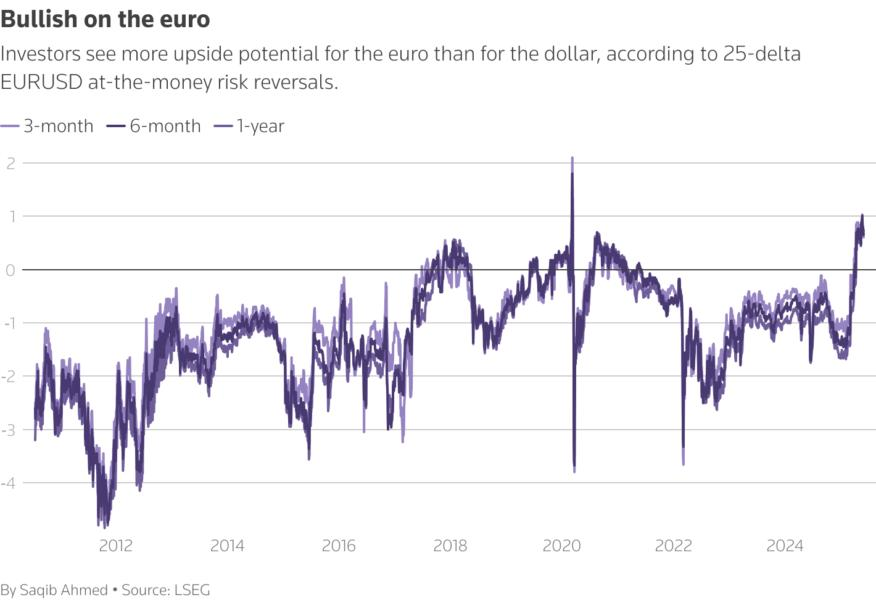
· EUR/USD risk reversal measures are near highest level on records dating to 2007
· Although relief rallies are possible, experts predict that the overall trend for the dollar is downward
The U.S. dollar has steadied after a sharp tumble this year but traders in the foreign exchange options market are positioned for the U.S. currency to weaken further amid growing concern about the U.S. economy and persistent trade-related tensions.
The options market can offer a view on how investors and traders expect currencies to fare months down the line.
“FX option prices in general continue to point to a greater risk of further dollar weakening,” said Tim Brooks, head of FX options at Optiver. “From our perspective there is no clear single large position, but relative to the past 5-10 years, we see unprecedented demand from investors to own USD puts in comparison with at-the-money options or USD calls.”
Put options confer the right to sell the underlying security at a fixed price and date and are typically bought to express a bearish view. Their bullish counterpart is the call option, which grants the right to buy at a set price and known time frame.
Because the foreign exchange market quotes currencies in pairs like dollars per euro EURUSD, and yen per dollar USDJPY, a bullish position on the euro indicates a bearish view on the dollar.
FX risk reversals, a type of options strategy that involves the simultaneous purchase of a put option and sale of a call, or vice versa, are useful indicators of which currency is seeing more demand.
According to LSEG data, the three-month (EUR3MRR=FN), six-month (EUR6MRR=FN), and one-year (EUR1YRR=FN) 25-delta EURUSD at-the-money risk reversal measures just edged off their highest level of bullishness for the euro against the dollar on records dating to 2007, apart from a brief interlude during the 2020 pandemic’s market disruption.
 June 3, 2025 at 1:06 pm #25759
US Dollar Rises Early Tuesday Before Busy Data Schedule, Fed Speakers
The US dollar rose against its major trading partners early Tuesday ahead of a busy day of economic data releases, starting with weekly Redbook same-store sales at 8:55 am ET.
Factory orders and job openings data for April are due at 10:00 am ET, followed by consumer sentiment data for June around 10:10 am ET.
Chicago Federal Reserve President Austan Goolsbee is due to speak at 12:45 pm ET, followed by Fed Governor Lisa Cook at 1:00 pm ET and Dallas Fed President Lorie Logan at 3:30 pm ET.
A quick summary of foreign exchange activity heading into Tuesday:
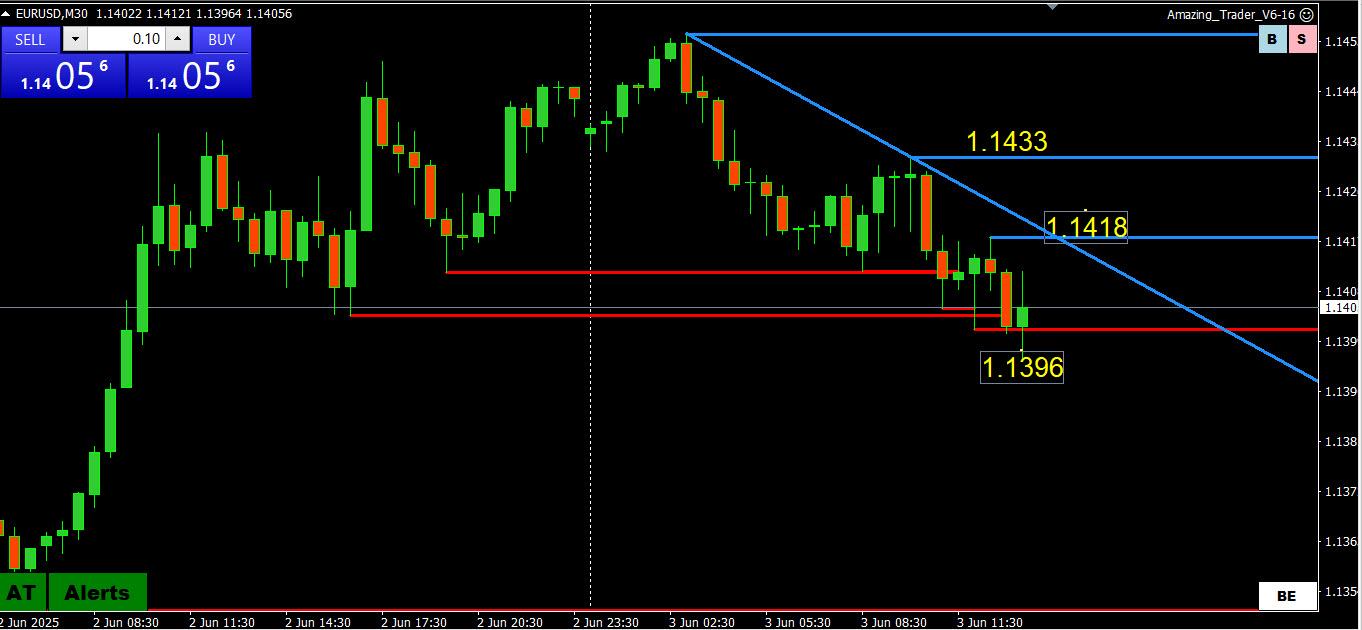
EURUSD fell to 1.1403 from 1.1445 at the Monday US close and 1.1419 at the same time Monday morning. Eurozone consumer prices were flat in May, slowing the year-over-year growth rate, while the unemployment rate declined modestly in April, according to data released earlier Tuesday. European Central Bank President Christine Lagarde is due to speak at 12:00 pm ET. The next European Central Bank meeting is scheduled for Thursday, when a 25-basis point rate reduction is expected.
GBPUSD fell to 1.3510 from 1.3547 at the Monday US close and 1.3536 at the same time Monday morning. There are no UK data on Tuesday’s schedule. The next Bank of England meeting is scheduled for June 19.
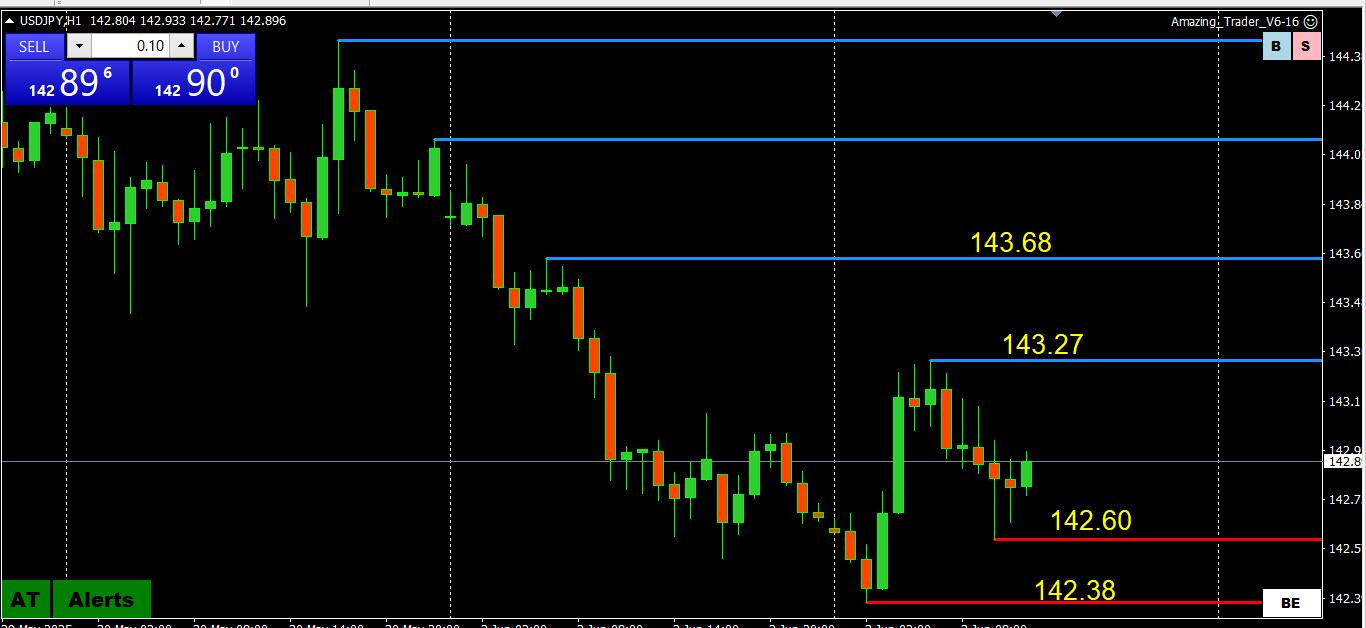
USDJPY rose to 143.0657 from 142.6914 at the Monday US close and 142.8175 at the same time Monday morning. There were no Japanese data released overnight. Bank of Japan Governor Kazuo Ueda said that the BOJ will not move rates higher until economic conditions allow for it and is not planning to increase rates just to allow room for future rate reductions. The next Bank of Japan meeting is scheduled for June 16-17.
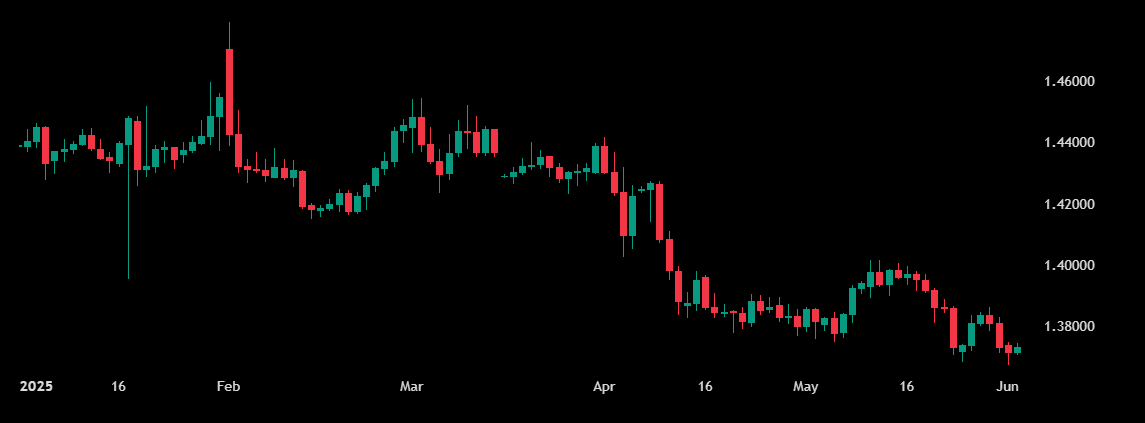
USDCAD rose to 1.3735 from 1.3703 at the Monday US close and 1.3696 at the same time Monday morning. There are no Canadian data on Tuesday’s schedule. The next Bank of Canada meeting is scheduled for Wednesday, when no change in policy is expected.
USDCAD Chart
 June 3, 2025 at 12:58 pm #25758
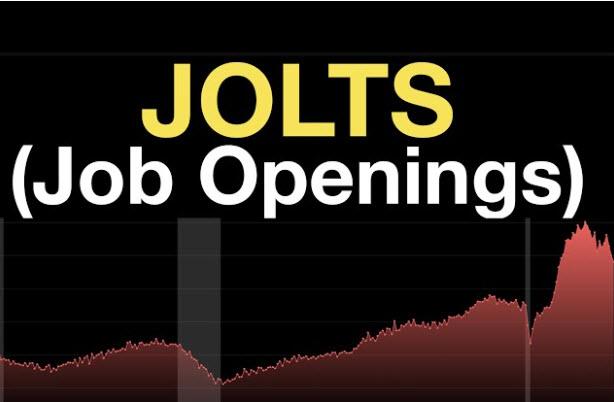
JOLTS
Attention shifts next to the JOLTS report as focus is on any data related to employment.
JOLTS stands for the Job Openings and Labor Turnover Survey, a monthly report published by the U.S. Bureau of Labor Statistics (BLS). It provides key insights into the demand side of the labor market,
Job Openings: The number of unfilled jobs available at the end of the month. A high number suggests strong labor demand and vice versa.
 June 3, 2025 at 12:22 pm #25757June 3, 2025 at 12:20 pm #25756
Data on deck
US factory orders and JOLTS… the latter should get the most attention
June 3, 2025 at 12:13 pm #25755June 3, 2025 at 12:03 pm #25754June 3, 2025 at 11:58 am #25753June 3, 2025 at 10:51 am #25752June 3, 2025 at 10:06 am #25751June 3, 2025 at 10:03 am #25750June 3, 2025 at 9:54 am #25749June 3, 2025 at 9:23 am #25748 -
AuthorPosts









- You must be logged in to reply to this topic.
Search
© 2024 Global View