
- This topic has 28,268 replies, 54 voices, and was last updated 3 minutes ago by GVI Forex 2.
-
AuthorPosts
-
June 5, 2025 at 5:22 pm #25893June 5, 2025 at 4:32 pm #25892June 5, 2025 at 3:41 pm #25889
What’s Hot and What’s Not?
What’s Hot
All currencies except the JPY vs up the USD although moves have cooled after EURUSD failed to test 1.15
US stocks trying to heat up after a whipsaw day
What’s Not
JPY the only currency not up vs the USD today
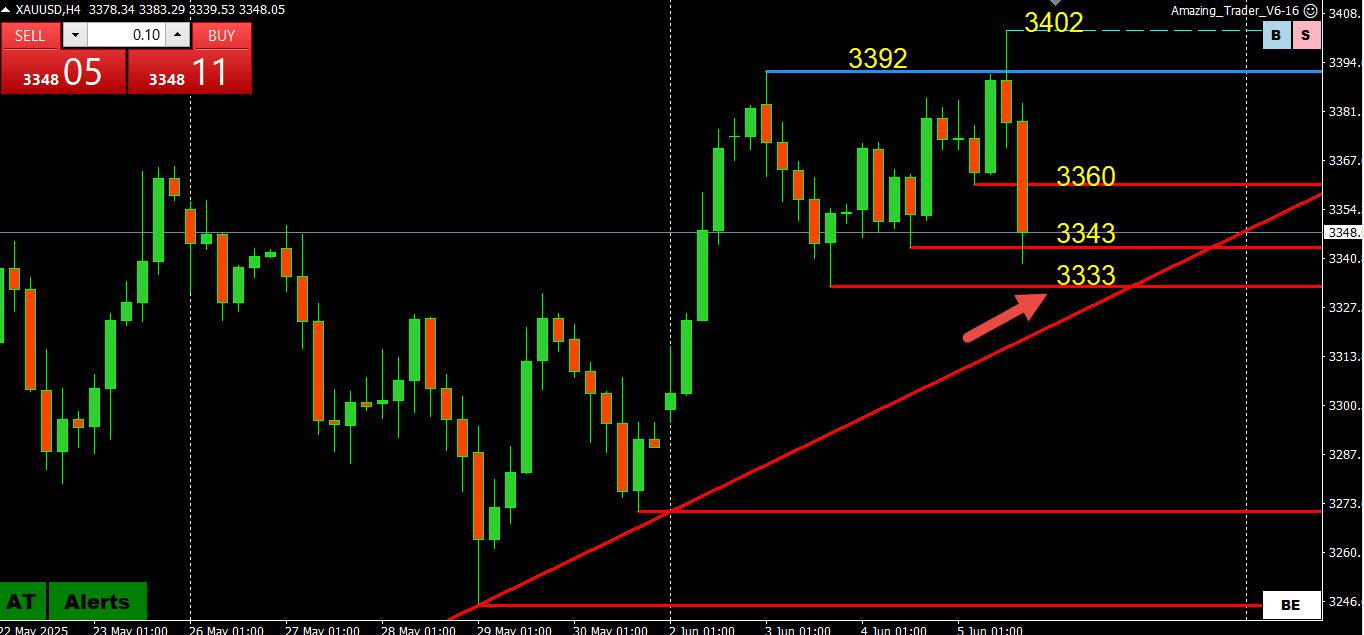
GOLD, hot earlier but has since cooled after failing to sustain a 3392 break (high 3402)
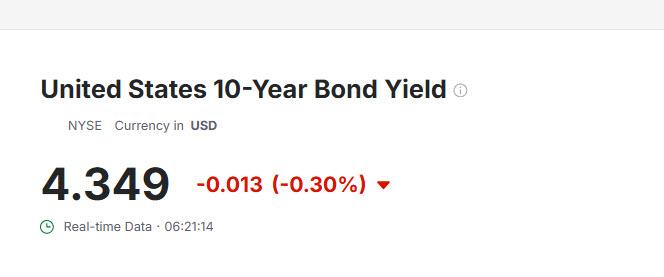
US bonds: Yields up after falling earlier in the session
 June 5, 2025 at 3:12 pm #25888June 5, 2025 at 2:52 pm #25887June 5, 2025 at 2:51 pm #25886June 5, 2025 at 2:26 pm #25885June 5, 2025 at 2:19 pm #25884June 5, 2025 at 2:15 pm #25883June 5, 2025 at 1:54 pm #25882
US500 (SP500)
Here is where ther6006 resistance came from… on an AT Daily Chart
US500 (SP500) DAILY CHART
 June 5, 2025 at 1:49 pm #25881June 5, 2025 at 1:34 pm #25880June 5, 2025 at 1:24 pm #25879June 5, 2025 at 1:20 pm #25878June 5, 2025 at 1:16 pm #25877June 5, 2025 at 1:10 pm #25876
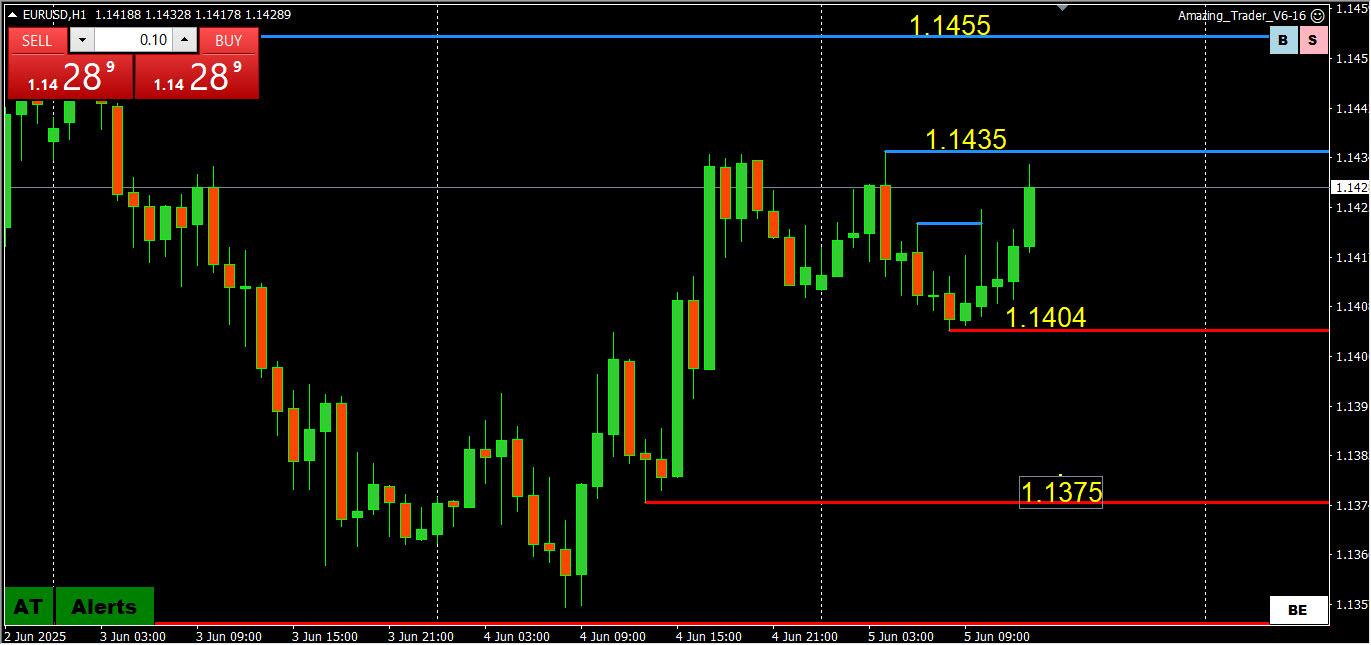
EURUSD got a lift af’ter this comment — High so far 1.1449 set post data, 1 pip shy of the Power’ of 50 level at 1.1450 and the key 1.1455′ resistance
 June 5, 2025 at 12:53 pm #25875
Stocks pop, USD follows on Trump-Xi headline… watch for details from BOTH sides given Trump’s tendency to paint a rosy picture.
 June 5, 2025 at 12:51 pm #25874
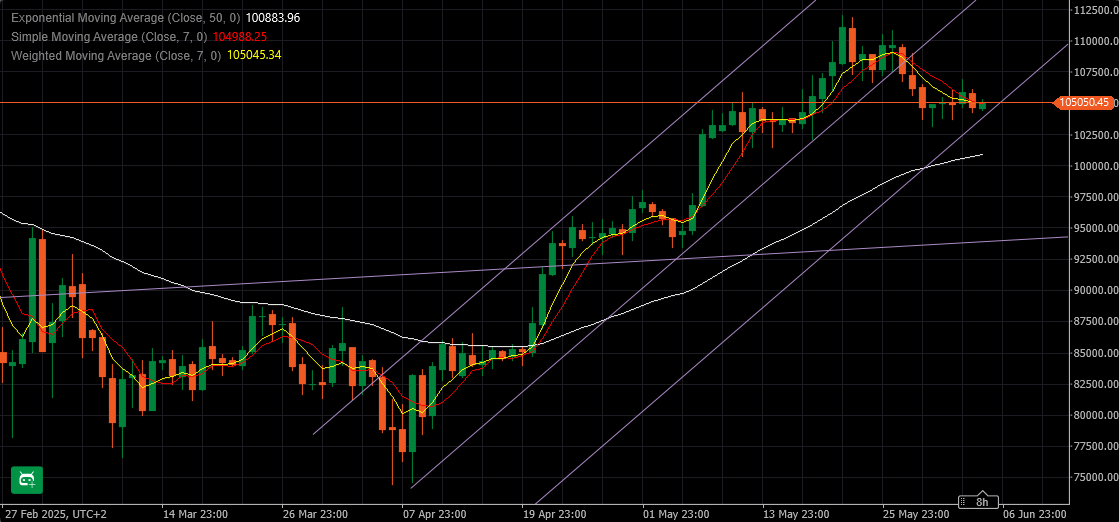
Bitcoin supply shock? Percentage of BTC on exchanges nears 2018 levels
Key takeaways:
· Bitcoin’s percent supply on exchanges has dropped below 11% for the first time since 2018.
· Institutional adoption is accelerating BTC withdrawals from public exchanges.
· Trust in centralized platforms is shaky post-FTX.
Bitcoin’s BTCUSD percent supply on exchanges has dropped to near seven-year lows, falling below 11% for the first time since March 2018, according to Glassnode data.
The peak occurred around March 2020, when over 17.2% of the BTC supply was held on exchanges. Since then, over 6% of the total supply, or roughly 1.26 million BTC, has been withdrawn from exchange wallets.
Bitcoin’s Holding rises to a two-year high
Bitcoin investors are holding onto their coins at the highest level in over two years, according to the latest Exchange Flows to Network Activity Ratio chart by CryptoQuant.
The ratio, measuring the volume of BTC flowing to exchanges relative to on chain network activity, has fallen to its lowest reading since early 2023, signalling subdued exchange deposits despite rising prices.
Historically, such low levels have marked periods of strong conviction among long-term Bitcoin holders, with investors preferring cold storage to trading.
This reduces available supply, with fewer coins potentially up for sale even as Bitcoin nears all-time highs.
Institutional custodians replacing crypto exchanges
The rise of institutional custody solutions is another major factor behind Bitcoin’s decreasing supply across exchanges.
Instead of public exchanges, large financial institutions like BlackRock, Fidelity, and Franklin Templeton prefer third-party custody platforms.
Coinbase Prime, for example, reported over $212 billion in assets under custody in Q1 2025, driven by “inflows from ETF issuers, corporations, and high net worth individuals.”
 June 5, 2025 at 12:44 pm #25873June 5, 2025 at 12:43 pm #25872June 5, 2025 at 12:34 pm #25869
Weekly Jobless claims miss … higher than expected.. highest since Oct 25, 2024
 June 5, 2025 at 12:25 pm #25868
Next up:
US WEEKLY JOBLESS CLAIMS
MONTHLY TRADE BALANCE
key focus will be jobless claims
See our Economic Data Calendar
June 5, 2025 at 12:22 pm #25867June 5, 2025 at 12:14 pm #25865June 5, 2025 at 11:24 am #25864June 5, 2025 at 11:13 am #25863FX, China Economic Report Roil Asian Stock Markets
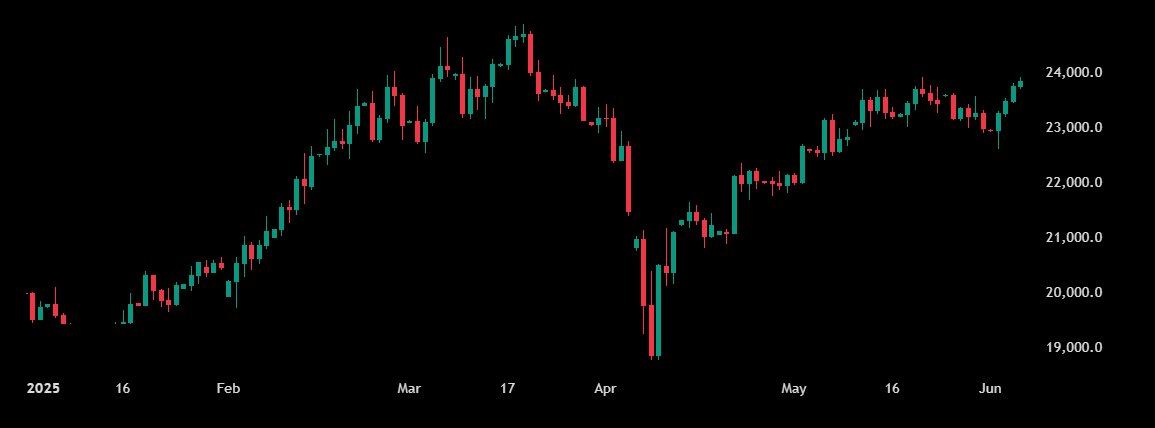
Asian stock markets were mixed on Thursday as traders weighed foreign exchange rates and reports on China’s economy.
Hong Kong and Shanghai finished in the green, while Tokyo lagged. Other regional exchanges gained ground.
In Japan, the Nikkei 225 opened lower and failed to recover, finishing down 0.5% as a stronger yen undercut export-related issues.
The benchmark Nikkei 225 fell 192.96 to 37,554.49, as losing issues outnumbered gainers 181 to 41.
Leading the upside was semiconductor manufacturing equipment maker Lasertec, up 5.6%, while Sumitomo Pharma declined 6.7%.
In Hong Kong, the Hang Seng Index finished up 1.1% after a report indicated China’s service sector was expanding.
The broad gauge Hang Seng rose 252.94 to 23,906.97, as gaining issues outnumbered losers 60 to 21. The Hang Seng TECH Index gained 1.9% on the day, while the Mainland Properties Index rose 1.2%.
Leading the upside was smart phone components maker Sunny Optical Technology, gaining 5.6%, while shipping line Orient Overseas International declined 5.9%.
On the mainland, the Shanghai Composite rose 0.2% to 3,384.10.
In economic news, the headline final China services purchasing managers index (PMI) posted at 51.1 in May, up from 50.7 in April, and striking further above the 50-mark that separates growth from contraction, reported S&P Global.
The China composite PMI, a combination of the service and manufacturing sectors, declined to 49.6 in May, down from 51.1 in April, due to a soft factory segment, added S&P Global.
On the other regional exchanges, the S. Korean KOSPI rose 1.5%; the Taiwan TWSE advanced 0.3%; the Australian ASX 200 was steady; the Singapore Straits Times Index rose 0.4%, and the Thai Set gained 0.8%. In late trading in Mumbai, the Sensex was up 0.6%.
Hangseng Chart
 June 5, 2025 at 10:45 am #25862June 5, 2025 at 10:44 am #25861
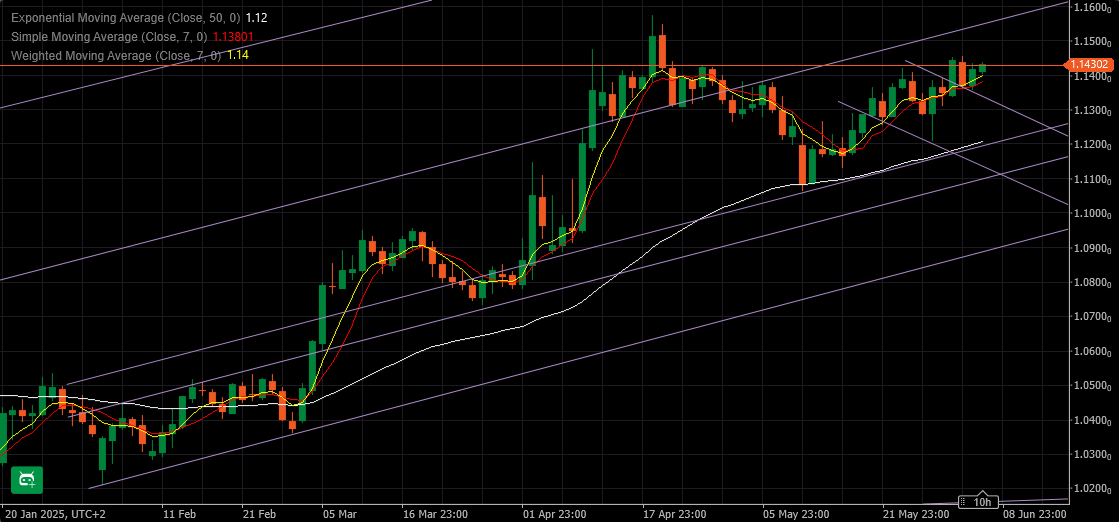
EURUSD
EUR started this morning straight in our direction.
As I said, it is most important that EURUSD overcomes 1.14550 today to be able to continue towards 1.15400
In next 2h it has to hold on the gains and push through 1.14350 and later on 1.14550
Supports: 1.14200, 1.14100 & 1.13800
Right now pressure is Up, but we need to take out 1.14350 soon, to avoid any intraday correction.
 June 5, 2025 at 10:28 am #25860June 5, 2025 at 10:09 am #25859
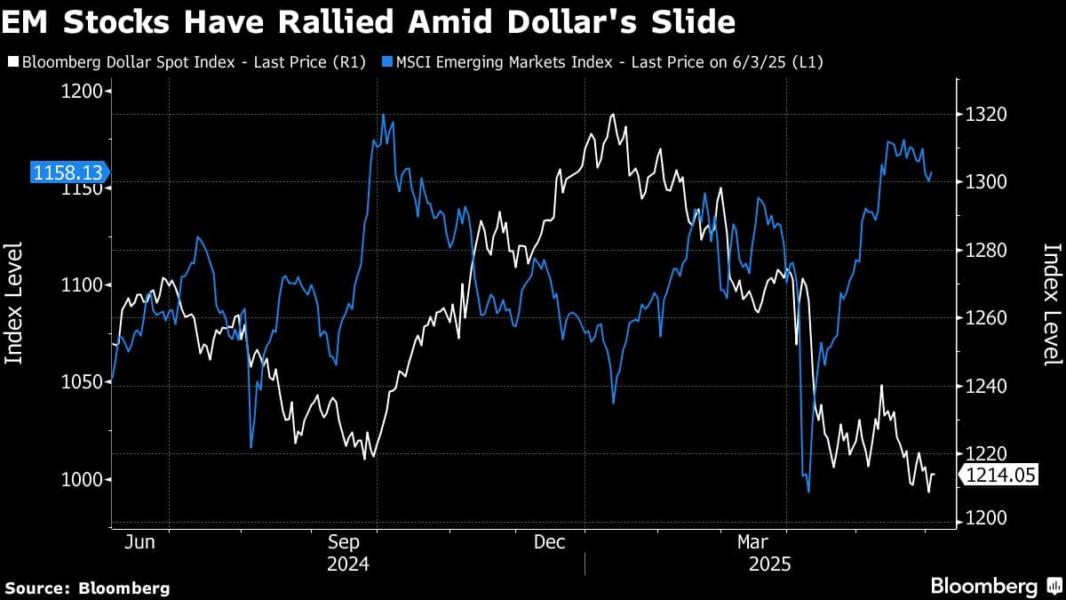
BofA’s analyst expects more emerging market gains as Dollar drops
Emerging-market assets look poised to deliver “several percent” returns this year on expectations of a continued decline in the US dollar, according to BofA Securities.
BofA Securities is bullish on the Eastern European currencies and equities. In fixed income, Brazil remains its top pick as interest rates are very high in the South American nation and rate cuts could begin by the end of the year
The US dollar is trading near two-year lows. Wall Street banks, including Morgan Stanley and JPMorgan Chase & Co., expect further weakness in the US currency due to likely interest-rate cuts, slowing economic growth, and ongoing fiscal and trade policy uncertainty. This may accelerate the rotation of funds from US assets into developing nations.
In a context where the dollar weakens, the currency that improves most among the big currencies is the euro. That normally means that the whole European time zone should be doing best because these currencies benefit most when the euro goes up.
This year’s emerging-market rally has been underpinned by local-currency bonds and stocks. Local sovereign debt has handed investors an average total return of 5.7%, led by Brazil where a carry rush has fuelled a 20% gain. Ten other countries have yielded returns of 10% or more.
Stocks, on their part, have ended seven years of underperformance relative to the US market. The MSCI EM index is beating the S&P 500 by more than 7%, led by China and India.
-
AuthorPosts







- You must be logged in to reply to this topic.
Search
© 2024 Global View