

True or False: Is There a Mar-a-Lago Accord:?
On September 22, 1985, the historic Plaza Accord was signed at the Plaza Hotel in New York City. This agreement brought together finance ministers from the United States, West Germany, France, Japan, and the United Kingdom. Their goal: to intentionally weaken the U.S. dollar in order to reduce trade imbalances and restore economic equilibrium.
This real event appears to have inspired a more speculative concept: the Mar-a-Lago Accord.
What Is the Mar-a-Largo Accord?

The Mar-a-Lago Accord is a theoretical or proposed strategy to restructure global trade and monetary systems to favor the United States. Unlike the Plaza Accord, the Mar-a-Lago Accord has not been officially signed or confirmed, and it’s unclear whether it’s a serious policy plan or speculative concept.
A core idea behind the accord is to devalue the U.S. dollar to address trade imbalances and boost the competitiveness of American exports. To achieve this, the U.S. would negotiate with major trading partners—such as China, Japan, and the European Union—to encourage them to strengthen their currencies relative to the dollar.
Another component of the accord involves restructuring U.S. debt. This would mean converting foreign-held Treasury securities into long-term, low-interest instruments—such as 100-year bonds—to reduce short-term fiscal pressure and lengthen the maturity profile of national debt.
Stephen Miran, the chair of President Trump’s Council of Economic Advisers, and a Ph.D. economist trained at Harvard fand is known for floating the idea of a Mar-a-Lago Accord to restructure the global trading system
Trump’s View on the Dollar and Global Trade
Former President Donald Trump has long criticized the strong U.S. dollar, arguing it hurts domestic manufacturing and leads to job losses. He believes:
-
An artificially strong dollar undermines U.S. industry by making exports expensive.
-
The dollar’s role as the world’s primary reserve currency encourages capital inflows, keeping the currency elevated.
-
A strong dollar increases reliance on foreign imports, weakening American manufacturing.
-
Countries like China subsidize local industries, further tilting the playing field.
-
The U.S. acts as the world’s policeman, incurring massive defense spending and deficits—which are easily financed due to the dollar’s reserve status.
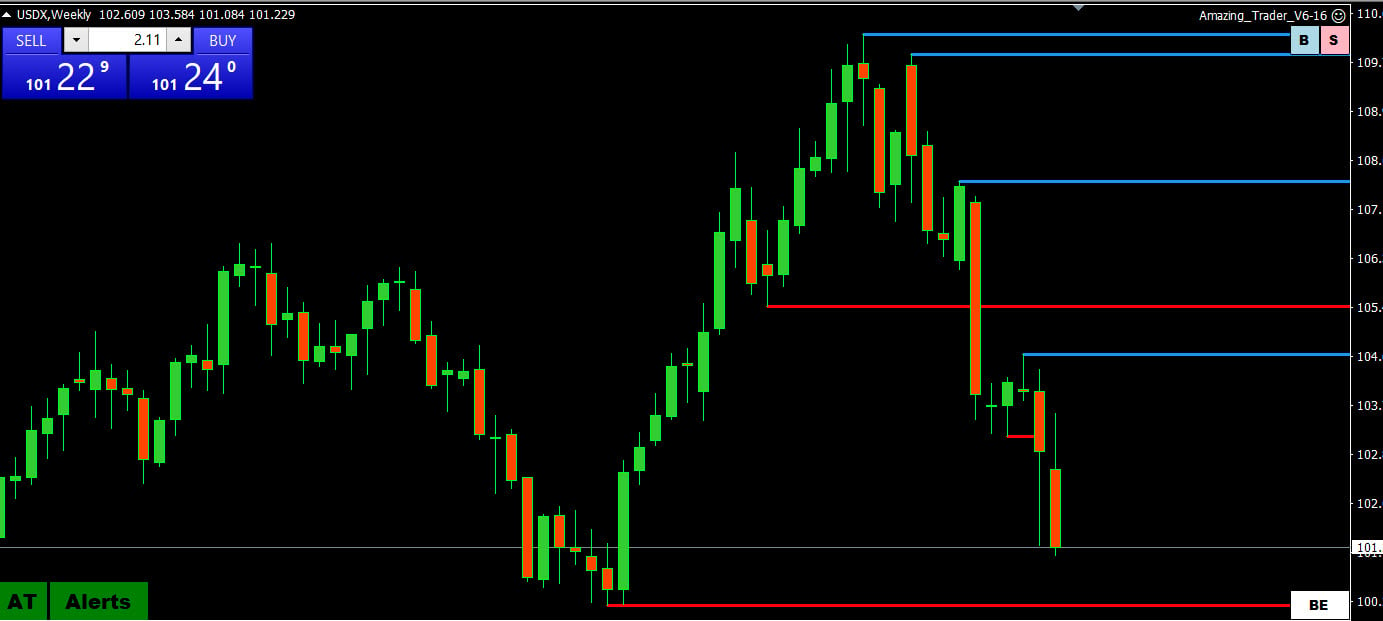
USDX (Dollar Index) Monthly Chart

2025 Is Not 1985: The Dollar in a Multipolar World
The global financial landscape has changed dramatically since 1985. Back then, the dollar dominated international trade and currency markets. Today, we live in a multi-currency world, where the U.S. dollar is no longer the only game in town.
Additionally, the U.S. is in a weaker position diplomatically and economically. It depends heavily on foreign capital and is burdened by growing fiscal deficits, reducing its leverage in any future negotiations like a modern-day Plaza Accord.
Could the Mar-a-Lago Accord Become Reality?
The likelihood of a real Mar-a-Lago Accord taking shape is low. Here’s why:
-
One-Sided Advantage: The plan largely favors the U.S., offering little incentive for other nations to participate—even under the threat of tariffs.
-
Trust Issues: Given past deviations from international norms, many nations may distrust the U.S. to uphold such agreements long-term.
-
Risks to Dollar Reserve Status: A strategic dollar devaluation could undermine its reserve currency role, leading to global economic instability.
-
Debt Renegotiation Concerns: Proposals to rework U.S. debt terms may set a dangerous precedent, spooking investors and making it harder to raise future funds.
It’s especially unlikely that China—a major U.S. trade rival—would take steps to strengthen its own currency if doing so would hurt its export-driven economy.
Final Takeaway: More Fiction Than Fact
While the Mar-a-Lago Accord remains speculative, it may reflect strategic thinking within certain U.S. political circles. Even if it never materializes, the ideology behind it—particularly Trump’s views on a strong dollar—could influence future policy.
In short, if the dollar starts rising significantly, it may trigger headline-worthy moves from U.S. policymakers seeking to rebalance trade and protect American industry.
Join The GTA for FREE – Click HERE
Get Your FREE Trial of The Amazing Trader – Click HERE




Add comment
You must be logged in to post a comment.