Understanding Forex Intervention
Japanese Central Bank Intervention
With the USDJPY climbing to its highest level since February, traders are watching closely for signs of how Japan’s new government might respond.
Japan’s Finance Minister Satsuki Katayama recently delivered another strong verbal warning about currency movements, saying he remains “highly alert” to market fluctuations.
His comments have fueled speculation that official intervention in the forex market could soon follow.
When a country’s currency moves too far or too fast, governments often step in to influence the exchange rate, a practice known as forex intervention. However, intervention is a complex and often unpredictable tool, and its success depends heavily on how it’s carried out.
Let’s explore the different types of forex intervention and which tend to be most effective with insights that are especially relevant with the yen under pressure.
(scroll below for addendums)
Japanese Central Bank Intervention
-
Unilateral vs. Coordinated Intervention
- Unilateral intervention occurs when one central bank acts alone, buying or selling its currency to influence its value.
- Coordinated intervention involves multiple central banks acting together, amplifying the impact.
Coordinated action is usually more powerful. The 1986 Plaza Accord, where the G7 joined forces to weaken an overvalued U.S. dollar, remains a prime example. In the current multi-currency world, the odds on coordinated intervention to weaken or strengthen the dollar is highly unlikely.
-
Sterilized vs. Unsterilized Intervention
When a central bank intervenes, it can either:
- Sterilize the effect by offsetting its forex actions in domestic money markets to maintain liquidity conditions; or
- Leave it unsterilized, allowing its operations to directly influence money supply and interest rates.
Unsterilized intervention generally has a stronger and more lasting market impact since it changes liquidity dynamics.
-
Overt (Visible) Intervention
Sometimes, central banks deliberately make their actions public , often through electronic platforms to create a shock effect.
While the initial impact is sharp, repeated overt interventions lose effectiveness as traders adapt and fade the move.
-
Covert or “Stealth” Intervention
In contrast, covert intervention keeps traders guessing. Central banks may use intermediaries or “surrogates” to disguise their buying or selling activities.Japan’s Ministry of Finance (MOF) and Bank of Japan (BOJ) are often suspected of using stealth tactics to quietly curb yen strength/weakness without drawing criticism from trading partners.
-
Managed Float and Reserve Management
Countries with managed currency regimes use intervention to maintain balance within their foreign reserve baskets.This approach is common among emerging markets seeking to limit currency appreciation during periods of U.S. dollar weakness. It becomes more of a challenge during periods of currency weakness as a central bank needs to use its foreign currency reserves to intervene.While not the current focus in Japan, it remains a strategic tool for managing long-term currency stability.
-
Verbal Intervention
Sometimes, words alone move markets.
Japanese officials have long relied on verbal intervention signaling possible action to discourage excessive speculation.
If traders believe the government is serious, the psychological impact can temporarily stabilize the yen without any actual market operations.
Which Interventions Work Best?
Historically, the most effective interventions share several traits:
- Coordinated action among major central banks.
- Unsterilized operations that affect liquidity.
- Surprise timing to catch markets off guard.
- Complementary policies, such as interest rate adjustments.
By contrast, predictable or repeated interventions tend to lose power, a kind of “law of diminishing returns” as traders adapt their strategies.
Japanese Central Bank Intervention
Beware of Intervention
As USDJPY flirts with levels that could test Tokyo’s tolerance, traders should pay close attention to official comments and sudden price spikes, which may hint at covert intervention.Whether verbal, stealth, or coordinated, forex intervention remains one of the most unpredictable yet powerful forces in the currency market. Currency Intervention and Why the JPY is Called : “The Devil”
Before reacting, ask:
- Is it unilateral or coordinated?
- Is there monetary policy backing it?
- How visible is the central bank’s activity?
Understanding these dynamics gives traders a sharper edge in interpreting yen movements and broader forex volatility, especially in the current market where the new finance minister has fired the first verbal intervention volley.
Defending a specific level tends to be a losing battle although there are times when one can guess at what levels the MOF/BOJ) do not wasn’t to see USDJPY trade. In the current market, the pause below 154.50 and verbal intervention around that time suggests 155 is one that the authorities do not want to see trade.
Japanese Central Bank Intervention
USDJPY 4 HOUR CHART (November 4, 2025)

Addendum: November 21, 2025
The old trading adage “It is not ther news but reaction to news that counts” played out again as markets took notice of this warning:as USDJPY fell (and JPY crosses firmed) following this latest verbal intervention salvo.
Japanese Finance Minister Katayama says closely watching FX moves with a sense of urgency. Will take action based on US-Japan forex agreement.
Note: The threat of intervention is often more powerful than the actual act unless accompanied by other measures (e.g. hike in interest rates).
ADDENDUM: December 5, 2025
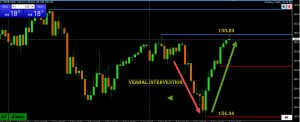
Either Japanese officials are overplaying their hands with idle verbal intervention threats or it is amateur hour at the new government. Price action suggests the more times verbal threats are used, the less lasting impact they have.
Vernal intervention:

USDJPY drops sharply following verbal intervention only to more than recover after not following through
ADDENDUM: December 23, 2025
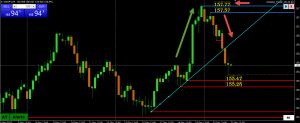
Intervention timeline
- Perverse reaction to the BoJ rate hike: USDJPY trades sharply higher (green arrow) until a pause below 157.88 (high 157.77)
- USDJPY 157.88 is a level the BoJ/MoF would not want to see broken (void above it on charts until 161.91)
- Verbal intervention (conspiracy theory says covert intervention as well) to defend 157.88
- USDJPY stalls to the upside followed by stepped up verbal intervention threats
- Break of 4-hour trendline indicates verbal (and covert?) intervention has won the battle (but would need to establish back below 155 to win the war)
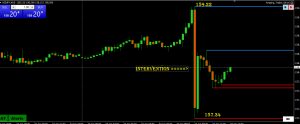
Addendum: January 23, 2026 (USDJPY15 minute chart: 159/22 => 157.34 in one candle)
While u8nconfirmed, all signs point to BoJ intervention
Is the Bank of Japan Truly Independent? The Takaichi Era May Put That to the Test
The Asahi Shimbun Breaking News in English