Hope Trades Explained
In today’s headline-driven markets, a glimmer of positive news can quickly trigger a market reaction.
A ceasefire may appear possible. An economic indicator may come in better than expected. A central bank may signal a change in policy. A political development may appear favorable.
News algos react. Traders react. Prices move.
For traders with quick execution and a defined strategy, these moves can create opportunities. But there is a critical distinction between trading a market reaction and trading on hope.
Hope trades occur when a trader takes or maintains a position based primarily on what they hope will happen rather than on a defined probability, confirmed setup, or risk-management plan.
And hope trades are not limited to losing positions.
They can happen before a trade is entered, after it is entered, or when a trader is waiting for an external event to validate a position.
The key lesson is simple:
Hope is not a trading strategy.
Hope Trades Explained – What Is a Hope Trade?
A hope trade is a trade where the expected outcome depends more on optimism or belief than on a clearly defined trading thesis.
It might sound like:
- “I hope this geopolitical situation improves.”
- “I hope the economic numbers come in weaker.”
- “I hope the central bank cuts rates.”
- “I hope this political development moves the market.”
- “I hope this headline means the worst is over.”
- “I hope my losing position gets back to breakeven.”
- “I hope the market reverses from here.”
There is nothing wrong with having a market view.
The problem begins when hope substitutes for evidence, probabilities, and risk management.
Trading is not about predicting what you want to happen. It is about identifying situations where the potential reward justifies the risk and having a plan for what happens if you are wrong.
Hope Trades Can Start With the News
Geopolitical events are a good example of how hope can enter the market.
When markets are focused on conflict, negotiations, ceasefires, sanctions, or diplomatic developments, headlines can produce immediate reactions.
A headline suggesting de-escalation may trigger a risk-on move. News algorithms can respond within seconds, while discretionary traders react to the changing narrative.
The initial move can be substantial.
But a headline is not necessarily confirmation that the underlying situation has fundamentally changed.
This is where traders need to be careful.
A market can trade on the hope of an outcome before there is evidence that the outcome will actually occur.
That does not mean the move cannot continue.
It means the trader needs to understand what is driving the move and whether the trade has a defined risk-reward framework.
Hope Trades Explained
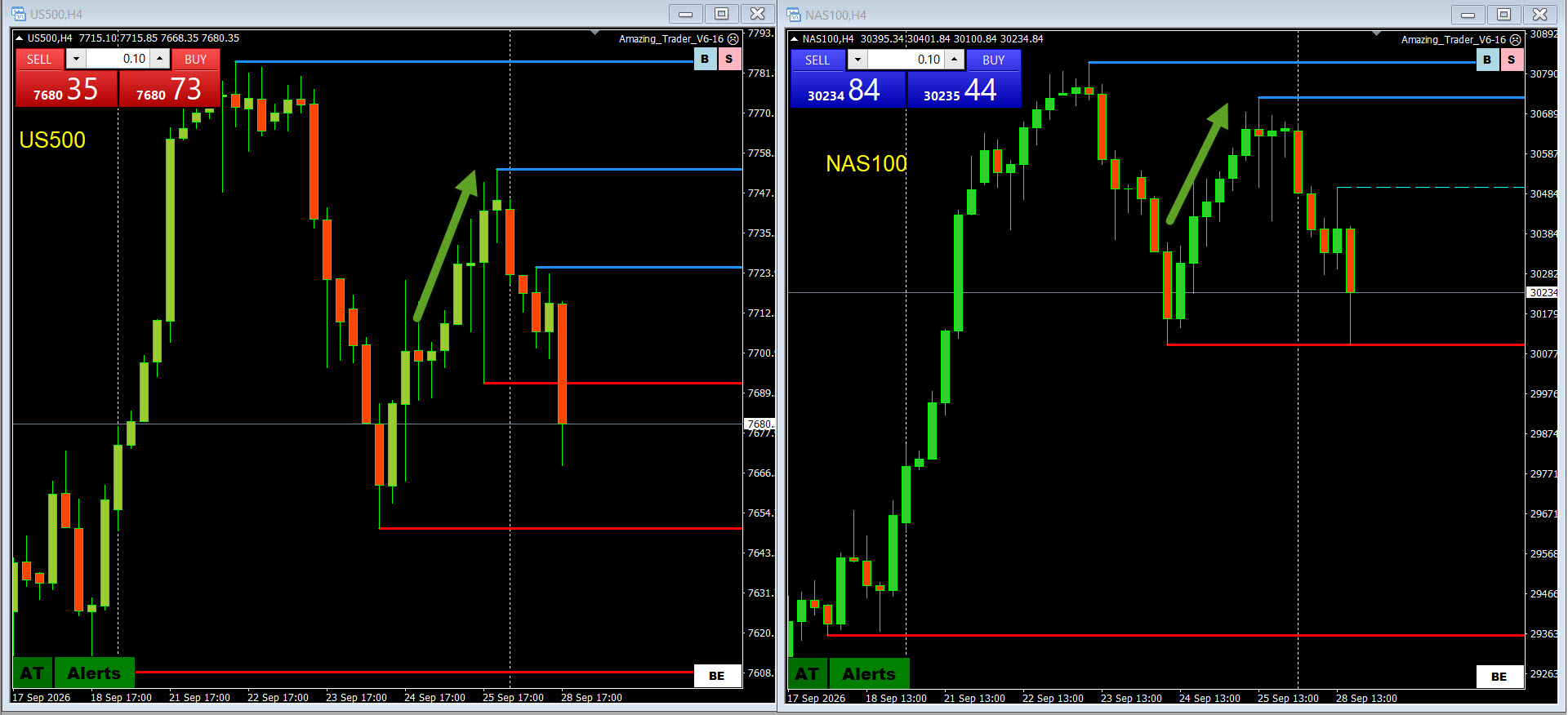
Hope trade in stock indices (green arrows) based on geopolitical news that did not last
Hope Trading Is Not Limited to Geopolitics
The same behavior can occur around almost any major market catalyst.
Economic Indicators
A trader may position ahead of an inflation, employment, GDP, or other economic report hoping the result will produce a favorable market reaction.
But economic data can surprise.
Even when the number comes in as expected, the market can interpret it differently from what the trader anticipated.
Trading based solely on what you hope an economic release will show is not the same as trading a confirmed setup.
Monetary Policy
Interest-rate decisions and central-bank communication can create significant market volatility.
Traders may anticipate a rate cut, rate hike, or change in forward guidance and position accordingly.
Again, the issue is not having a view.
The issue is whether the position has been constructed around a reasonable assessment of probabilities and risk or simply around the hope that policymakers deliver the outcome the trader wants.
Political Events
Political developments can also produce hope trades.
A trader may expect an election result, policy announcement, legislation, or diplomatic development to produce a particular market reaction.
But political events contain uncertainty, and markets can react in unexpected ways.
A trade should not depend entirely on being right about an uncertain event.
The Most Familiar Hope Trade: A Losing Position
While hope trades can begin before entering a position, the behavior becomes particularly obvious when a trade moves against you.
Have you ever held a losing position hoping it would return to breakeven?
Have you moved a stop-loss because you hoped the market would reverse?
Have you traded without a stop because you believed the market would eventually mean-revert?
Have you hedged a losing position because you hoped you could trade your way out of it?
Almost every trader has faced this temptation.
The problem is that the original trade can gradually turn into something completely different.
The trader is no longer evaluating whether the original thesis remains valid.
The focus becomes getting back to breakeven.
That is a hope trade.
When Hope Replaces Risk Management
Trading is fundamentally a probability and risk-management exercise.
You do not need to know exactly what the market will do next.
You need to know:
- Why you are entering
- What would invalidate the trade
- How much you are willing to risk
- Where you will exit
- What the potential reward is relative to the risk
- What you will do if the market moves against you
Without those parameters, a trade can quickly become an emotional decision.
Hope tends to appear when the trader has run out of answers.
The position is losing money, the original thesis is questionable, and instead of following a predetermined exit, the trader starts looking for reasons to stay.
“Maybe the next headline will help.”
“Maybe there will be a reversal.”
“Maybe buyers will come back.”
“Maybe I just need to give it more time.”
Maybe I should double up to improve my average entry price?”
Those thoughts are understandable.
They are not risk management.
The Difference Between Trading and Gambling: What Every Trader Should Know
Don’t Confuse Hope with Patience
This distinction is important.
Patience is not the same as hope.
A trader can hold a position through short-term volatility because the original thesis remains intact and the trade is still within its predetermined risk parameters.
That is patience.
A trader who remains in a position solely because they want it to recover, despite evidence that the original thesis has broken down, is doing something different.
That is hope.
Patience is based on a plan.
Hope is often based on an outcome.
Hope Trades Explained – What Disciplined Traders Do Instead
Disciplined traders do not need to eliminate uncertainty.
They accept it.
They understand that some trades will work and others will not. They accept that even a well-researched trade can lose money.
Their focus is therefore on controlling what they can control.
That includes:
Defined Risk
Know how much capital is at risk before entering the trade.
Position Sizing
The size of a position should reflect the risk being taken, not the trader’s level of conviction or desire to make money back.
Predefined Exits
Know what would cause you to exit before emotions take over.
Confirmation
Avoid treating an anticipated outcome as though it has already happened.
Probability
Think in terms of possible outcomes rather than certainty.
Discipline
Follow the trading plan even when doing so means accepting a loss.
The Problem With Betting on Being Right
One of the biggest psychological traps in trading is believing that being right matters more than managing risk.
It doesn’t.
You can correctly identify the eventual direction of a market and still lose money if your position is too large, your timing is poor, or you cannot withstand the volatility required for the thesis to play out.
Conversely, you can be wrong about a trade and still manage the loss effectively.
Trading is not a contest to see who can make the most predictions.
It is a process of managing probabilities and risk.
That is why hope has such little value in the actual execution of a trade.
A Simple Test for a Hope Trade
Before entering or holding a position, ask yourself:
“What evidence supports this trade?”
Then ask:
“What would prove me wrong?”
Finally, ask:
“Would I still make this trade if I had no emotional attachment to the outcome?”
If the primary answer is:
“Because I hope it happens,”
you may not have a trading strategy.
You may have a hope trade.
Replace Hope With a Process
Hope is a perfectly reasonable part of everyday life.
Trading is different.
Markets do not care what traders hope will happen. They respond to changing expectations, information, liquidity, positioning, and the actions of other market participants.
That is why a disciplined trading process matters.
Instead of hoping a geopolitical situation improves, define what market evidence would confirm the thesis.
Instead of hoping an economic report produces a certain outcome, understand the potential scenarios and their risks.
Instead of hoping a central-bank decision moves the market in your favor, establish the risk before the announcement.
Instead of hoping a losing trade comes back, determine whether the original thesis remains valid.
The objective is not to eliminate uncertainty.
It is to manage it.
Hope Trades Explained
Trading Tip: Eliminate Hope From the Decision-Making Process
Every trader will experience uncertainty.
Every trader will experience losing trades.
Every trader will be tempted to believe that the next headline, economic number, political event, or market reversal will change the outcome.
The difference is how the trader responds.
A disciplined trader does not need to know what will happen.
They need to know what they will do if each potential outcome occurs.
That is the difference between trading a probability and trading a hope.
Hope can be useful in life.
In trading, it can be expensive.
Hope is not a trading strategy.
Use analysis. Define the risk. Wait for confirmation when appropriate. Manage the position.
And when the trade is wrong, accept the loss and move on.
The next opportunity does not require hope.
It requires capital, discipline, and a plan.