
- This topic has 28,643 replies, 54 voices, and was last updated 5 hours, 5 minutes ago by GVI Forex 2.
-
AuthorPosts
-
June 30, 2025 at 5:54 pm #26953June 30, 2025 at 5:52 pm #26952June 30, 2025 at 5:47 pm #26951June 30, 2025 at 5:40 pm #26950June 30, 2025 at 5:04 pm #26949June 30, 2025 at 4:20 pm #26948June 30, 2025 at 4:08 pm #26947June 30, 2025 at 4:05 pm #26946June 30, 2025 at 3:37 pm #26945June 30, 2025 at 3:26 pm #26944June 30, 2025 at 3:15 pm #26943June 30, 2025 at 2:57 pm #26942June 30, 2025 at 2:43 pm #26941June 30, 2025 at 2:23 pm #26940June 30, 2025 at 2:04 pm #26939
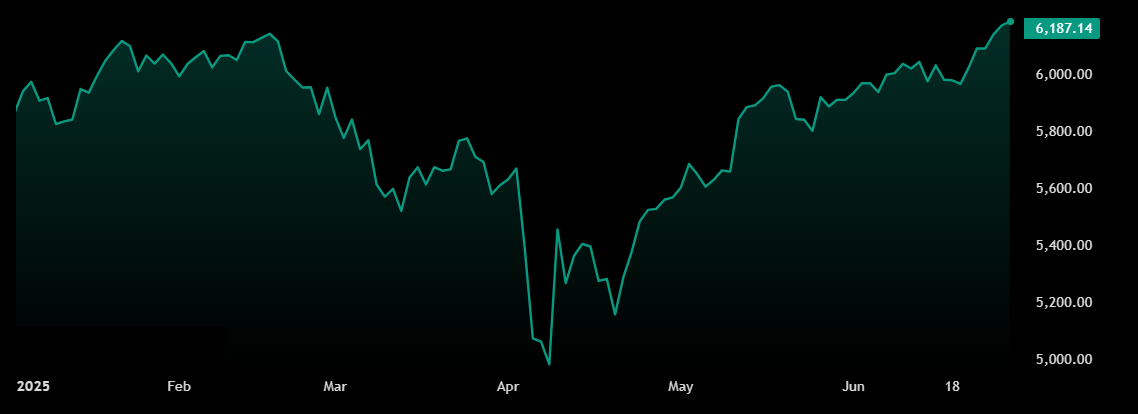
S&P 500, Nasdaq 100 Reach Fresh Highs
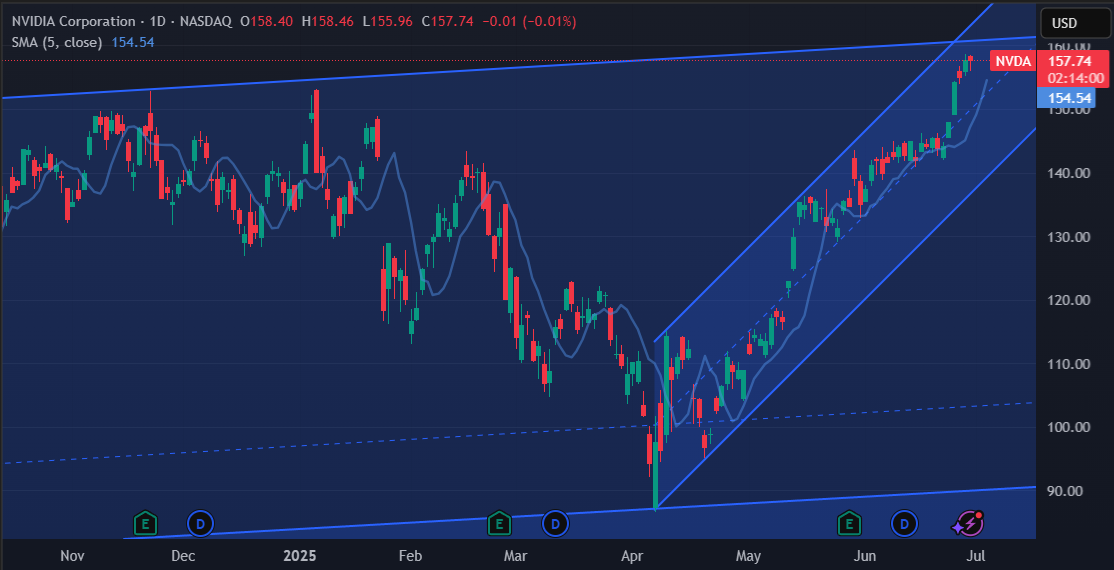
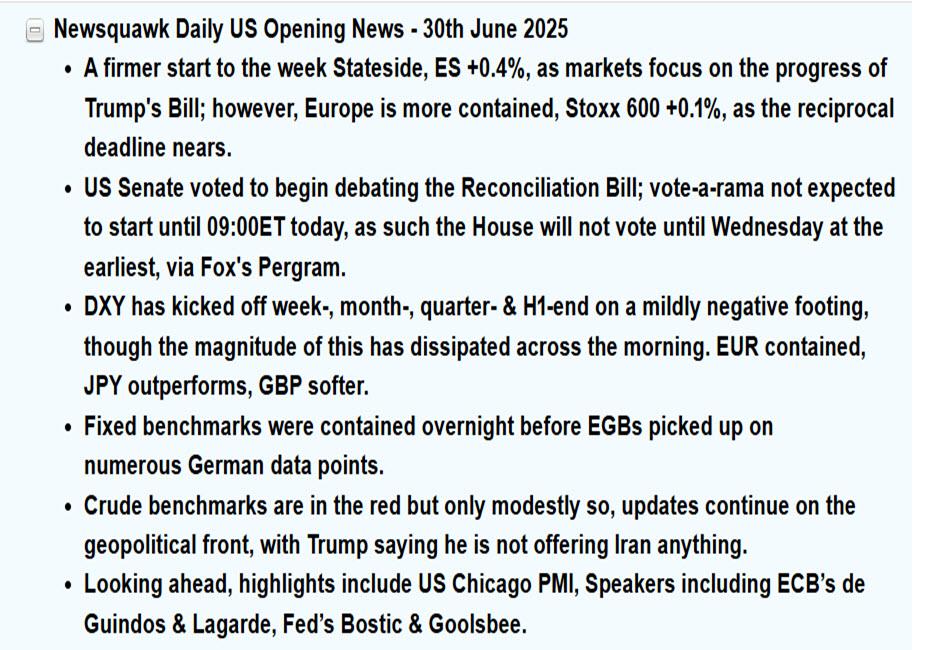
US stocks were firmly higher on Monday, extending the sharp gains from the previous week as the softer stance on tariffs by the US government allowed markets to focus on signs of multiple rate cuts by the Fed this year.
The S&P 500 and the Nasdaq 100 advanced around 0.5% each to reach new record highs, while the Dow added over 200 points.
White House officials announced that the US and China had formally reached an agreement to prevent the return of tariff exchanges that topped levies at 145%.
Additionally, President Trump noted that he is open to extending the July 9th deadline for reintroducing reciprocal tariffs, while remaining optimistic that key deals will be announced before the date.
Lastly, Canada withdrew its digital services tax to support the outlook for US tech companies and restart trade talks with Washington.
Meta and Alphabet each gained 1%.
Also, Juniper Networks surged 9% after the DoJ settled its lawsuit against the company concerning its acquisition by HP.
SP 500
 June 30, 2025 at 1:56 pm #26937
4 PM London fixing
The 4pm month-end London fixing is important because it serves as a critical benchmark for pricing and executing foreign exchange (FX) transactions, particularly during periods of large institutional rebalancing, like the end of the month. Here’s why it’s so significant:
⸻
🔹 1. Global FX Benchmark
• The 4pm London fix (officially the WM/Refinitiv 4pm Fix) is the most widely used FX benchmark rate in the world.
• It provides a standardized rate that asset managers, custodians, corporates, and index funds use to value portfolios, execute trades, or calculate performance.⸻
🔹 2. Month-End Portfolio Rebalancing
• At month-end, global asset managers rebalance portfolios to align with benchmark indices (like MSCI or FTSE).
• This often requires converting currencies (e.g., if U.S. equities outperform, managers may sell USD to buy EUR or JPY to match benchmark weights).
• These FX flows are usually timed around the 4pm fix to ensure price consistency and transparency.⸻
🔹 3. High Volume = Market Impact
• Month-end 4pm fix sees a spike in trading volumes, making it one of the most liquid times in the FX market.
• But because everyone trades at once, it can also cause sharp moves or volatility in currency pairs — often referred to as “month-end fixing flows.”⸻
🔹 4. Benchmarking and Performance
• Many funds are evaluated against benchmarks priced at the 4pm fix.
• To minimize tracking error, fund managers prefer to trade at or near this rate, especially at month-end.⸻
🔹 5. Predictable Flow Patterns
• Market participants try to predict the direction of these flows ahead of time (e.g., “USD selling expected into the fix”), making it a tradable event.
• Banks often release month-end FX flow forecasts, which are closely watched by traders.June 30, 2025 at 1:48 pm #26936June 30, 2025 at 1:24 pm #26931Next up is Chicago PMI (released early to subscribers)… often an erratic report but in this market,there is usually a reaction to data.
See our Economic Data Calendar
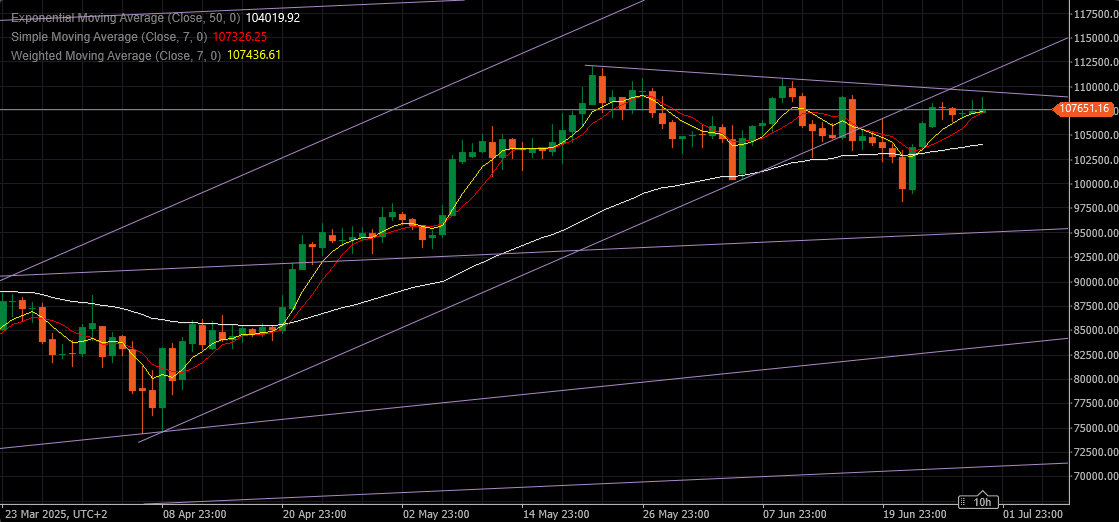
June 30, 2025 at 12:30 pm #26920June 30, 2025 at 12:03 pm #26912June 30, 2025 at 10:55 am #26911BTCUSD – Bitcoin
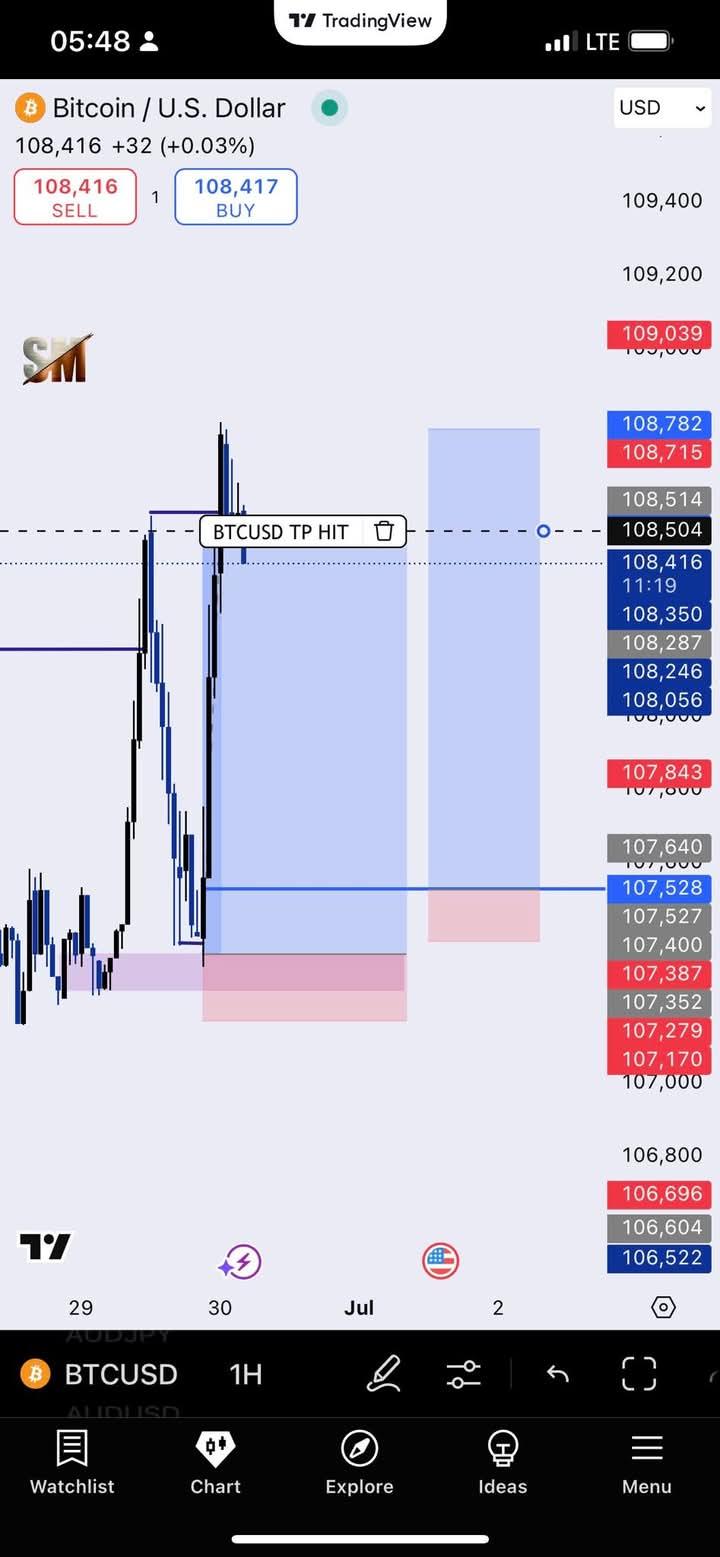
And another leg Up we had…
But it stopped short of the resistance at 109.600
Now is the question is that “It” – will it turn down again
107.345 is the turning point – if below targets 104.150
Day is still young, so we wait and see.
Currently the pressure is Down – Resistance at 107.975 – targets 106.650
 June 30, 2025 at 10:52 am #26910
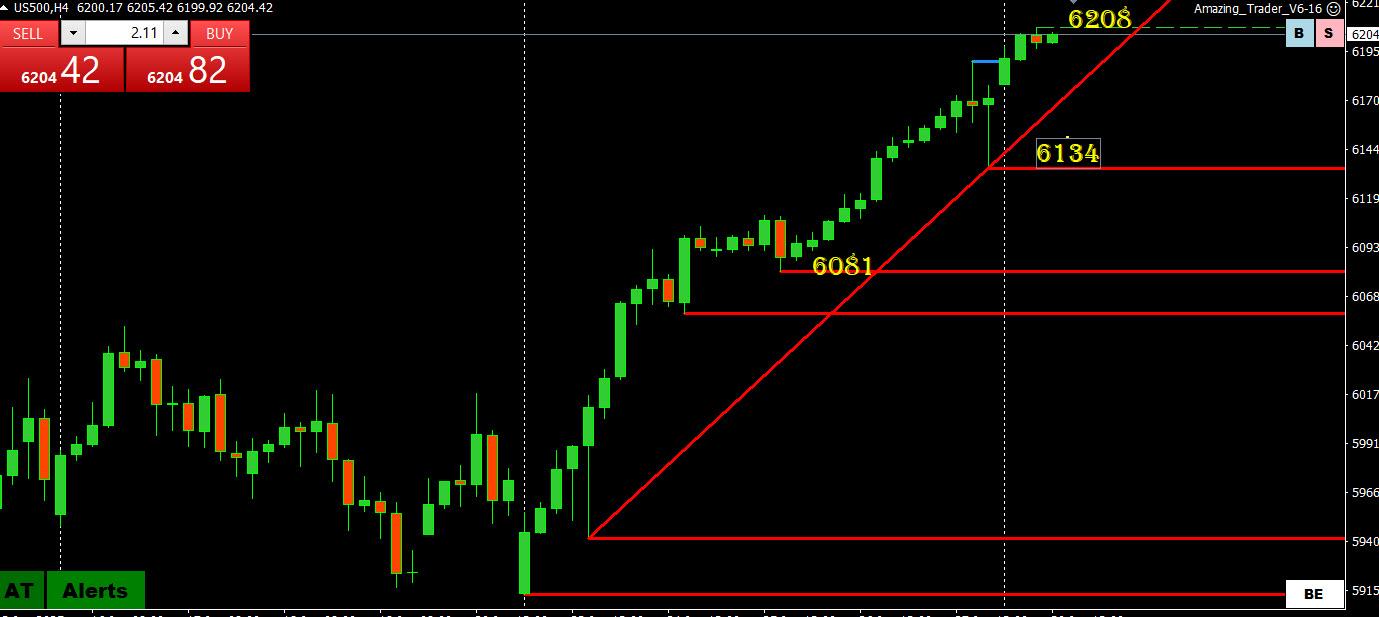
US500 (SP500)
When in unchartered (record high) territory an absence of key levels leaves the most recent high as key resistance.
This leaves 6200 as the pivotal and bias setting level going forward.
A test for stocks will come after month/quarter end passes as fund/money managers will want to show investors that they are invested in the rally to record highs ahead of month end.
US500 4 HOUR CHART
 June 30, 2025 at 10:44 am #26909
THIS WEEK’S MARKET-MOVING EVENTS (all days local)
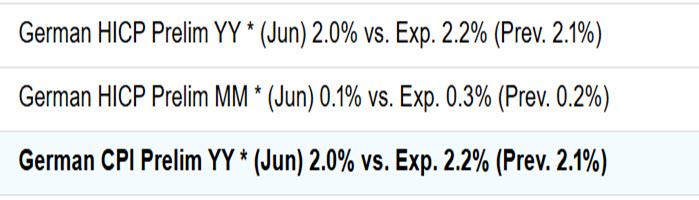
The upcoming week’s global economic data provides crucial insights into consumer behavior, inflation trends, and industrial activity across key regions. In Europe, focus turns to retail sales from Germany, Switzerland, and Italy, along with inflation updates from several countries. While France saw a June CPI uptick of 0.4% due to rising service and energy costs, Germany and Italy may follow suit, potentially pushing Eurozone inflation above the 2% threshold. On the industrial side, recent data indicate ongoing contraction, yet future optimism is fueled by NATO-aligned increases in military spending, with Germany pledging a notable 5% of GDP—though implementation remains uncertain.
In the United States, the economic calendar is compressed due to the July 4th holiday, with the June employment report releasing Thursday. Expectations are modest, with consensus around 110,000 new jobs and unemployment potentially rising to 4.3%. Sectoral weakness, particularly in retail, tech, and housing-related construction, is likely to weigh on job growth. Meanwhile, key manufacturing and services indices remain below the growth threshold, highlighting continued business caution. In Asia-Pacific, PMI figures from China, Japan, and South Korea will offer early insight into regional economic health amid ongoing geopolitical risks. Australia’s falling inflation may bolster the case for another interest rate cut in the near term. (Econoday)
 June 30, 2025 at 10:21 am #26908June 30, 2025 at 10:17 am #26907June 30, 2025 at 9:43 am #26906June 30, 2025 at 9:43 am #26905June 30, 2025 at 9:39 am #26904June 30, 2025 at 9:31 am #26903June 30, 2025 at 9:19 am #26902
-
AuthorPosts






- You must be logged in to reply to this topic.
Search
© 2024 Global View