JAPAN
some annecdotes
–
legislatores are currently gunning to raise avg min wage to 1125 yen / hr
japan debt to gdp is around 220%
japanese demographics are going into the toilet:
– low birth rate; massive ageing pop
legislators, screaming, claim they have “difficult” decisions from choices about interest rates and credit
Crypto funds see $223M outflow, ending 15-week streak as Fed dampens sentiment
Cryptocurrency investment products ended last week in the red, interrupting 15 weeks of consecutive inflows after investor sentiment took a hit from hawkish remarks during last week’s Federal Open Market Committee (FOMC) meeting.
Global crypto exchange-traded products (ETPs) saw $223 million worth of outflows last week, according to the latest report from crypto asset management firm CoinShares, published Monday.
Despite a strong start to the week with $883 million worth of inflows, the “trend reversed” in the second half of the week, “likely triggered by the hawkish FOMC meeting and a series of better-than-expected economic data from the US,” the report said
US Federal Reserve Chair Jerome Powell’s remarks also dampened investor expectations of an interest rate cut for September to 40% from 63% before the FOMC meeting, Cointelegraph reported last Thursday.
The decline in sentiment comes as Bitcoin (BTC) enters August, historically one of its worst-performing months. Data from CoinGlass shows Bitcoin’s median return in August stands at -7.49%.
Bitcoin products accounted for the bulk of last week’s losses, with $404 million in outflows. Despite the pullback, some analysts said Bitcoin’s next catalyst may arrive after the summer recess. In a research note published Friday, Matrixport said Bitcoin could gain traction when the US Congress reconvenes after Labor Day.
Ether defies broader fund retreat
Despite outflows among global cryptocurrency funds, Ether (ETH) ETPs closed their 15th week of net positive inflows, attracting $133 million of investments despite a pullback in the second half of the week.
The report attributed the continuous Ether fund inflows to “robust positive sentiment for the asset.”
Crypto funds focused on XRP (XRP), Solana (SOL) and Sui (SUI) also closed the week in the green, seeing $31.2 million, $8.8 million and $5.8 million in inflows, respectively.

Euro Stabilizes Above $1.15 as Weak US Jobs Data Fuels Fed Cut Bets
The euro stabilized just above $1.15, rebounding from a seven-week low of $1.139 touched on August 1, as broad dollar weakness followed disappointing US jobs data.
The weaker-than-expected July payrolls report, along with sharp downward revisions to May and June figures, fuelled expectations that the Federal Reserve will cut interest rates as soon as September.
In response, President Trump dismissed a senior Labor Department official, adding to market uncertainty.
Money markets are now pricing in two more Fed rate cuts this year, starting in September, while the European Central Bank is expected to hold rates steady.
In the Eurozone, annual inflation held at 2.0% in July, slightly above the 1.9% forecast. Meanwhile, investor sentiment remains cautious amid fresh US tariffs, which impose a 15% duty on EU exports to the US.

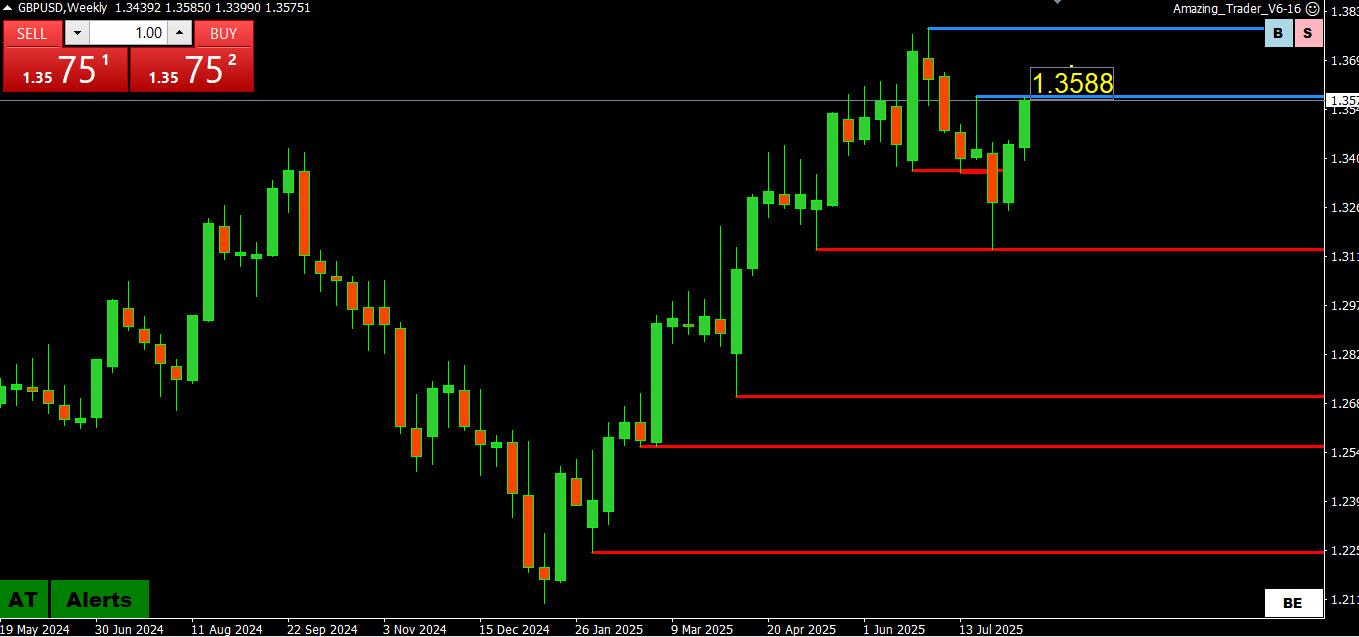
GBP/USD: Sterling Extends Rise to $1.33 as Traders Bid Up Ahead of BoE Rate Decision
Key points:
· Sterling climbs to start week
· Markets ready for the rate cut
· Pound off by 3.8% from 2025 peak
Monday’s pop was another leg up following Friday’s rise after US job growth sank things everywhere, dollar included.
Pound Perks Up Into the BoE Week
· The GBPUSD pair was rising for a second session early on Monday, trading near $1.33 — up 1.2% from Friday’s lows — as traders piled in ahead of Thursday’s Bank of England rate call.
· Friday’s rebound broke a six-day losing streak, sparked by soft US jobs data that hit the dollar hard and reignited the case for a September Fed cut after July’s meeting wrapped up with a hold.
· Cable’s momentum comes despite broader bearishness — the exchange rate is still down 3.8% from its July peak of $1.3790.
BoE Rate Cut Incoming?
· On Thursday, the Bank of England is widely expected to cut interest rates by 25 basis points, trimming the benchmark rate from 4.25% to 4%.
· The call comes as UK inflation continues to haunt consumers and growth slows — putting pressure on the BoE to move before the economy gets choked further.
· Traders will be watching the vote split and forward guidance closely — a dovish tone could cap sterling’s rally.
Weak Dollar Adds a Tailwind
· The dollar took a hit Friday after July’s nonfarm payrolls came in at just 73,000 jobs — well below expectations — with a brutal 258,000 in downward revisions for May and June.
· Rate cut bets jumped, with markets now pricing in an 81% chance of a September Fed cut. The dollar index fell for its worst day since April.
· The pound-dollar continues to benefit from broad dollar weakness — but sustained upside could need help from the BoE not sounding too dovish.

Institutional FX Markets Volumes Weather Dollar’s Historic Plunge In July 2025
Institutional foreign exchange volumes showed signs of stabilization in July 2025, with most major trading platforms recording modest improvements compared to June’s subdued activity, despite the US dollar touching its lowest levels since 2022 during the month.
Institutional FX Volumes Stabilize in July Despite Dollar’s Historic Decline
Cboe FX volumes climbed to $1.05 trillion in July from June’s $1.01 trillion, though the increase was primarily driven by additional trading days. With 23 trading days compared to 21 in June, average daily volumes actually declined to $45.6 billion from $48.3 billion the previous month.
The year-over-year comparison tells a different story. July 2024 saw Cboe handle $1 trillion in total volumes with an ADV of $44.5 billion, suggesting current activity levels remain roughly in line with historical patterns despite the dollar’s broader struggles.
European Exchanges Maintain Momentum
European platforms showed more consistent strength. Euronext FX volumes dipped slightly to $584.7 billion from June’s $609.5 billion, but the decline was modest given the volatile currency environment. ADV fell to $25.8 billion from $27.7 billion, reflecting the impact of additional trading days.
360T, operated by Deutsche Börse Group, posted stronger results with total volumes reaching $768.6 billion, up from June’s $711.7 billion. The platform’s ADV climbed to $33.4 billion from $33.9 billion, representing one of the more robust performances among major institutional venues.
Market Context and Outlook
July’s performance reflects the complex dynamics facing currency markets. While the dollar’s decline to 2022 lows initially seemed poised to drive volatility and trading activity higher, institutional volumes have remained relatively contained compared to the explosive growth seen during April’s Trump-induced market turbulence.
“We are expecting a weaker U.S. dollar in the coming months. The recent budget implications, the inflationary effects of tariffs, and President Trump’s critical remarks towards Fed Chair Jerome Powell all suggest a negative outlook for the U.S. economy for the remainder of the year,” said Jennifer Lee, Senior Economist at BMO Capital Markets
The dollar’s first monthly gain in six months during July may signal a potential turning point, though traders remain cautious about declaring an end to the greenback’s broader weakness. With ongoing geopolitical tensions and trade uncertainties continuing to influence currency flows, institutional platforms are preparing for potentially higher volatility in the coming months.

FX option expiries for 4 August 10am New York cut
There are a couple to take note of on the day, as highlighted in bold below.
They are for EUR/USD layered in between the 1.1550 to 1.1600 levels. The dollar was dealt a blow after the US jobs report last week, with massive downward revisions to payrolls and Trump’s firing of the BLS chief giving reasons for traders to dump the greenback. Fed funds futures also shifted to price in a September rate cut, compounding the dollar’s woes.
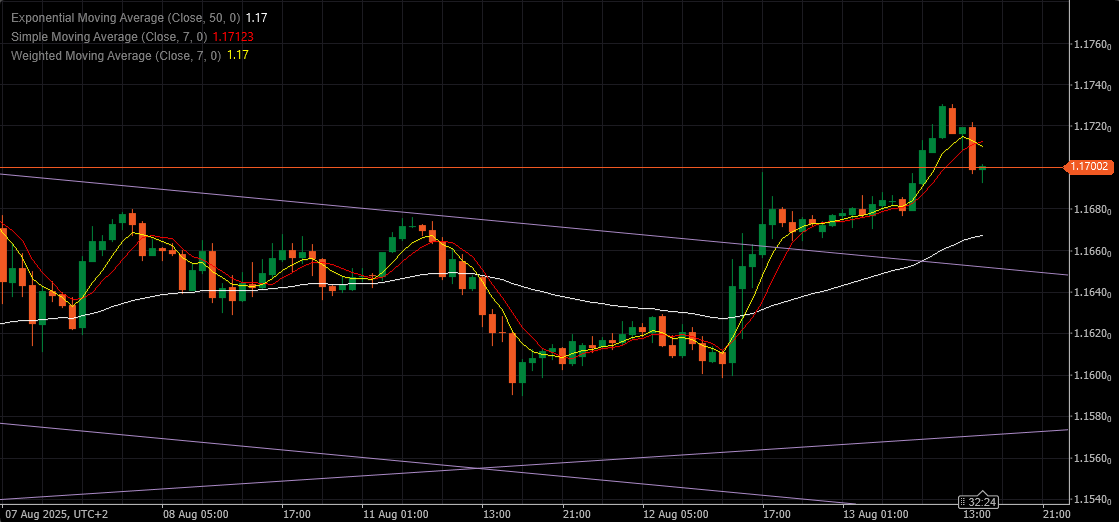
That sees EUR/USD now put back in between its key hourly moving averages of around 1.1497 to 1.1610. That’s a lot of room to maneuver but the expiries above could help to limit that, at least for European trading today. The more relevant one is likely to be the one closer to 1.1600 but overall, the expiries could keep price action more limited before Wall Street enters the fray.

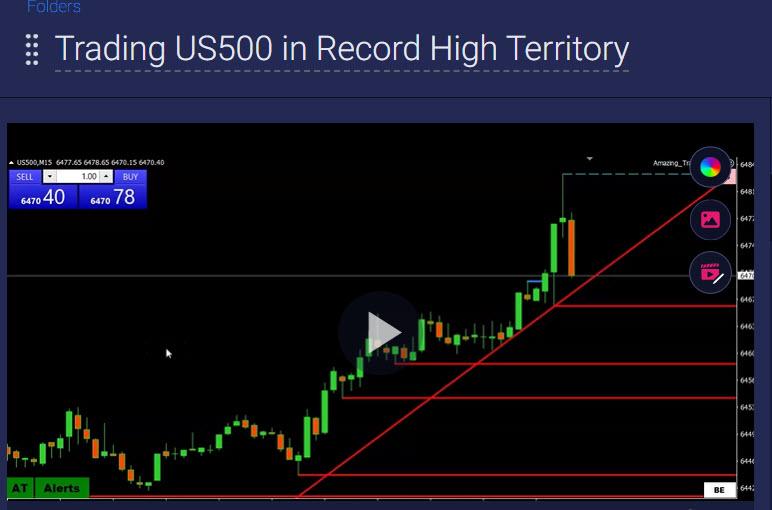
Using my platform as a Heatmap shows
No aftershocks following Friday’s market earthquakes that saw the dollar and stocks tumble
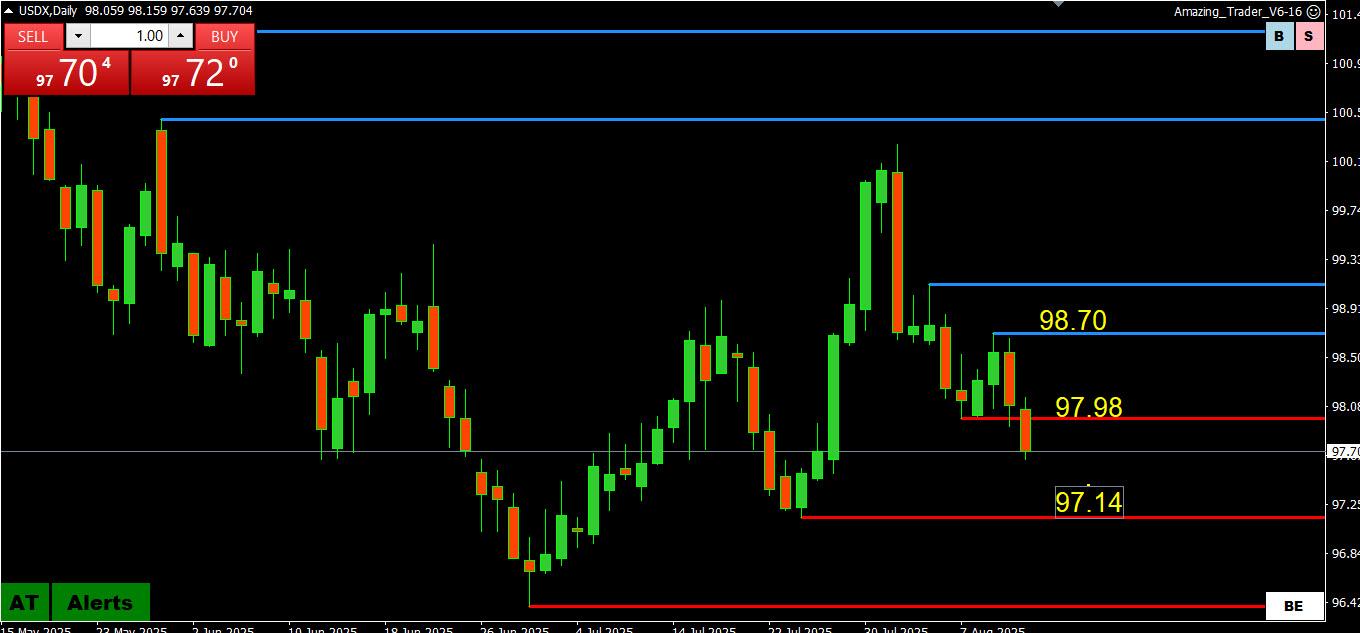
The dollar is off opening week lows as it consolidates but still feeling effects if its tumble
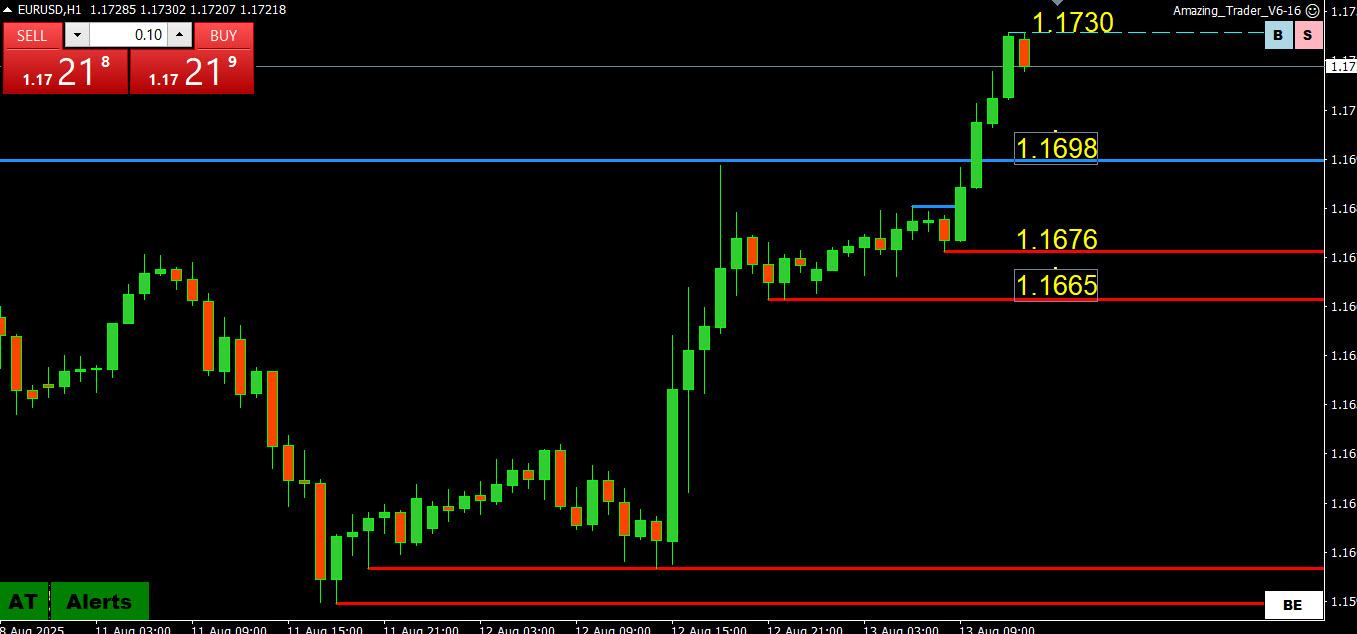
EURUSD so far holding 1.1550
USDJPY briefly tested 148+
CHF is the underperformer (USDCHF up over 0.6%)
Gold is consolidating as well after rising sharply on Friday
US stocks have recovered some of Friday’s losses
US bond yields are up a touch after plunging on Friday on raised expectations of a Sept rate cut

THIS WEEK’S MARKET-MOVING EVENTS (all days local)
The week ahead in global economics focuses on central bank policy decisions, trade developments, and key labor and inflation data. In Asia, the Reserve Bank of India is expected to hold its benchmark rate at 5.50% after cutting aggressively earlier this year, citing falling inflation and slowing industrial output. Australia’s household spending and trade figures may push the Reserve Bank of Australia closer to another rate cut, while New Zealand’s labor market report is expected to show a slight drop in employment and a modest rise in the unemployment rate.
In Europe, recent EU-US trade developments have introduced more questions than clarity, with new U.S. tariffs weighing on sentiment—especially in Germany’s auto sector. Upcoming industrial production and trade data from Germany, France, and Italy will help gauge the depth of the impact. Meanwhile, Eurozone retail sales are expected to rebound modestly, offering limited relief.
In the U.S., July’s jobs report sharply disappointed with just 73,000 payrolls added and significant downward revisions to previous months, boosting expectations for a Fed rate cut in September. Although layoffs remain relatively subdued, rising jobless claims and longer unemployment durations are early signs of labor market softening. Productivity is forecast to rebound in Q2, but cost pressures are easing, suggesting mixed signals for the economy’s underlying momentum.
Econodayv
no opening GAPs worth playing
–
only thing somewhat entertaining is the over-the-weekend parade of chicken littles – like l sommers for ex. – having something to squawk about what makes President Trump’s uqnique strenght, namely that he does not shy to tell and say what he thinks, what most people know as well and which more often not matches with that what “polite” people with square careers / social standing think as well but simply will not say in public.
JP, we are living in a different world
This is from the nyt article ST posted
Many businesses chose to absorb the additional tax during the early days of President Trump’s trade war. But evidence is emerging that they are running out of options to keep prices stable in the face of deteriorating profit margins, suggesting that the tariffs could have a more pronounced effect on prices in the months ahead.
GVI 9:55 – Your govt currently spends just a bout a $trillion in interest. Various “expert” yakkers claim that the US can not default and so, allegedly, it wont default. Because, again allegedly, jerome gang’s outfit will print what-ever is necessary to “buy” the debt. This is where understanding of meaning of “depreciation” of money concept comes in.
President Trump’s tariff program is getting a lot of credit for rising prices – i.e. inflation.
By contrast the inflation component in the last two “stagflation” episodes was attributed to price dynamics of crude oil, allegedly an external factor when compared to tariffs.
This is turning out to be a timely article
In our blog
© 2024 Global View