
- This topic has 28,559 replies, 54 voices, and was last updated 9 hours, 4 minutes ago by GVI Forex 2.
-
AuthorPosts
-
October 20, 2025 at 11:53 am #32280
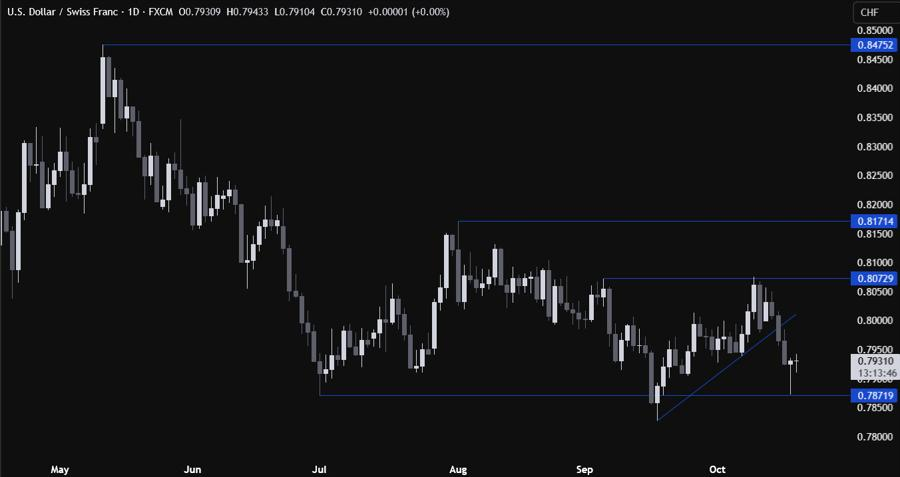
USDCHF bounces from the cycle lows: just a pullback or a reversal?
Fundamental OverviewThe USD strengthened a bit on Friday following some positive Trump’s comments on China as Treasury yields bounced and erased the Thursday’s losses. Overall, the US dollar performance has been mixed as markets have been driven by quick changes in risk sentiment since Trump’s tariffs threat.
On the domestic side, the US government shutdown continues to delay many key US economic reports. The dollar “repricing trade” needs strong US data to keep going, especially on the labour market side, so any hiccup on that front is weighing on the greenback.
The BLS will release the US CPI report on Friday despite the shutdown, so that’s going to be a key risk event. That will need to be seen in the context of US-China relations and any negative shock by that time though. If things go south, then the CPI will not matter much as growth fears will trump everything else.
On the CHF side, nothing has changed. The SNB left interest rates steady and kept everything unchanged at the last meeting. SNB’s President Schlegel didn’t offer any forward guidance but he did say that the bar to cut rates further is very high and negative inflation prints in the short-term won’t be enough.
The last Swiss inflation prints rebounded a bit but there’s a long way to go before breaching their 2% inflation limit. So, this leaves the CHF trading mostly based on risk sentiment.
USDCHF Technical Analysis – Daily Timeframe
USDCHF daily
On the daily chart, we can see that USDCHF broke below the major upward trendline last week and extended the drop into the 0.7872 level before pulling back a bit after some positive Trump’s comments on tariffs. If the price rolls over again, we can expect the buyers to step in around the 0.7872 level with a defined risk below it to keep targeting a rally into the 0.8073 level. The sellers, on the other hand, will want to see the price breaking lower to increase the bearish bets into new lows.
 October 20, 2025 at 11:47 am #32279
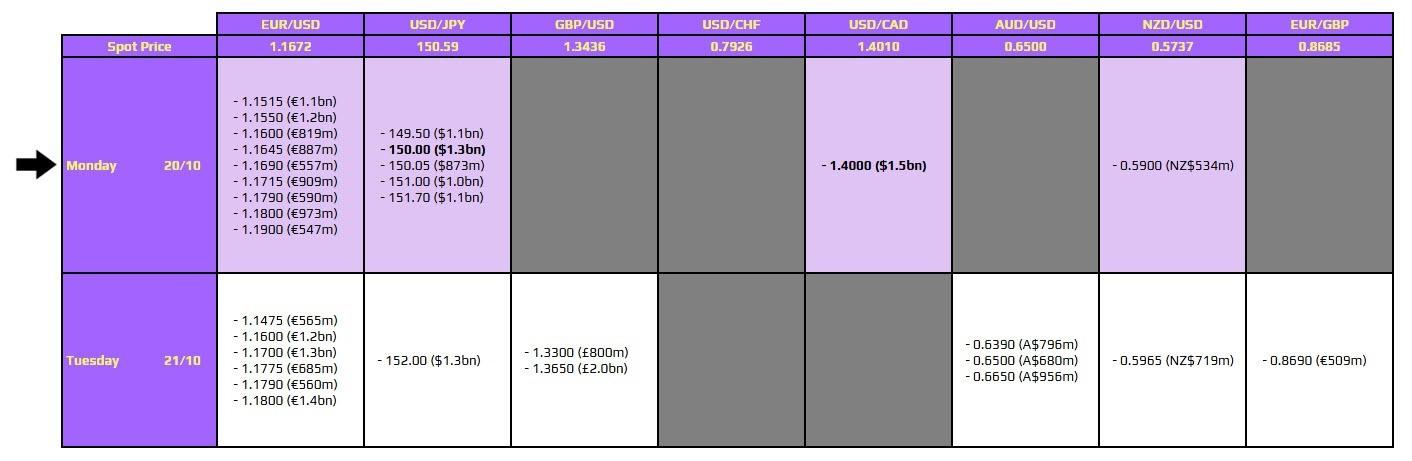
FX option expiries for 20 October 10am New York cut
There are just a couple to take note of on the day, as highlighted in bold below.
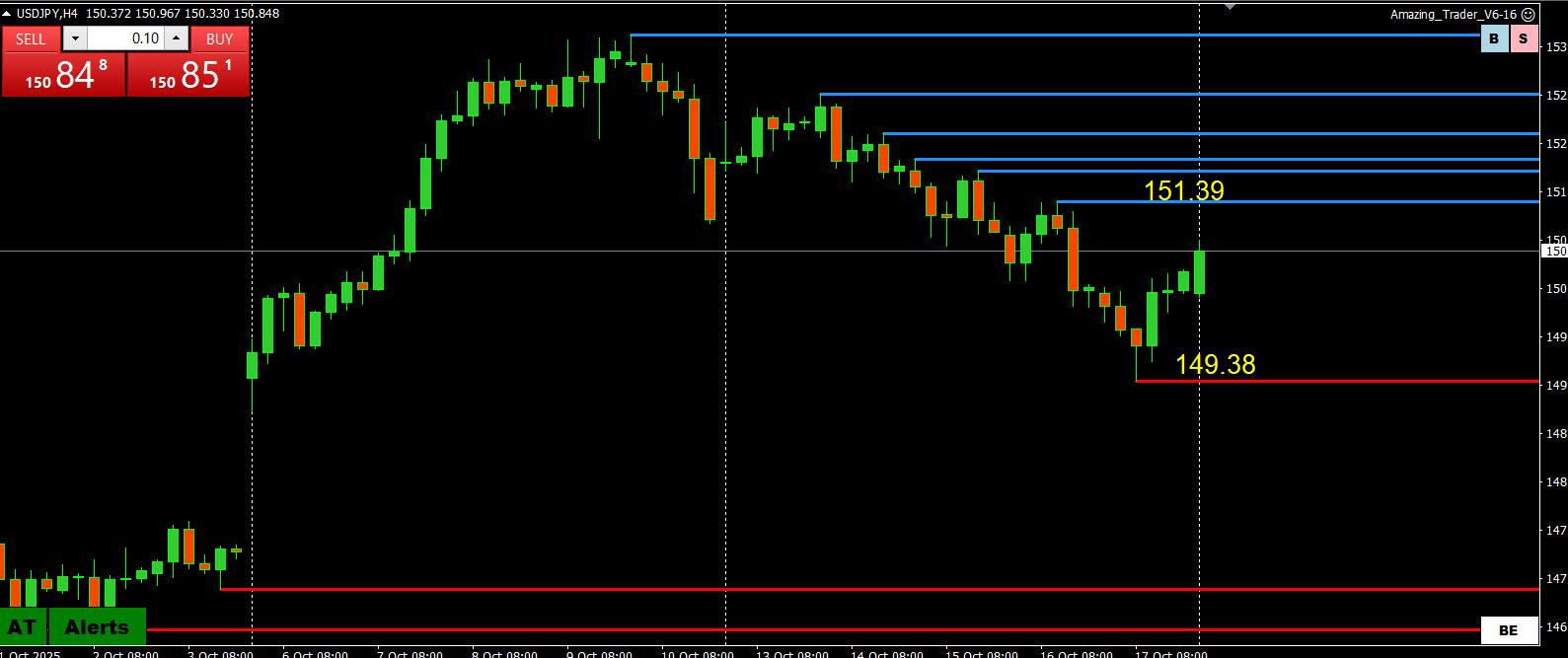
The first one is for USD/JPY closer to the 150.00 mark. The pair held a daily break under that on Friday and is now having to balance out the political developments in Japan to start the week. The LDP and Nippon Ishin look set to partner up and that paves the way for Takaichi to become the next prime minister. The end of political uncertainty is good news for the yen but Takaichi’s stance as a fiscal dove, not so much.
The expiries above may help to limit any downside in the session ahead with upside also capped a little closer to 151.00 for now, with the 100-hour moving average sitting thereabouts. There’s a modest set of expiries there too in case.
Then, there is one for USD/CAD at the 1.4000 level. It’s not one that ties to any technical significance but amid the drift lower since the end of last week, it could limit price extensions to the downside for the pair before rolling off later today.
Right mouse click – open in the new tab to see bigger picture
 October 20, 2025 at 11:04 am #32278October 20, 2025 at 10:21 am #32277October 20, 2025 at 10:06 am #32276October 20, 2025 at 10:01 am #32275
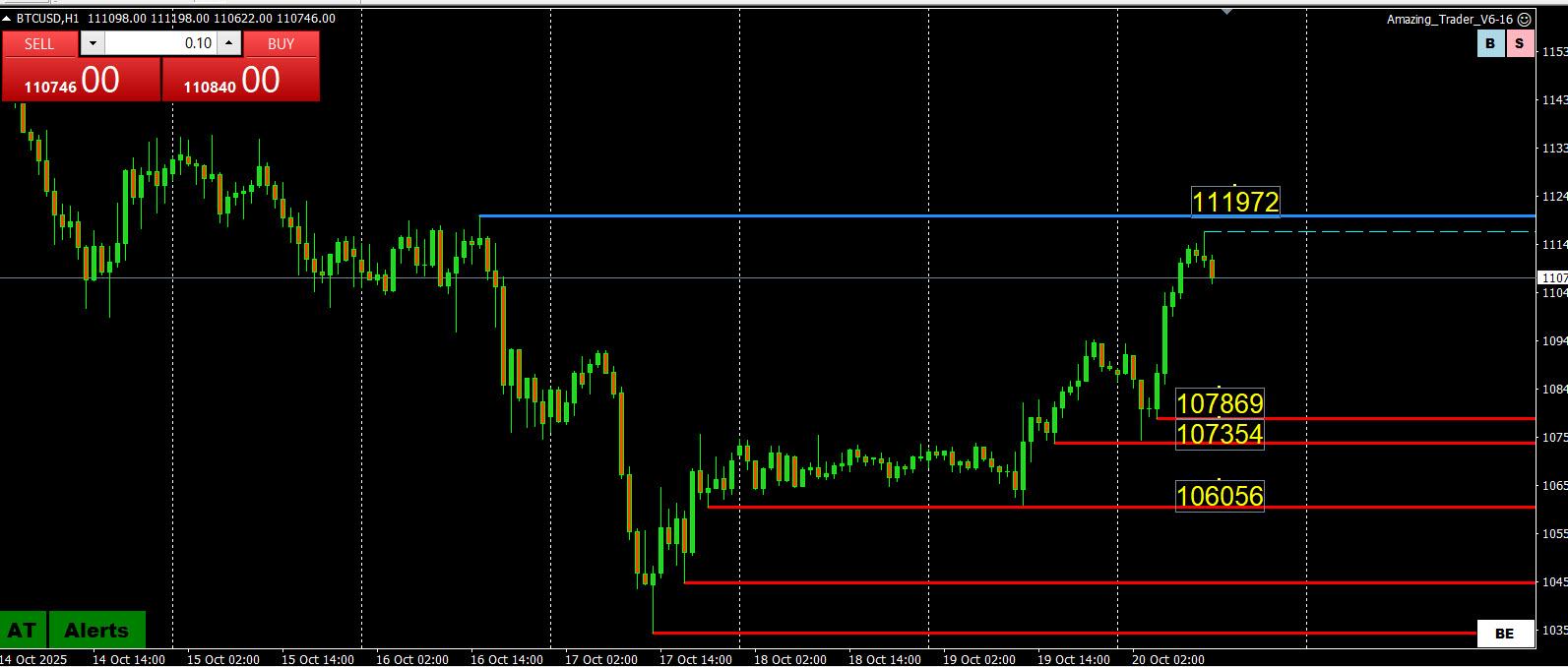
BTCUSD (BITCOIN) UPDATE
- I prefer to round off chart levels rather than fine tune them in Cryptos given the volatility and tendency to over/undershoot.
- Sharp bounce from the 100-105K danger zone so far pausing just below a key 112K resistance.
- While 10K is a psychological pivot key supports are at 107500 and 106000.
- Even after an 18% retracement (126000 => 103500), bulls not likely to give up the fight unless forced to by break of a 98000-100000,
BTCUSD 1 HOUR CHART
 October 20, 2025 at 9:34 am #32274October 20, 2025 at 9:32 am #32273October 20, 2025 at 9:29 am #32272
XAUUSD (GOLD) UPDATE
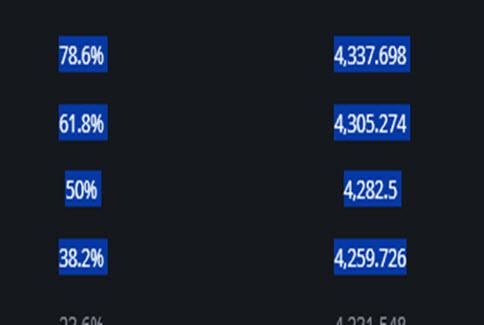
- Feeling the effects of Friday’s sell off as it consolidates within its broad 4186-4379 range
- It would take a lot for bulls to give up the fight where a firm break of 4186 would be needed to squeeze them further. Otherwise expect choppy trade until/unless 4379 is broken.
- Using FIBOS as potential resistance 4282= 50%
- Intra-day range 4421-74
XAUUSD 1 HOUR CHART
 October 20, 2025 at 9:23 am #32271
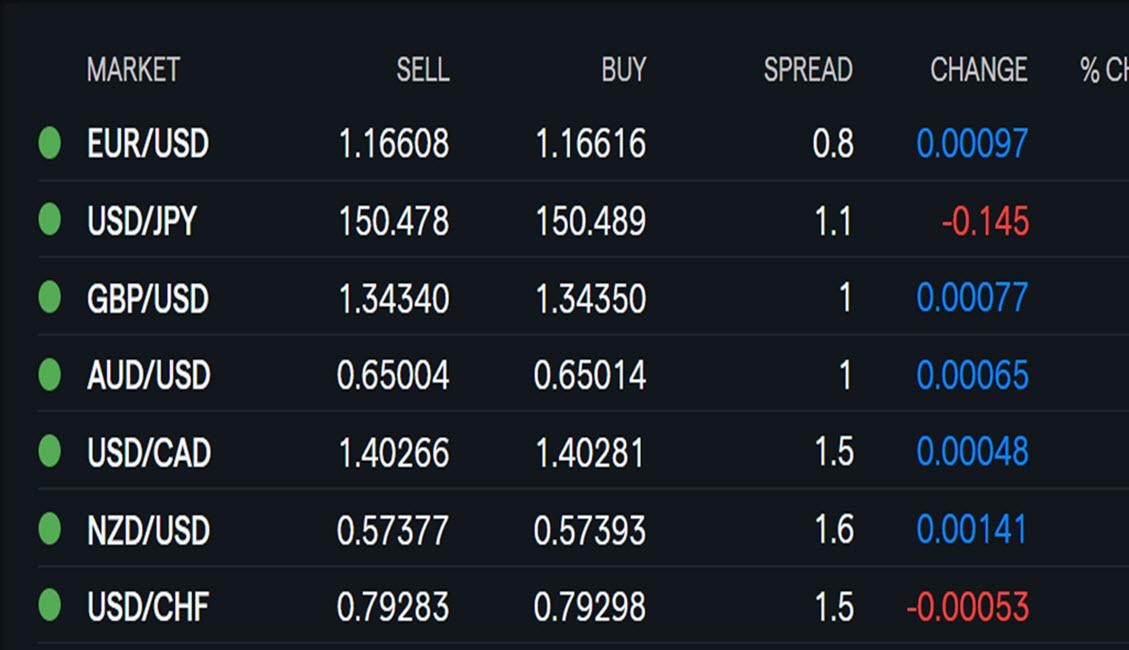
Forex Market Snapshot
- A cautious start to the week in a modest risk on mood with the dollar testing its downside but with little follow through.
- The big winner has been Bitcoin but that is not a currency.
- Otherwise the only underlying theme is expectation of a Fed rate cut in 9 days time.
- Note Fed is entering a blackout period where there will be no Fedspeak.ahead of next week’s FOMC.
 October 20, 2025 at 12:55 am #32270October 20, 2025 at 12:03 am #32269
THIS WEEK’S MARKET-MOVING EVENTS (all days local)
The upcoming week in global economics is marked by limited U.S. data releases due to the ongoing federal government shutdown, now entering its third week. The only major U.S. report scheduled is the September Consumer Price Index (CPI), crucial for determining the 2025 Social Security cost-of-living adjustment (COLA). CPI is expected to rise by 0.4% month-over-month and 3.1% year-over-year, with core inflation also forecast at 3.1%. Elevated food and energy prices, along with tariff pass-through, suggest continued inflationary pressures. The Federal Reserve enters a communications blackout ahead of its October 28–29 FOMC meeting, offering no fresh insight into its policy path.
Internationally, China’s Q3 GDP is projected to slow to 4.7% year-over-year, down from 5.2% in Q2, reflecting weakness in domestic demand and the troubled property sector. Industrial production and retail sales are also forecast to cool, while policymakers gather to discuss the next five-year economic plan, with a focus on boosting consumption and maintaining policy stability. Meanwhile, central banks in South Korea and New Zealand face diverging pressures as inflation remains contained but growth risks linger. In Europe, UK and Eurozone inflation remains elevated, while PMI indicators suggest economic momentum remains fragile. (Econoday)
See our Economic Data Calendar
>
 October 19, 2025 at 11:59 pm #32268October 19, 2025 at 11:50 pm #32267October 19, 2025 at 10:24 pm #32266October 19, 2025 at 10:12 pm #32265October 19, 2025 at 10:58 am #32264
How will the JPY react to a stimulus economic agenda but with a weak government?
Japan’s LDP and Ishin parties reportedly agree to form a coalition govefnment
- Deal with Ishin paves way for Japan’s first female leader, Takaichi
- Ishin, unlike previous LDP partner, won’t be in cabinet
- Parliamentary vote to choose PM slated for Tuesday
- Takaichi wants tax cuts, higher spending
- Potentially shakier alliance than the coalition with Komeito
 October 18, 2025 at 11:17 pm #32263October 18, 2025 at 1:59 pm #32262
allegedly
The alleged ‘sweeping betrayal of trust’ that rocked Zions bank and spooked Wall Street cnbc
…”Zions Bancorporation lost $1 billion of its valuation in a single day on Thursday after disclosing $60 million worth of loans it had made that were unlikely to be repaid.
What led to that point was a messy, tangled web of loans that Zions said were surreptitiously subordinated by the borrowers all while the collateral was effectively eliminated.” …/.
“sweeping betrayl of trust”: glory to the betrayors ?
October 18, 2025 at 10:52 am #32259October 18, 2025 at 10:47 am #32258iN OUR BLOG
Why Trading Is About Odds, Not Predictions
No one can predict the market. What traders can do is take high-odds trades that have a strong chance of success, rather than chasing risky setups with poor risk/reward ratios.
Trading is a game of probabilities. You win not by being right all the time, but by putting the odds on your side you have a better chance pf being successful.. October 17, 2025 at 9:56 pm #32257
BoC’s macklem is likely trying to mask the stink of crap data pilling upon crap data of canadian economy:
Bank of Canada to focus more on risks, will try to be forward-looking, head says – rtrs
… “We will be using a new base case projection to look forward against the background of heightened uncertainty … I’m hoping we can be a bit more forward looking,” Macklem said.
He added that there was still a lot of uncertainty even though it lower than the levels seen in February and March. …/..The central bank is due to release the rate decision and its latest economic forecasts on October 29 when it will also resume issuing forecasts for the economy and inflation, a practice it discontinued earlier this year citing heightened uncertainty due to a constant threat of tariffs.
October 17, 2025 at 9:38 pm #32256also … bessent bought more MORE Argentinian crap
Oct 17 (Reuters) – The U.S. Treasury bought Argentine pesos in the spot and “Blue Chip Swap” markets on Thursday and it continues to monitor all markets, Treasury Secretary Scott Bessent said on Friday.
“Treasury is monitoring all markets, and we have the capacity to act with flexibility and with force to stabilize Argentina,” he said in a post on X.40October 17, 2025 at 8:34 pm #32255October 17, 2025 at 8:31 pm #32254October 17, 2025 at 7:13 pm #32253October 17, 2025 at 6:59 pm #32252October 17, 2025 at 6:57 pm #32251October 17, 2025 at 6:55 pm #32250US Stocks Rise on Trade Optimism, Bank Rebound
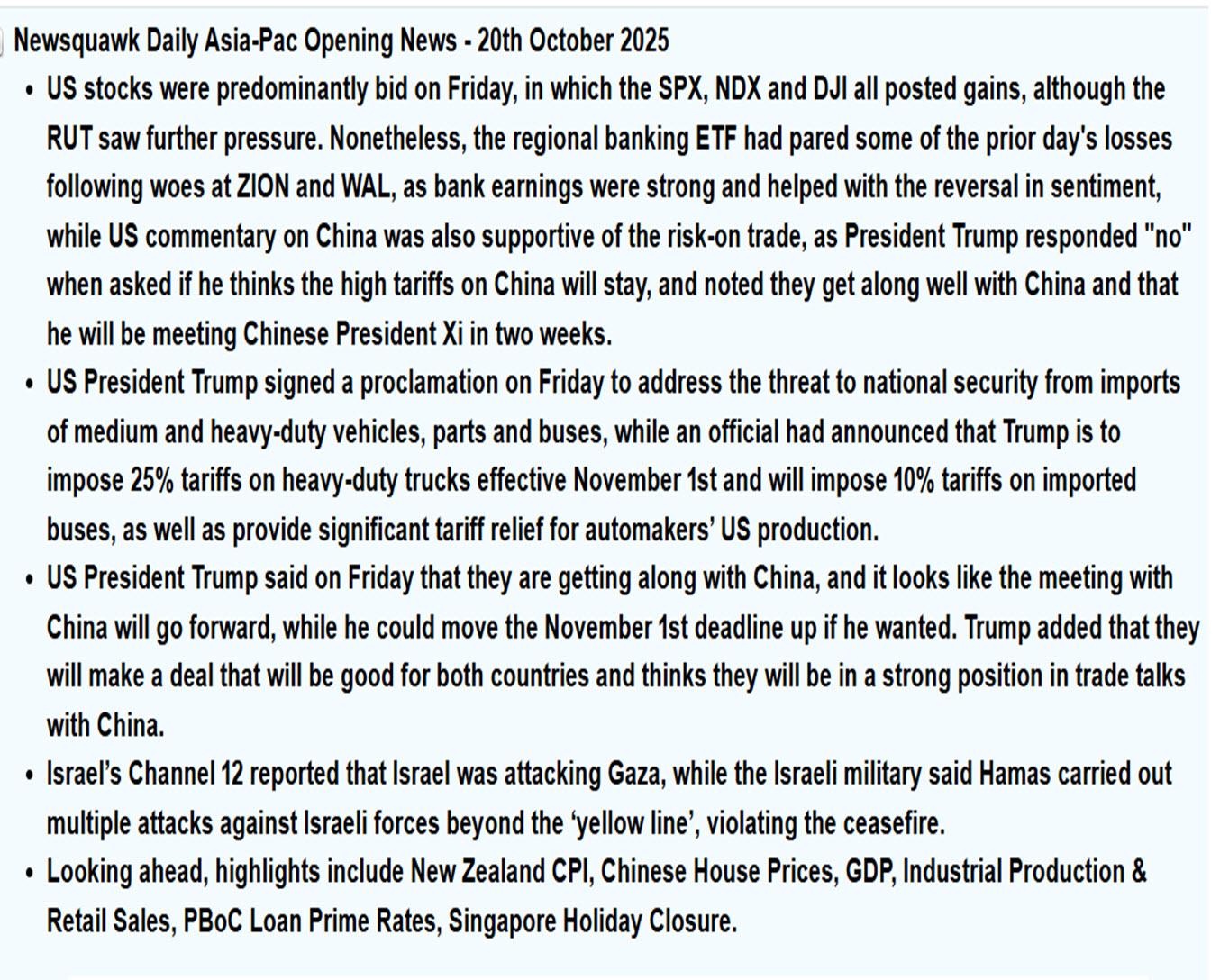
Wall Street edged higher on Friday as investor sentiment improved following President Trump’s comments easing fears of further trade escalation with China and as regional bank stocks rebounded from steep losses.
The S&P 500 and the Nasdaq 100 gained 0.2% each, while Dow Jones rose over 150 points.
Trump confirmed plans to meet Chinese President Xi Jinping later this month, noting that 100% tariffs on Chinese goods would not be sustainable for either economy.
Consumer staples, energy, and financials led the gains, while materials and utilities lagged.
Regional lenders such as Zions Bancorp and Western Alliance, which tumbled Thursday on loan concerns, recovered 4% to 6%.
Strong earnings from Fifth Third Bancorp, Truist Financial, and Huntington Bancshares helped restore confidence in the sector.
The KBW Regional Bank Index climbed 1.2%, rebounding from its steepest drop since April, as all major US indices stayed on track for weekly gains.
Dow Jones Hourly Chart
 October 17, 2025 at 6:49 pm #32249
-
AuthorPosts







- You must be logged in to reply to this topic.
Search
© 2024 Global View