
- This topic has 28,110 replies, 54 voices, and was last updated 4 minutes ago by GVI Forex 2.
-
AuthorPosts
-
June 8, 2026 at 8:31 am #40806June 8, 2026 at 7:06 am #40805
THE WEEK AHEAD: KEY DATA & EVENTS TO WATCH
JUNE 8 – JUNE 12, 2026
Markets face a critical test this week as investors navigate a packed calendar of inflation data, major central bank decisions, and one of the largest IPOs in history. U.S. CPI and PPI reports will reveal whether elevated energy prices continue to fuel inflation, while consumer inflation expectations will provide insight into how households are responding to rising living costs. Beyond the economic data, SpaceX’s anticipated $75 billion IPO, China’s inflation and trade reports, and an expected ECB rate hike could all influence market sentiment, liquidity flows, and expectations for global growth. With inflation pressures, energy markets, and monetary policy all in focus, volatility is likely to remain elevated across stocks, bonds, and other risk assets.(Econoday)
June 8, 2026 at 6:52 am #40804June 8, 2026 at 5:45 am #40803June 7, 2026 at 11:23 pm #40802June 7, 2026 at 10:17 pm #40801June 7, 2026 at 10:02 pm #40798Newsquawk Daily Asia-Pac Opening News – 8th June 2026
US stocks were hit hard on Friday, with the Nasdaq-100 the clear laggard, falling more than 4% as technology stocks remained under pressure. Broadcom (AVGO) extended losses following its earnings report earlier in the week, while additional weakness came after the FT reported that
Meta (META) is considering raising tens of billions of dollars through a stock offering. As a result, Technology was the clear sectoral laggard, followed by Consumer Discretionary and Communication Services. However, the main macro driver of the session was the stronger-than-expected US jobs report, which set the tone for trading throughout the day and spurred Fed rate hike bets, with traders now fully pricing a 25bp Fed rate hike by year-end, compared with around 16bps of tightening priced before the release.
Israel conducted airstrikes on a couple of apartment buildings in Beirut’s Dahiya district on Sunday, in what the military described as targeting a Hezbollah command centre.
Iran launched four waves of strikes against Israel on Sunday evening in retaliation for an Israeli strike on Beirut, which it stated ‘crossed all red lines’, while it threatened devastating blows if Israel expands Lebanon operations. Iran signalled a halt to attacks if Israel refrains from strikes, but vowed stronger retaliation if Israel strikes back, and it closed its western airspace until further notice.Looking ahead, highlights include Japanese Revised Q1 GDP & Eco Watcher Survey, Holiday Closure in Australia.
June 6, 2026 at 10:01 am #40794Why NOT use Bitcoin
Bitcoin is widely discouraged as a currency or savings vehicle due to extreme volatility, lack of intrinsic value, and security risks. Experts and financial institutions highlight several critical disadvantages that make it unsuitable for stable transactions or reliable wealth preservation.
Price Instability and Speculation
– Bitcoin’s value fluctuates wildly, sometimes dropping over 80% or swinging 20-30% in a single day, making it unreliable for setting prices or serving as a stable store of value. Critics argue it is not a true asset because it generates no income; instead, it is a speculative tool driven by investor emotions and herd behavior rather than fundamental economic metrics. Using it for short-term savings or daily transactions is considered gambling rather than investing due to this unpredictability.Security and Operational Risks
– The ecosystem lacks buyer protection; transactions are irreversible, meaning lost coins or fraud result in total loss with no recourse. Wallets and exchanges are frequently hacked, and losing private keys or sending funds to incorrect addresses results in permanent, unrecoverable loss of assets. Additionally, Bitcoin is not widely accepted by merchants, limiting its utility as a medium of exchange in the real world.Regulatory and Legal Uncertainty
– Bitcoin operates in an unregulated space with no central authority for grievance redressal, exposing users to Ponzi schemes, fraud, and illegal activities like money laundering. Its deflationary nature (capped at 21 million coins) can discourage spending and cause economic fluctuations, while high transaction fees and slow processing times further hinder its practical use compared to traditional financial systems.June 6, 2026 at 9:58 am #40793Why use Bitcion
Bitcoin is used primarily for censorship-resistant financial sovereignty, borderless value transfer, and as a scarce store of value. Unlike traditional fiat currencies, it operates on a decentralized network without central bank control, meaning no third party can seize, freeze, or reverse transactions.
Key reasons for using Bitcoin include:
– Financial Independence: Users maintain exclusive control over their assets via self-custody wallets, eliminating reliance on banks or payment processors.
– Global Portability: It enables instant, permissionless cross-border transactions that are faster and often cheaper than traditional wire transfers, accessible to anyone with an internet connection.
– Scarcity and Inflation Hedge: With a hard-capped supply of 21 million coins, Bitcoin is immune to the inflation caused by government money printing, preserving purchasing power over time.
– Security and Privacy: Transactions are secured by cryptographic proof (SHA-256) and are irreversible, protecting users from fraud and chargebacks while offering greater privacy than monitored banking systems.June 5, 2026 at 7:44 pm #40791June 5, 2026 at 7:37 pm #40789June 5, 2026 at 6:10 pm #40788June 5, 2026 at 5:23 pm #40786June 5, 2026 at 5:04 pm #40784USDJPY 160.28
–
Who can not but admire the audacious degenerate traders pushing USDJPY N of 160 – HoD 160.37 – and teasing the BoJ / MoF into unleashing coordinate policy steps (and ideally and additionally in co-ordination with their buddy bessent)By the time the interventionists get going usdyen puppy could be floating in the 161+ clouds
June 5, 2026 at 4:52 pm #40783June 5, 2026 at 4:41 pm #40782June 5, 2026 at 2:32 pm #40781June 5, 2026 at 2:01 pm #40780June 5, 2026 at 1:51 pm #40779June 5, 2026 at 1:31 pm #40778June 5, 2026 at 12:36 pm #40777June 5, 2026 at 11:18 am #40776June 5, 2026 at 10:59 am #40775June 5, 2026 at 10:50 am #40774June 5, 2026 at 10:34 am #40773In ref to the problematic (and speculative opportunity) YEN
–
“On foreign exchange, we will respond appropriately at any time when necessary,” – Finance Minister Satsuki Katayama said on Friday (Jun 5)“Japan and the US are in close contact on market moves,” she (Katayama) said, adding that Tokyo has the right to take decisive action against excessively volatile moves under a joint statement signed last year.
Data released on Friday underscored the cost of defending the currency. Japan’s foreign reserves, the bulk of which are believed to be held in US Treasuries, suffered a historic drop in a sign of the limits of deploying sustained, large-scale intervention after Tokyo unleashed a record US$73 billion yen-buying operation.
June 5, 2026 at 10:13 am #40772June 5, 2026 at 10:12 am #40771June 5, 2026 at 9:56 am #40770Jeff Cox:
The May jobs report will be released Friday. Here’s what to expect
The stronger-than-expected start this year for job creation could be in for a reality check.… The consensus sees the unemployment rate holding steady at 4.3%. …/.
June 5, 2026 at 5:02 am #40769Market Update
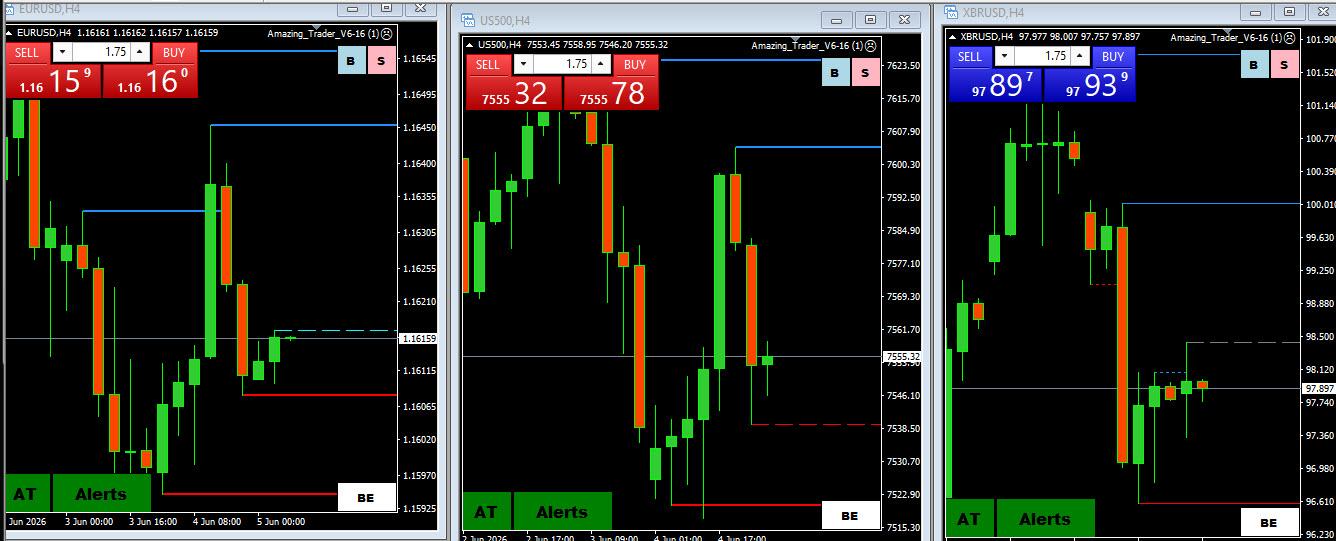
Another wait-and-see day, this time ahead of the US jobs report and for US-Iran status quo to break one way or another. The latter suggests a weekend risk that should keep trading defensive.
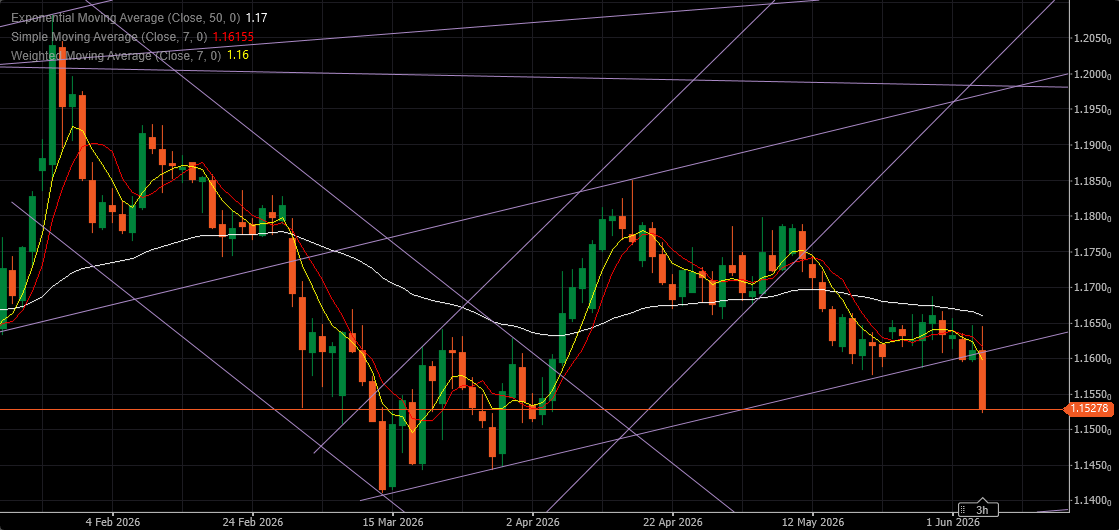
In FX, EURUSD 1.1600-50 so far containing but too tight to last for too long.
USDJPY remains bid but BoJ threat continues to see caution around 160.
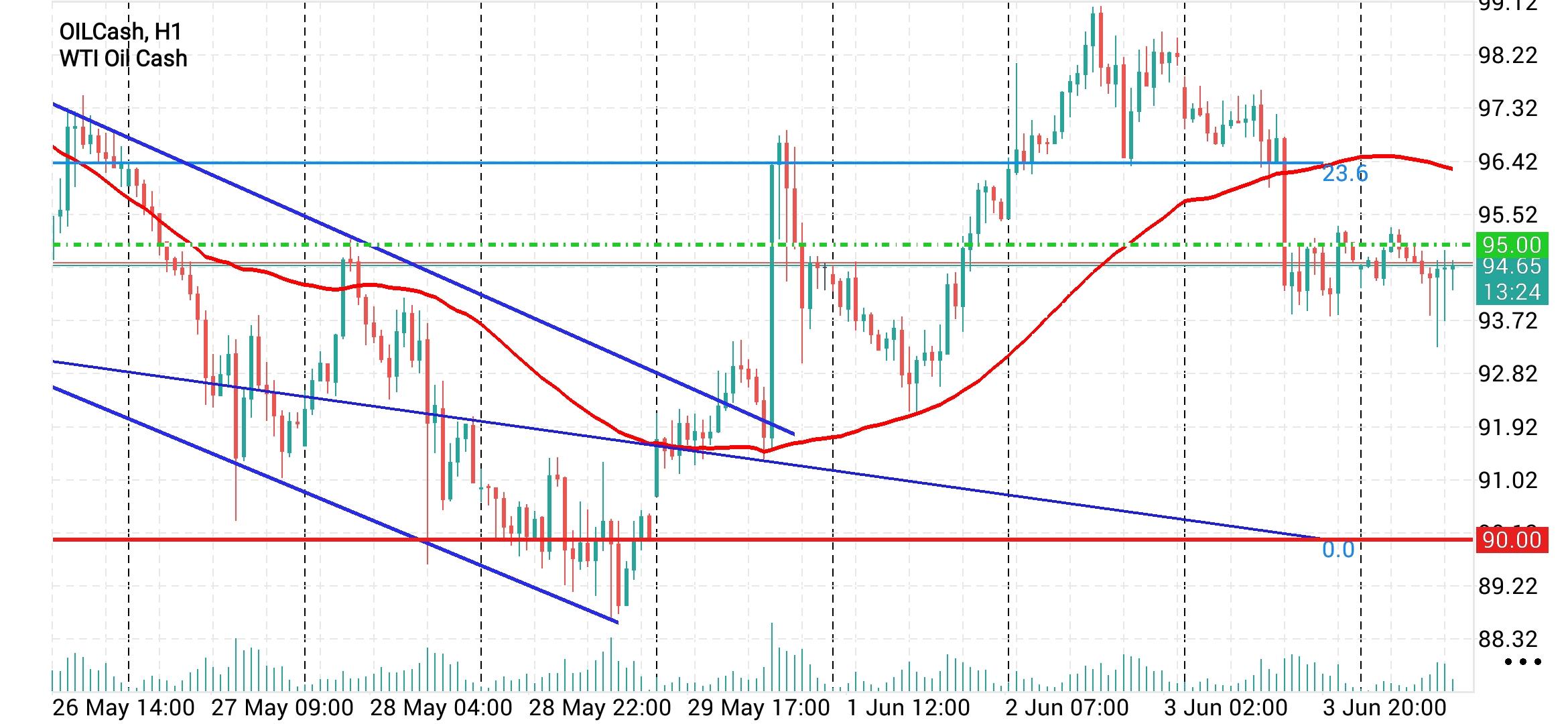
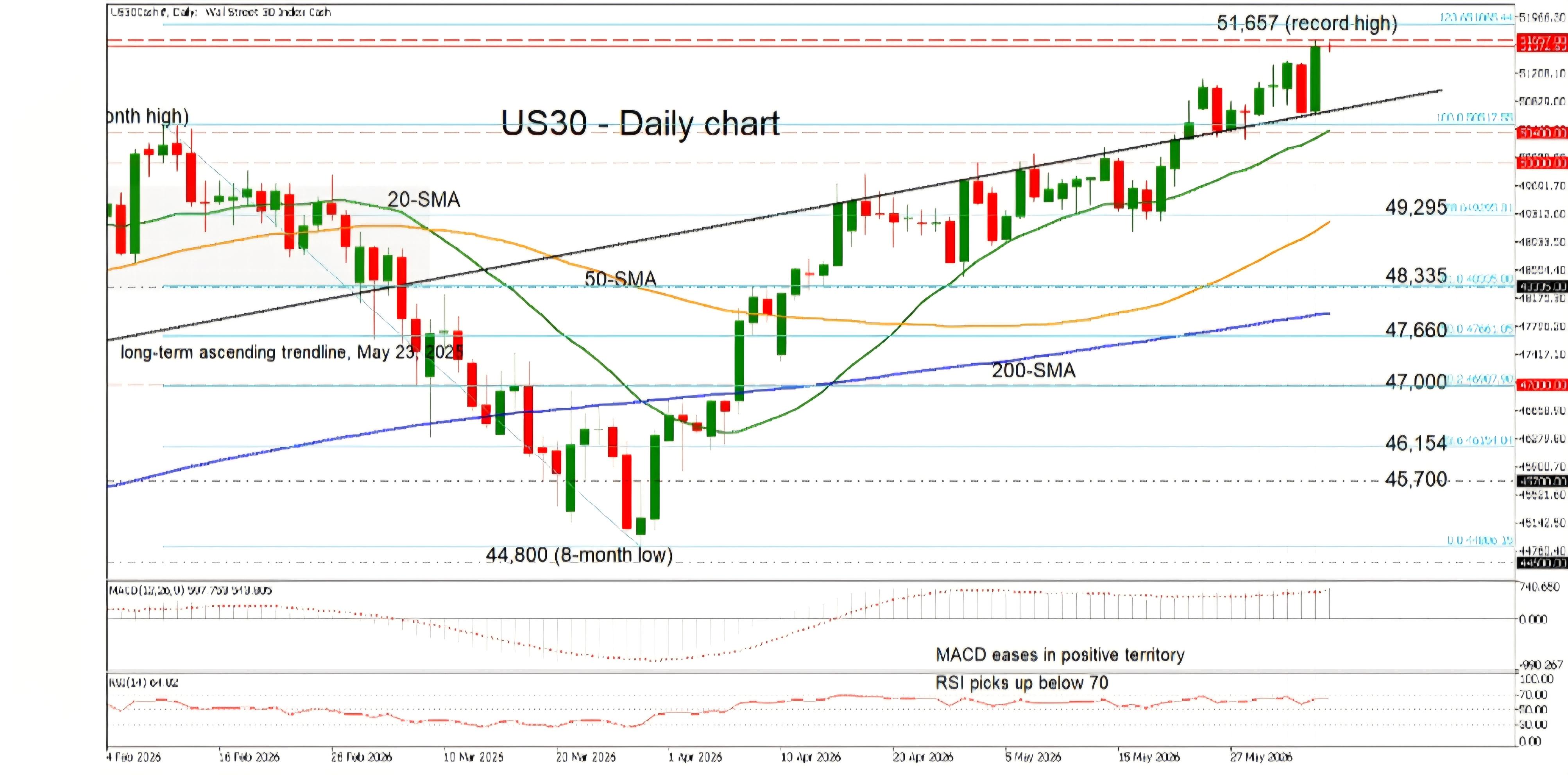
EURUSD US500 XBRUSD
 June 4, 2026 at 10:50 pm #40768
-
AuthorPosts
 looks like BiBi does not give a mosquito’s turd about what T says about having or not any choice




- You must be logged in to reply to this topic.
Search
© 2024 Global View