
- This topic has 28,643 replies, 54 voices, and was last updated 1 day, 6 hours ago by GVI Forex 2.
-
AuthorPosts
-
May 29, 2025 at 6:16 pm #25560May 29, 2025 at 6:11 pm #25557
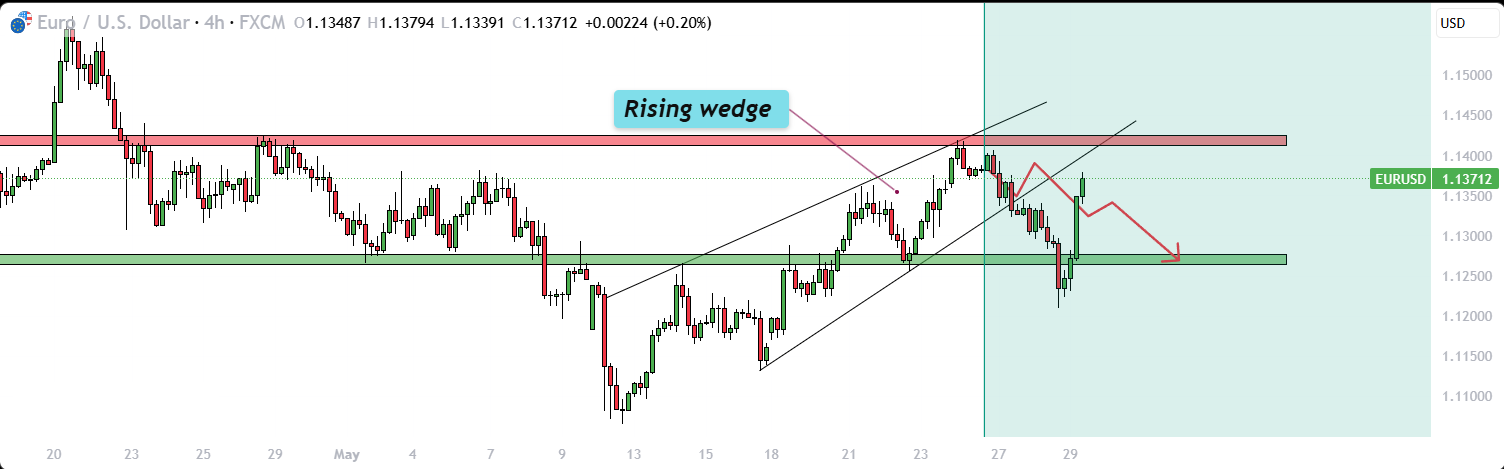
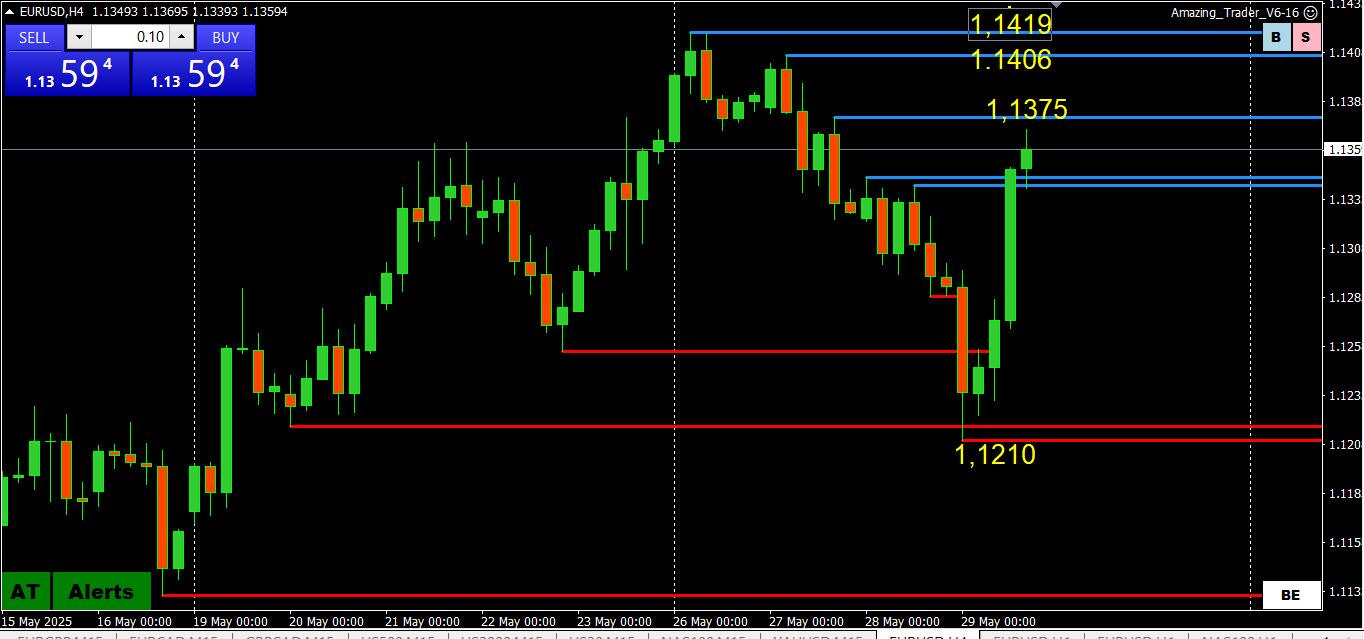
Euro Back Above $1.13 and beyond
The euro reversed earlier losses and climbed back above $1.13, as the dollar weakened following fresh economic data that reinforced expectations for further Fed rate cuts this year.
US GDP contracted at an annualized rate of 0.2% in Q1, slightly better than the initial 0.3% decline.
However, consumer spending grew at a slower pace, net trade exerted a greater drag than previously estimated, and corporate profits fell during the quarter.
Meanwhile, a federal trade court struck down President Donald Trump’s worldwide reciprocal tariffs and ordered the administration to cease their collection.
The ruling eased investor concerns about an escalating trade war.
On the monetary policy front, the ECB is set to announce its policy decision next week.
While many analysts anticipate another rate cut, some ECB officials have recently adopted a more hawkish tone, advocating for a pause in further easing.
 May 29, 2025 at 6:06 pm #25555May 29, 2025 at 6:04 pm #25553May 29, 2025 at 6:04 pm #25552May 29, 2025 at 5:37 pm #25551May 29, 2025 at 3:54 pm #25550
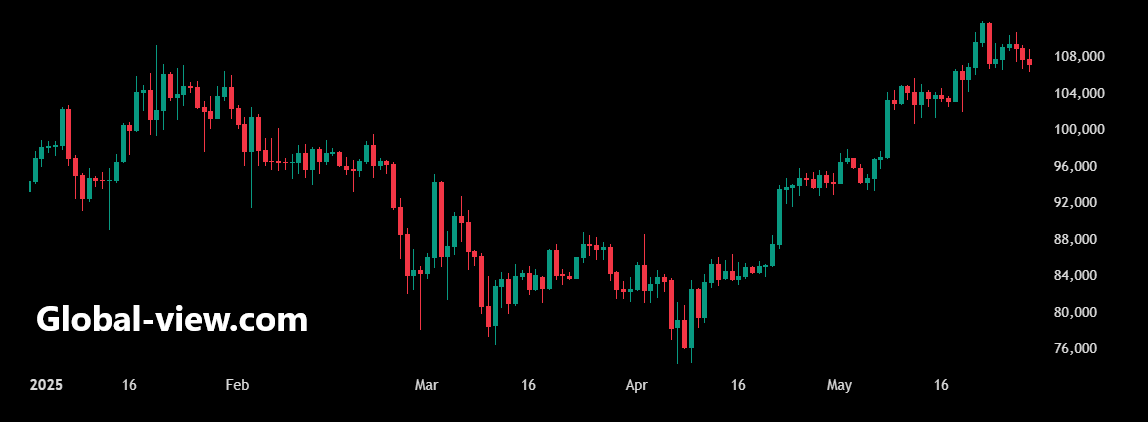
Bitcoin, crypto rally expected to resume after dip on hawkish Fed minutes
Bitcoin and cryptocurrency prices posted moderate losses following hawkish signals from minutes of the May 6-7 Federal Open Market Committee (FOMC) session released Wednesday.
U.S. Federal Reserve officials flagged potential “difficult tradeoffs” tied to persistent inflation and looming recession risks. “Participants agreed that uncertainty about the economic outlook had increased further, making it appropriate to take a cautious approach until the net economic effects of the array of changes to government policies become clearer,” the minutes read.
Bitcoin closed in losses below $107,800 following the release but has since rebounded to around $108,500, per The Block’s price page. Meanwhile, ETH closed May 28 in green and climbed higher to $2,711 on Thursday. Altcoins were mixed — XRP and SOL fell, while selective coins like Dogecoin gained, cushioning the GMCI 30 Index.
Rally optimism
Despite the brief pullback, analysts at BRN noted that institutional demand remains strong. U.S. spot Bitcoin ETFs have recorded 10 consecutive days of inflows, with BlackRock leading the pack.
Bitcoin continues to benefit from its positioning as a hedge and long-term asset. Corporate adoption remains strong, with more firms launching BTC reserves
Looking ahead, traders are eyeing Friday’s Personal Consumption Expenditures report — the Fed’s preferred inflation gauge — as a key macro trigger.
BTC Chart
 May 29, 2025 at 3:45 pm #25549
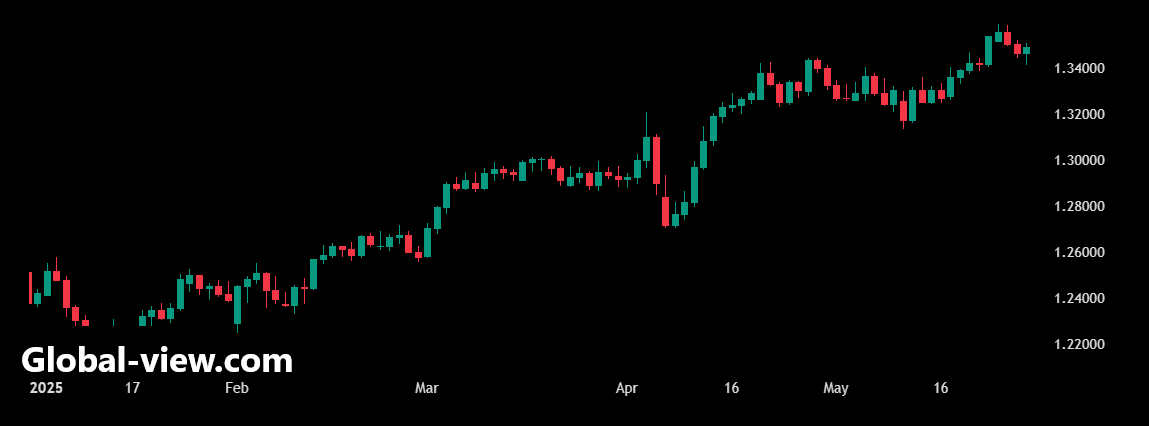
Sterling Steadies Below 3 Year High
The British pound traded at $1.348, below its three-year high of $1.356 on May 26, as investors assessed growth and trade developments.
Weak US economic data, including a Q1 contraction and rising jobless claims, strengthened expectations of two Fed rate cuts by early 2026.
Market focus also turned to a US court ruling that blocked many of President Trump’s tariffs, creating fresh uncertainty around trade policy.
In the UK, Business Secretary Jonathan Reynolds aims to speed up a trade deal with the US, with tariff cuts on UK goods still awaiting Trump’s sign-off.
The court ruling may affect the context, though its impact on the deal remains unclear.
Meanwhile, the UK government proposed new rules requiring pension funds to invest more in private markets and local projects, targeting £27.5 billion in new investments.
The plan, including pooling £1.3 trillion in pension assets, faces pushback from fund managers who warn it may conflict with their duty to prioritize client interests.
 May 29, 2025 at 3:23 pm #25548May 29, 2025 at 3:11 pm #25547May 29, 2025 at 3:06 pm #25546May 29, 2025 at 2:40 pm #25545
What’s Hot and What’s Not?

What’s Hot
EURUSD: Went from not to hot with outside day (above 1.1346)
USDJPY: Went from not to hot after failing to stay above 145 but not an outside day
GOLD: Went from not to hot after failing to hold an overnight breakdown
US bonds: Went from not to hot (lower yields) as mood turned to risk offr
What’s Not?
US stocks went from hot to not after tariff court ruling rally stalled
BTCUSD (Bitcoin): Went from hot to not and is now down on the day
May 29, 2025 at 2:10 pm #25544May 29, 2025 at 2:06 pm #25543May 29, 2025 at 1:44 pm #25542May 29, 2025 at 1:43 pm #25541Realiy check: The tariff court ruling creates more uncertainty, weakens Trump’s negotiating power, and likely poushes back the July 9 tariff deadline.
It also raises questions whether there will be revenue from tariffs to offset some of the deficits from the tax bill.
Net result, short-term reaction, longer term uncertainty.
May 29, 2025 at 12:48 pm #25540May 29, 2025 at 12:41 pm #25539May 29, 2025 at 12:38 pm #25538May 29, 2025 at 12:34 pm #25536May 29, 2025 at 12:34 pm #25537May 29, 2025 at 12:21 pm #25532May 29, 2025 at 11:45 am #25527Trade Outlook Elevates European Bourses Midday
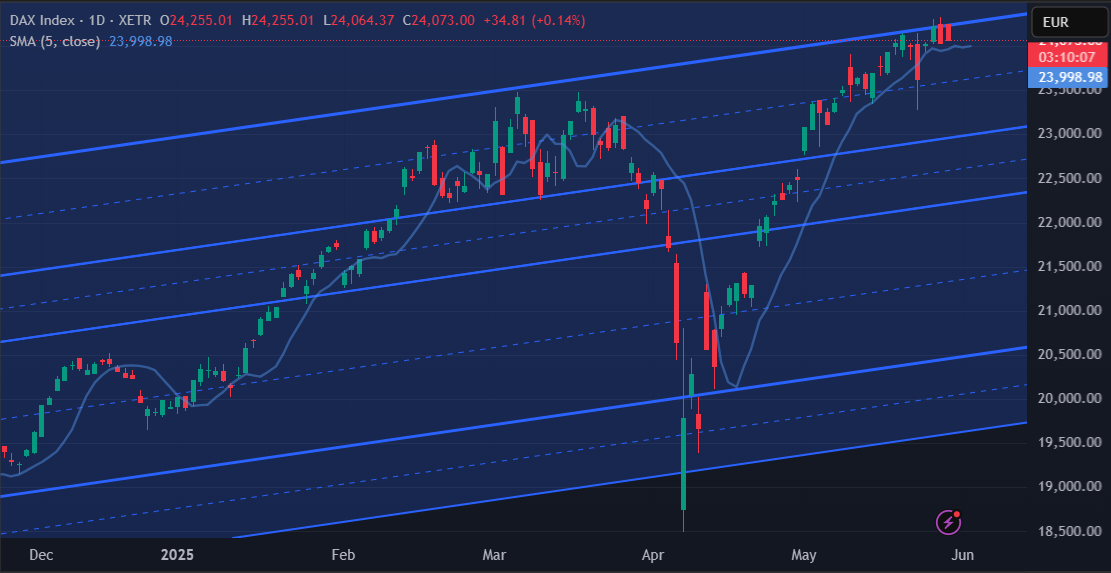
European bourses tracked moderately higher midday Thursday after the US Court of International Trade in New York on Wednesday ruled that President Donald Trump exceeded his authority in imposing a broad range of import levies.
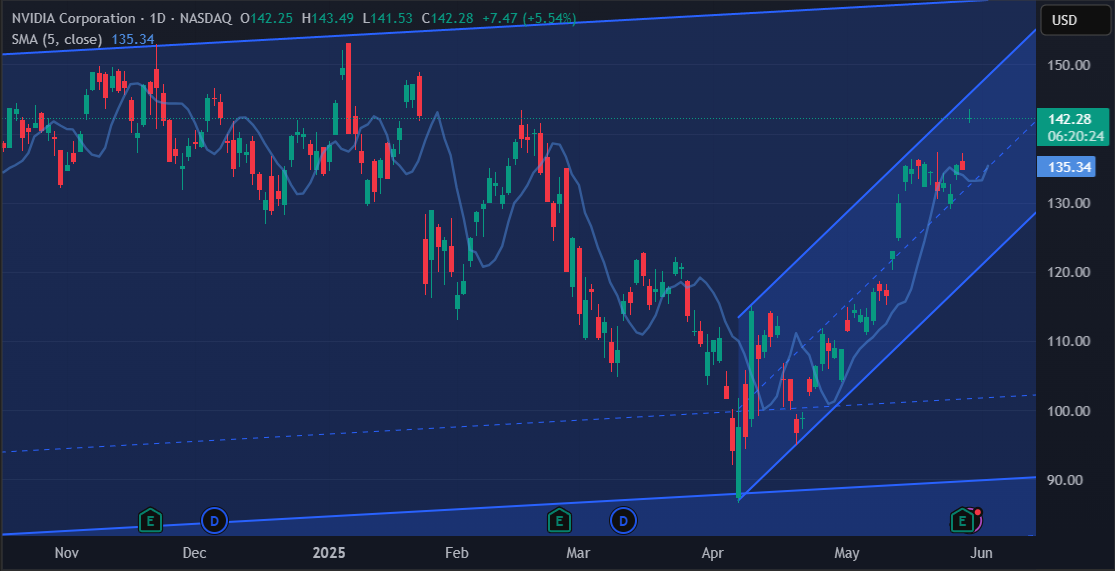
Bank and tech stocks led broad market gains on the continent.
Investors also eyed Wall Street futures signalling green, and higher closes overnight on Asian exchanges.
In economic news, Spain’s seasonally adjusted retail sales rose by 0.7% in April from March, the National Statistics Institute reported.
The pan-continental Stoxx Europe 600 Index was up 0.3% mid-session.
The Stoxx Europe 600 Technology Index was up 0.8%, and the Stoxx 600 Banks Index gained 0.8%.
The Stoxx Europe 600 Oil and Gas Index was up 0.2%, and the Stoxx 600 Europe Food and Beverage Index rose 0.1%.
The REITE, a European REIT index, rose 0.5%, and the Stoxx Europe 600 Retail Index advanced 0.2%.
On the national market indexes, Germany’s DAX was up 0.3%, and the FTSE 100 in London was steady. The CAC 40 in Paris was up 0.7%, and Spain’s IBEX 35 gained 0.3%.
Yields on benchmark 10-year German bonds were steady, near 2.57%.
Front-month North Sea Brent crude oil futures were up 0.4% to $64.58 per barrel.
The Euro Stoxx 50 volatility index was down 2.5% to 18.84, indicating below-average volatility for European stock markets in the next 30 days, a positive signal. A reading above 20 indicates choppier markets ahead, while below 20 suggests calmer exchanges.
SXXP Index
 May 29, 2025 at 11:36 am #25526
Data on deck
Weekly jobless claims (unemployment a key Fed focus)
Q1 GDP revision (old news)
Quarter PCE (monthly data more significant)
May 29, 2025 at 10:51 am #25524May 29, 2025 at 10:32 am #25523May 29, 2025 at 10:29 am #25522Month end forex rebalancing: USD Outlook: General consensus points towards moderate USD selling pressure at month-end, influenced by equity performance during the mointh of May.
So the question is:
Can You Time Month-End Forex Rebalancing Flows?
 May 29, 2025 at 10:28 am #25521May 29, 2025 at 10:23 am #25520
EURUSD
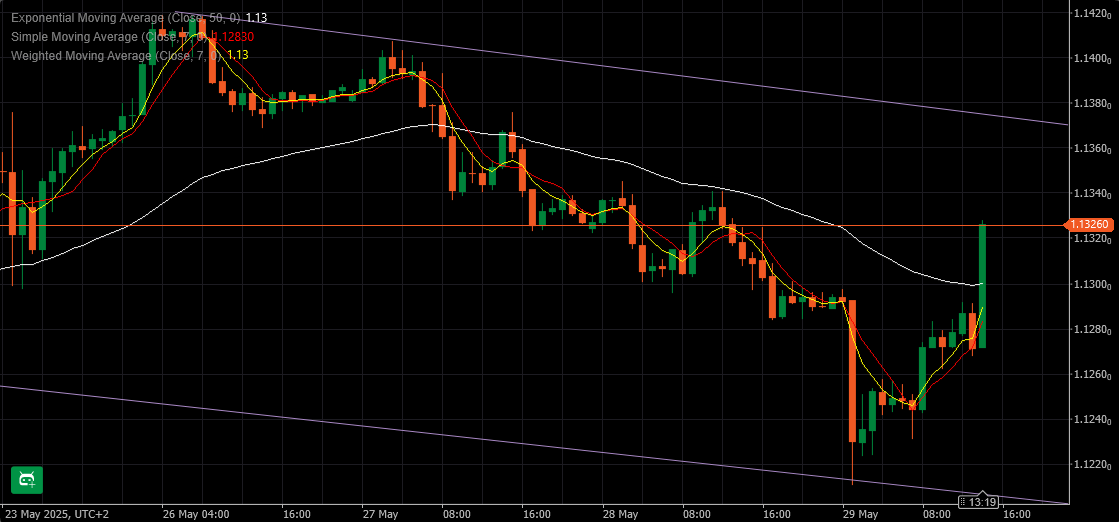
So scenario number 2 from last night came through:
If EUR closes below 1.12850 , it will either hit support first tomorrow and then up, or it will go straight up from the open.
Of course it is close to impossible to predict it 100% – EUR went through the support at 1.12550 and hit 1.12100 – and then you move that lower declination line to that low….this is how it works…it is dynamic and never static.
And afterwards it went straight up…
Now this is what we have:
Resistance: 1.13100, 1.13250 & 1.13450
Supports: 1.12550, 1.12100 & 1.11650
Now we follow it on the smaller time frames – Hourly says: going for 1.13100
 May 29, 2025 at 10:03 am #25519
-
AuthorPosts



- You must be logged in to reply to this topic.
Search
© 2024 Global View